


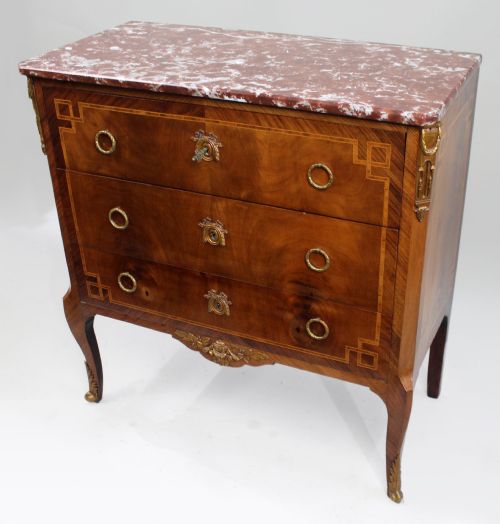
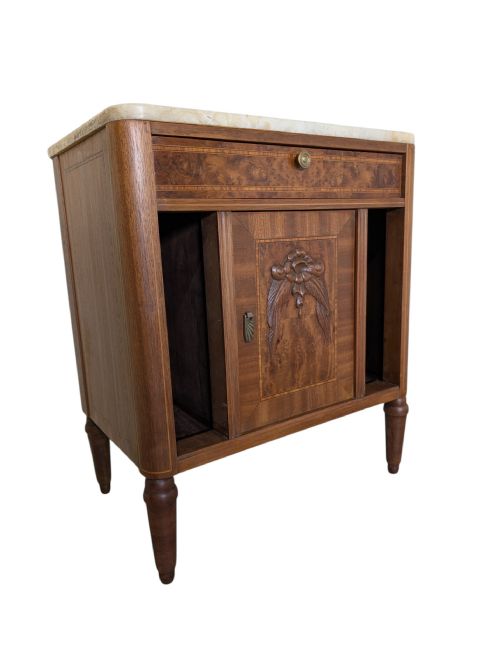
Vintage Marble Top Cabinet
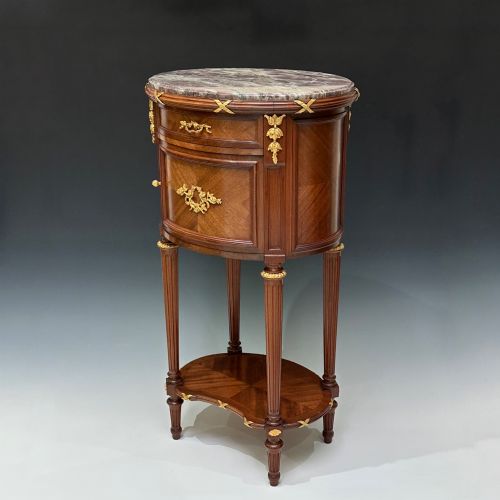
A vintage marble top cabinet brings a cool stone surface to bedside tables, commodes and washstands across various European revival styles.
Vintage Marble Top Cabinet
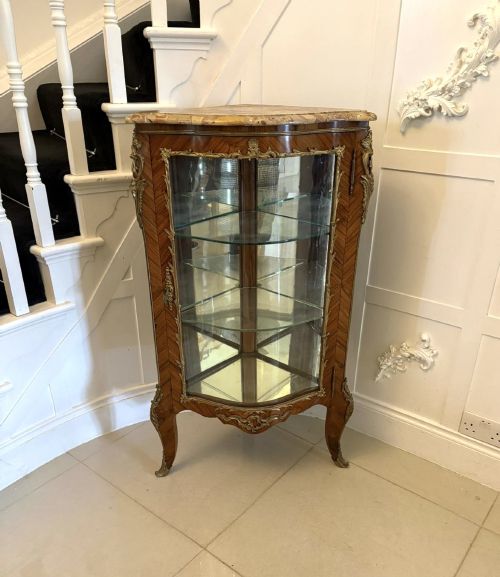
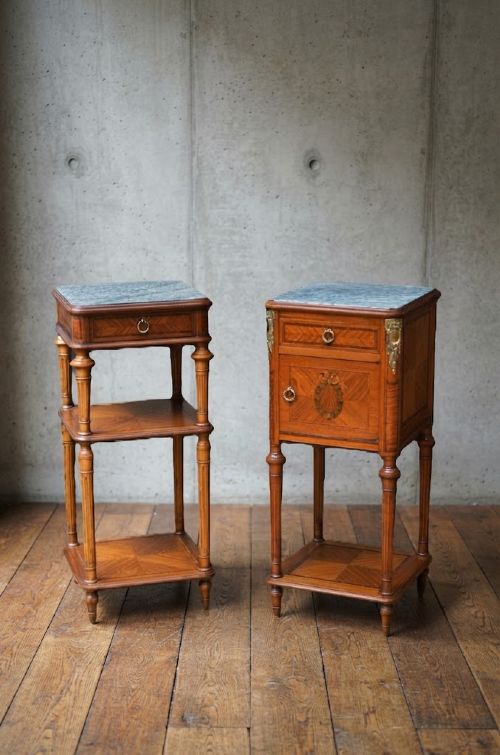
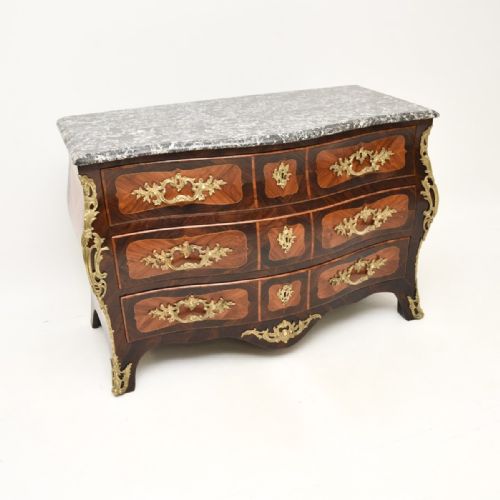
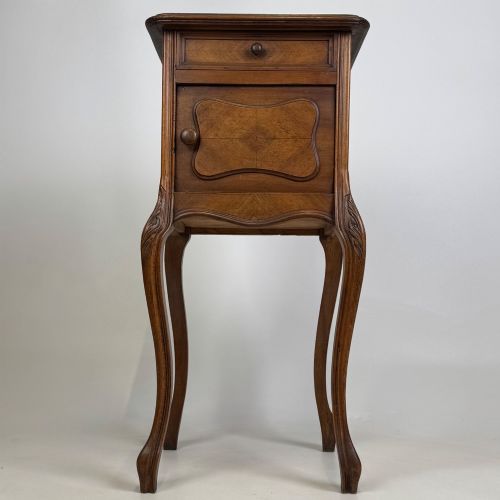
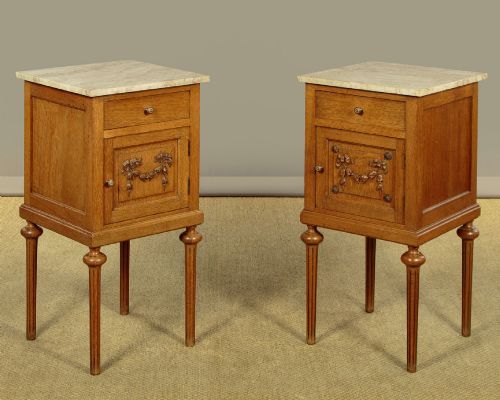
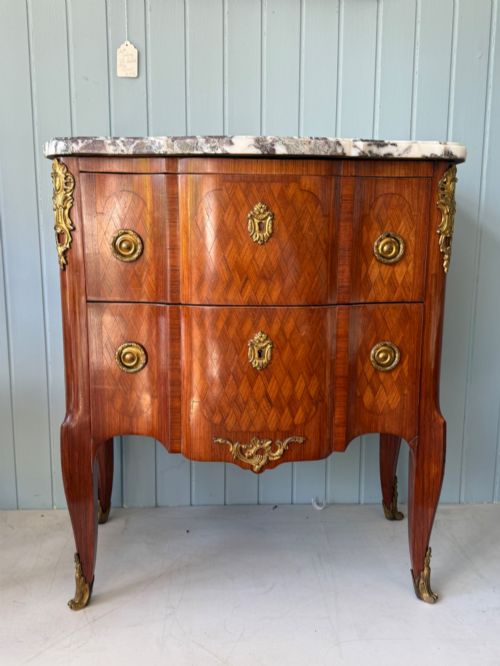
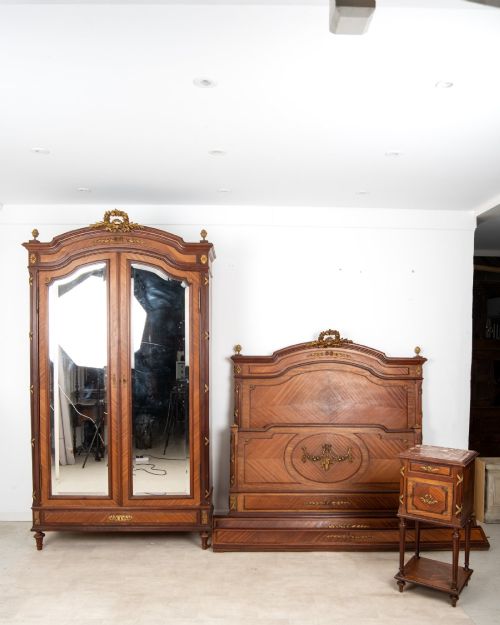
A vintage marble top cabinet spans compact bedside tables and larger commodes designed for bedrooms and parlours. These pieces appear most frequently in French styles such as Louis XV and Louis Philippe alongside Victorian interpretations.
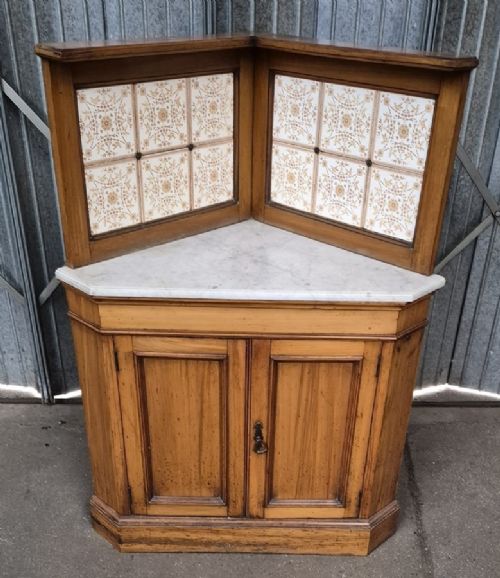
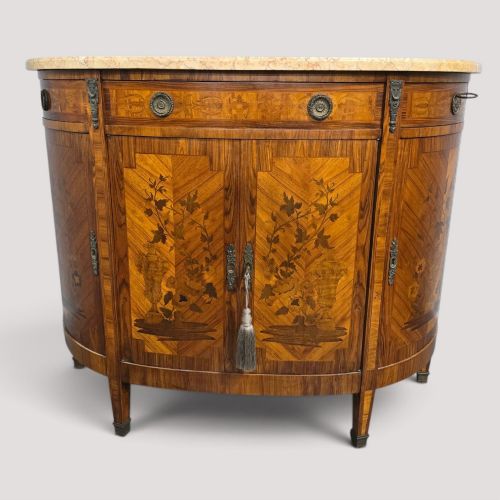
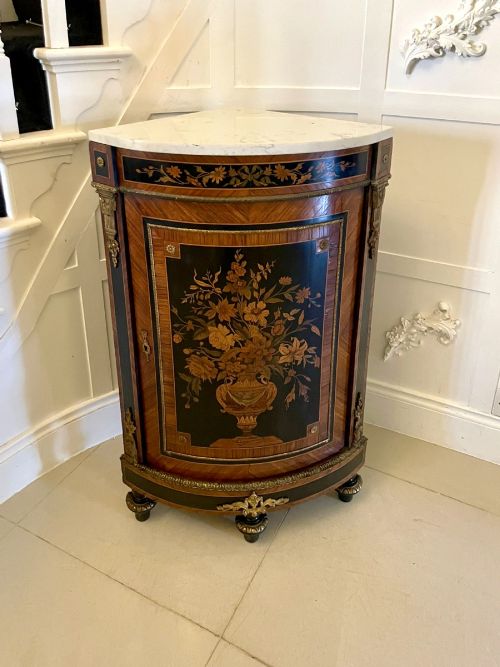
The inventory on this page ranges from mid-nineteenth century walnut washstands to nineteen-twenties oak bedside chests. Forms include serpentine corner units, demilune cabinets and upright commodes fitted with heavy stone slabs.
Materials and construction
Carpenters built carcass frames in walnut, mahogany, oak, satinwood and kingwood, frequently applying decorative marquetry veneers in geometric or floral patterns. Ormolu mounts and brass hardware accent many of the French revival examples.
Thick slabs of grey, white or rouge marble sit unattached or bedded onto the wooden tops to provide a durable, liquid-resistant surface. Internal construction utilises dovetailed drawer boxes and panelled doors appropriate to each period.
Materials documented across these listings include walnut, mahogany, oak, kingwood, satinwood, and ormolu alongside various shades of marble.
Judging the execution
Quality rests in the precision of the timber marquetry and the crispness of cast ormolu mounts rather than mere age. Better workshops selected choice burr veneers and matched grain patterns carefully across drawer fronts and doors.
The thickness and matching of the stone slab influence overall execution, as does the integration of the marble into the wooden moulding. Finer examples maintain original brass hardware and smooth drawer operation without excessive timber shrinkage.
Jacques Bircklé·François Linke·Walker & Sons
The Vintage Marble Top Cabinet Glossary
- Ormolu
- Gilded bronze mounts applied to furniture for decoration. These cast metal details appear frequently on French revival pieces from the nineteenth century.
- Marquetry
- Inlaid wood veneers arranged in pictorial or decorative patterns. Craftsmen utilised contrasting timbers such as kingwood, walnut and satinwood to create these surface designs.
- Commode
- A low chest of drawers or cabinet originating in France. These storage items commonly support heavy marble slabs on their upper surfaces.
- Serpentine
- A gently curved furniture front shaped in a wave line. This contour requires skilled woodworking to follow the sweeping profile.
- Vitrine
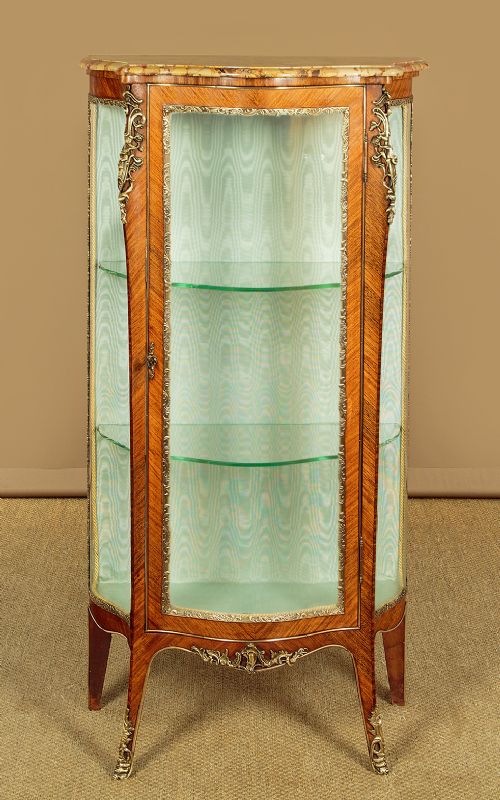
- A glass-fronted display cabinet used for porcelain and ornaments. Some smaller variations incorporate stone tops above glazed compartments.
Vintage Marble Top Cabinet: Frequently Asked Questions
Are the marble tops original?
Most marble slabs original to these pieces fit the exact rebate of the wooden moulding and show age-appropriate wear beneath. Replacement stone typically exhibits different thickness or edge profiles compared to the period timber base.
Inspect the underside of the stone and the supporting frame to check for old seating marks and matching patination.
How do I clean the marble?
Wash the stone surface using warm water and a soft cloth, avoiding acidic cleaners that etch polished calcium surfaces. Gentle soap suffices for routine maintenance without harming the antique finish.
Dry the marble thoroughly afterwards to prevent water rings or mineral deposits from forming on the polished top.
Can these cabinets support lamps?
The stone surface provides a sturdy, heat-resistant platform for bedside lighting and decorative objects. Weight distribution rarely poses an issue given the density of the marble.
Ensure electrical cords run safely behind the furniture to prevent pulling lightweight lamps off the polished edge.