
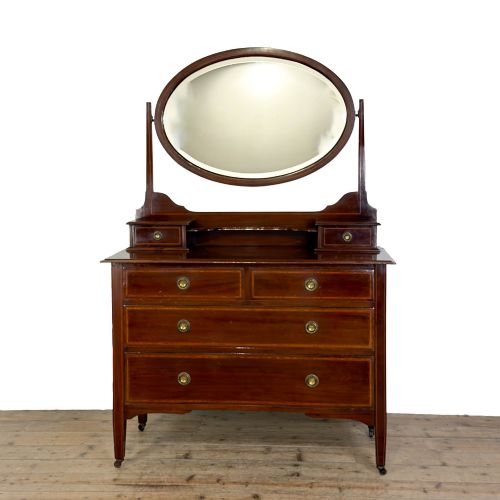


Vintage Makeup Desk
A vintage makeup desk brings classic dressing table craftsmanship and fitted mirrors into a modern bedroom with genuine period character.
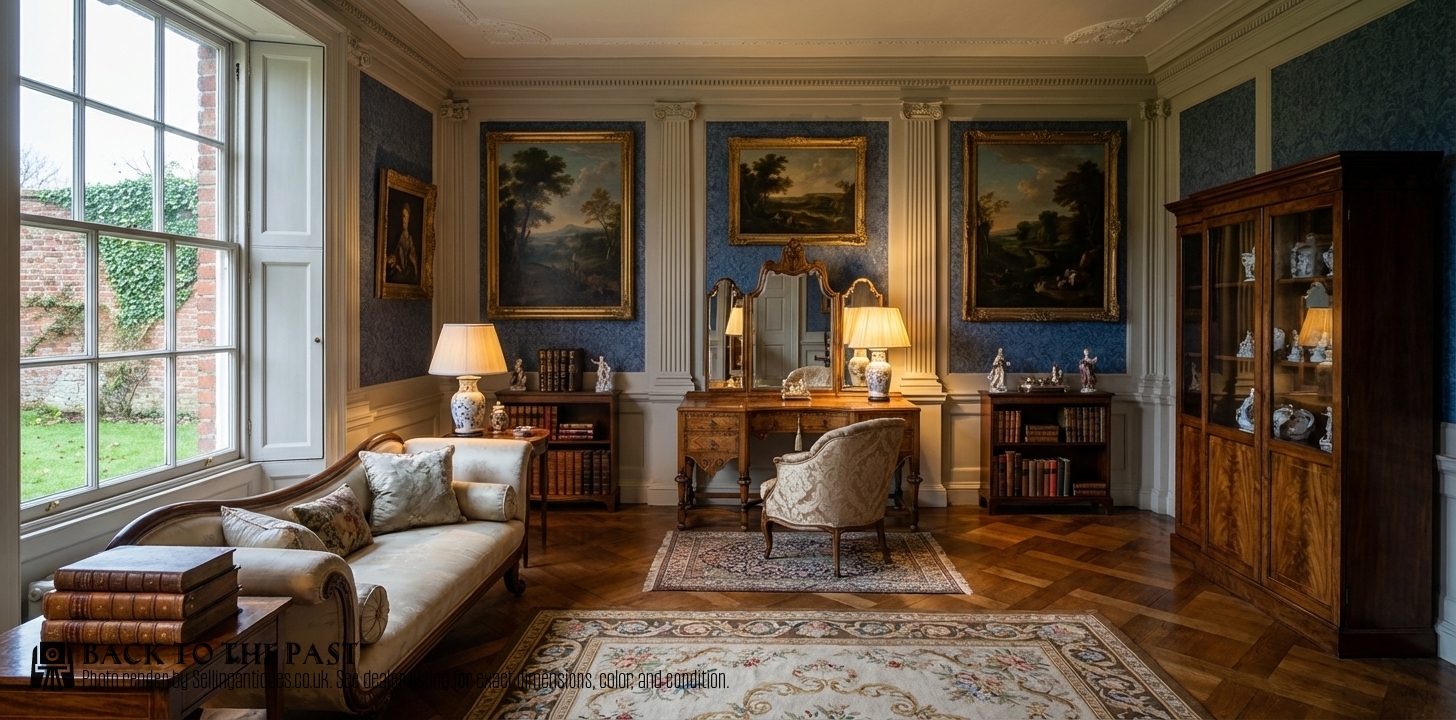
Vintage Makeup Desk
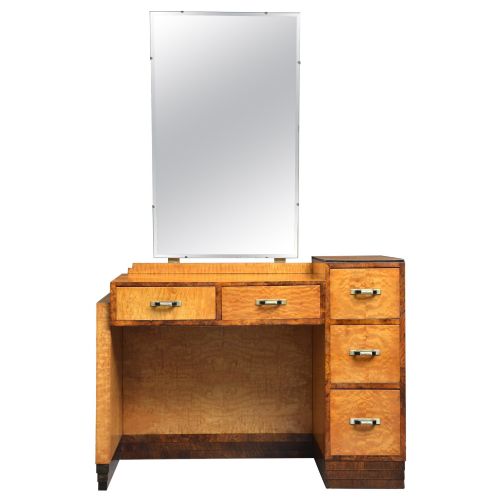
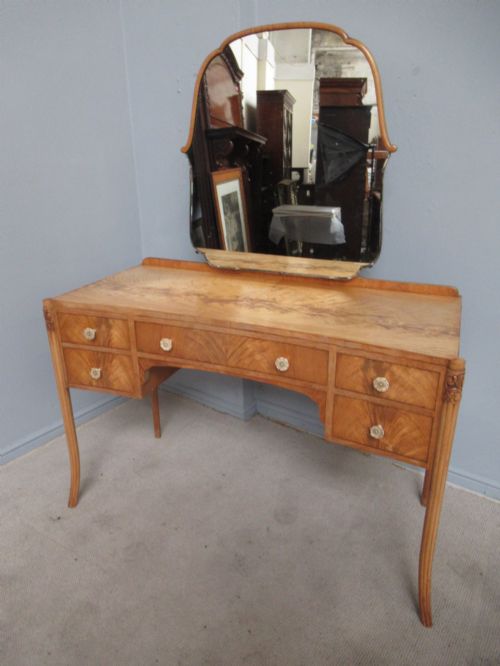
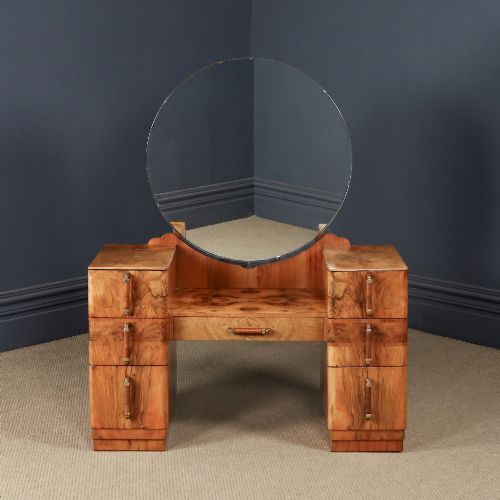
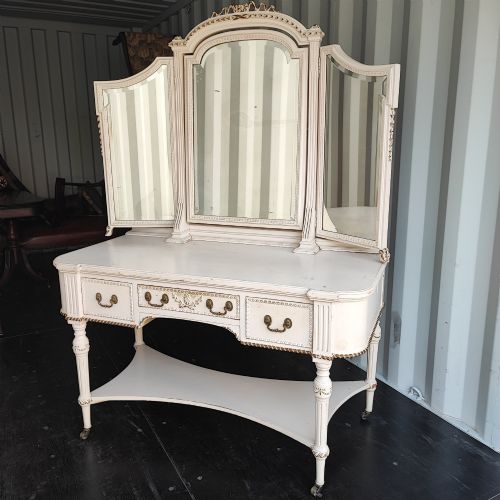
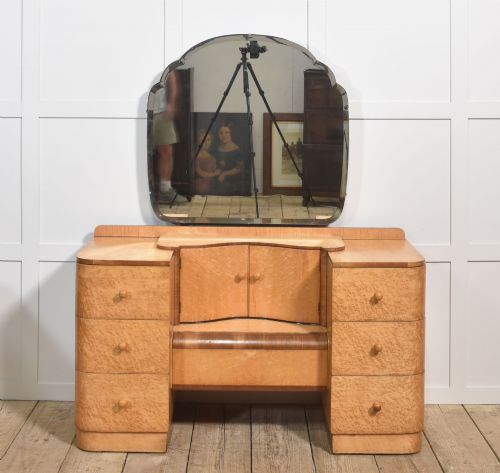
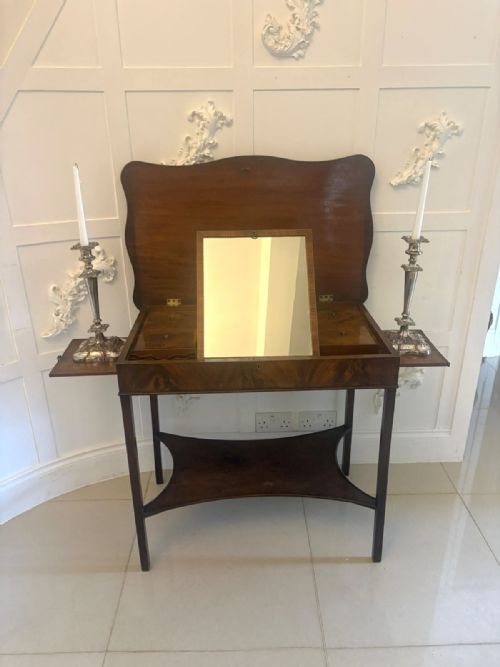
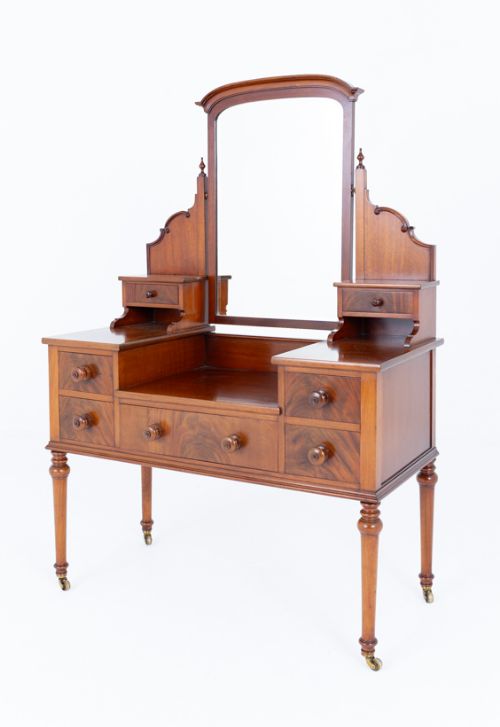
A vintage makeup desk encompasses traditional dressing tables and vanity pieces originating from periods spanning the Victorian and Edwardian eras through to the 1930s. Buyers searching for a vintage makeup desk encounter diverse stylistic interpretations, from substantial mahogany pedestal forms to sleek Art Deco designs.
Origins include English workshops and major cabinet makers, utilising forms designed specifically for personal grooming and cosmetic storage. These furniture pieces function equally well in contemporary interiors as dedicated vanity stations or focal bedroom desks.
How they were made
Cabinet makers utilised dense native and exotic timbers including mahogany, walnut, burr walnut, maple, and satinwood, frequently highlighting natural grain patterns through bookmatching and careful veneer work. Structural elements incorporated supportive secondary timbers while visible surfaces received hand-rubbed polish.
Decorative techniques relied on inlaid stringing, carved mahogany motifs, applied brass fittings, and painted Chinoiserie lacquerwork. Mirror glass was bevelled and set into adjustable frames supported by pivoted brackets or integrated superstructure backs.
Some dressing tables hide secret compartments behind miniature trinket drawers for safely stowing midnight letters.
What varies in quality
The distinction between standard examples and superior pieces rests on the selection of figured veneers and the precision of cabinet joinery. Master workshops employed symmetrical burr walnut or birdseye maple across primary surfaces, whereas simpler builds relied on plain mahogany or standard oak.
Hardware integration and mirror clarity indicate construction standards, with higher-grade vanity tables featuring original bevelled mirror plates, dovetailed drawer boxes, and intact maker signatures. The refinement of carved details and the preservation of original polished finishes further elevate a piece.
Maples·Betty Joel·Rowley Gallery
The Vintage Makeup Desk Glossary
- Pedestal dressing table
- A vanity desk featuring two banks of drawers flanking a central kneehole space. This form provides substantial storage beneath the main writing or grooming surface.
- Burr walnut
- A wood harvested from the wart-like growths on walnut trees, yielding highly figured, swirling grain patterns. Cabinet makers prized this material for decorative veneer panels.
- Duchess dressing table
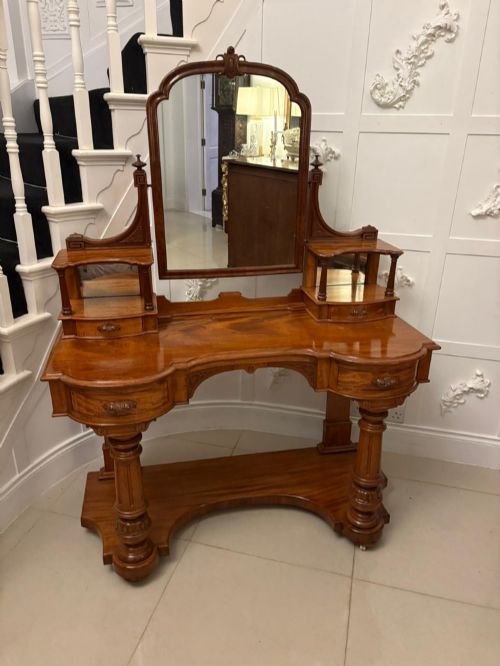
- A large Victorian vanity form characterised by a large central mirror supported by jewellery drawers above a serpentine table base. It represents a focal piece of bedroom furniture.
- Chinoiserie
- A European decorative style emulating Chinese artistic traditions through hand-painted motifs and lacquered surfaces. It appears on select dressing tables from the early twentieth century.
- Triple mirror
- An assembly comprising a large central mirror flanked by two smaller adjustable side plates. This arrangement allows the user to view angles from multiple perspectives.
Vintage Makeup Desk: Frequently Asked Questions
How do I identify an Art Deco vanity?
Art Deco vanity tables typically feature geometric silhouettes, symmetrical waterfall edges, and exotic light veneers such as birdseye maple or figured walnut. They often incorporate circular or shield-shaped mirrors without heavy carved ornamentation.
Such pieces date from the 1920s and 1930s, prioritizing streamlined modernism over the ornate flourishes of preceding Victorian and Edwardian decades.
What is a Duchess dressing table?
A Duchess dressing table is a grand Victorian furniture form distinguished by a towering central mirror flanked by small trinket drawers. The lower section provides a wide surface and additional drawer capacity.
These substantial tables require adequate wall space and serve as decorative centrepieces within period bedroom schemes.
Are mirrors original to these desks?
Many vintage dressing tables retain their original bevelled mirror plates, which often display subtle foxing or light age spots. Replacements are sometimes fitted when old glass has deteriorated beyond practical use.
Examining the mirror backing, mounting brackets, and silvering wear helps determine whether the glass has remained with the frame since manufacture.
How do I care for antique wood surfaces?
Antique wood finishes respond best to occasional applications of traditional beeswax, avoiding modern silicone sprays or harsh chemical cleaners. Direct sunlight and excessive humidity should be avoided to prevent veneer lifting or timber splitting.
Routine dusting with a soft cloth preserves the natural lustre of mahogany, walnut, and satinwood polish over time.