






Vintage Mahogany Wine Chest
These heavy timber boxes designed to hold bottles are vintage mahogany wine chest examples built to keep a gentleman's stock secure and cool.
Vintage Mahogany Wine Chest
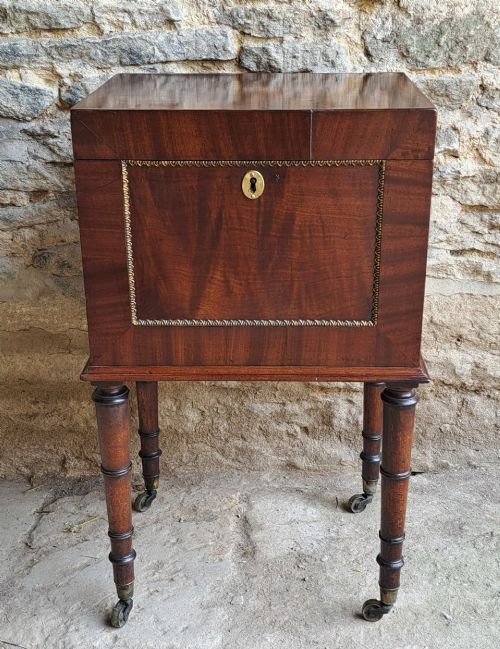
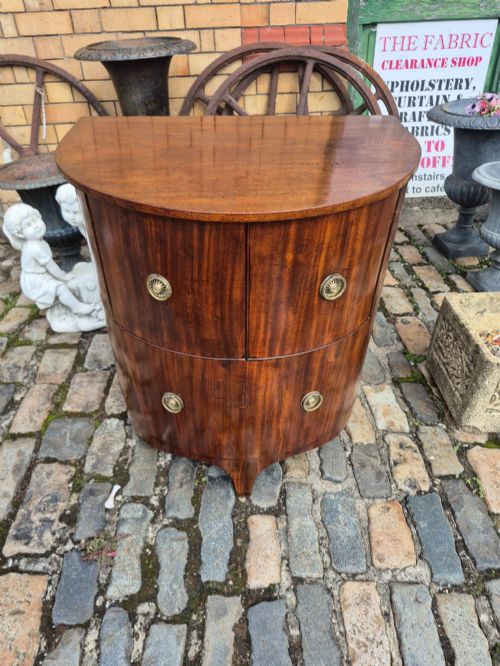
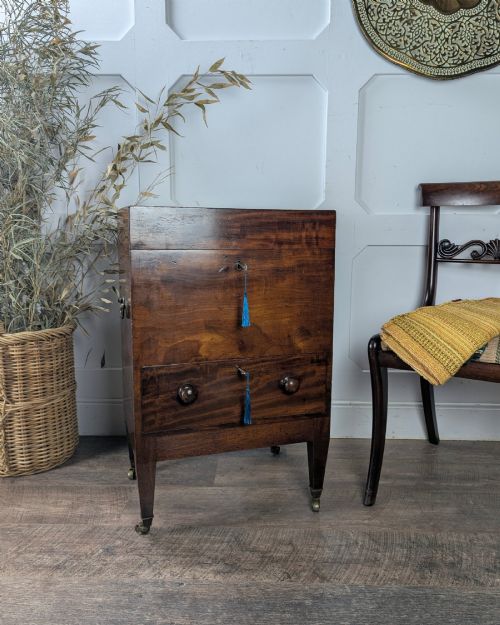
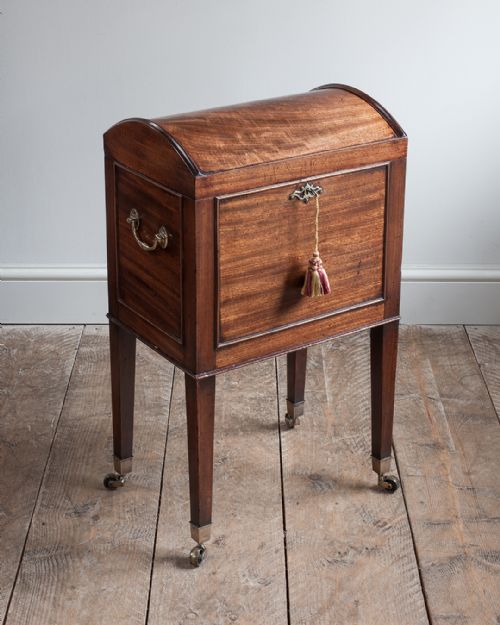
A vintage mahogany wine chest takes the form of a cellarette or wine cooler, designed to store bottles safely within the dining room or parlour. These pieces date across the Georgian, Regency, and Victorian eras, carrying the substantial proportions characteristic of those periods.
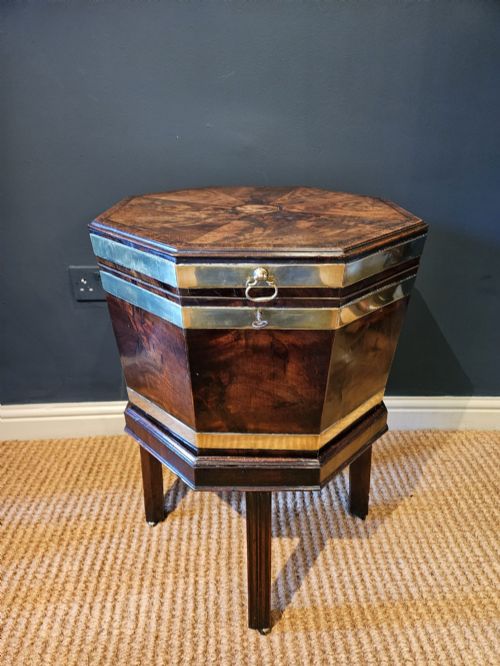
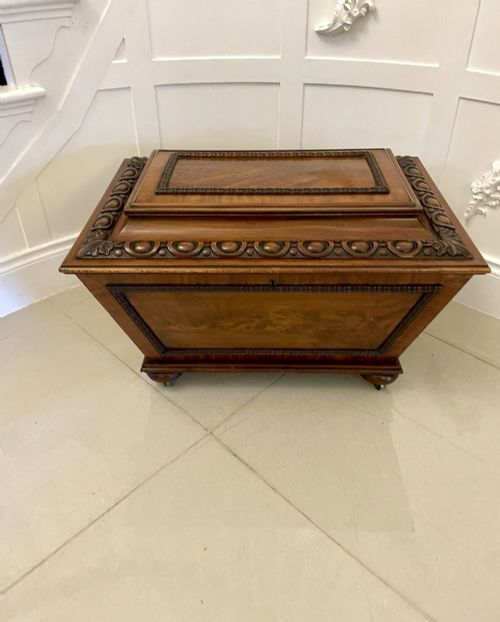
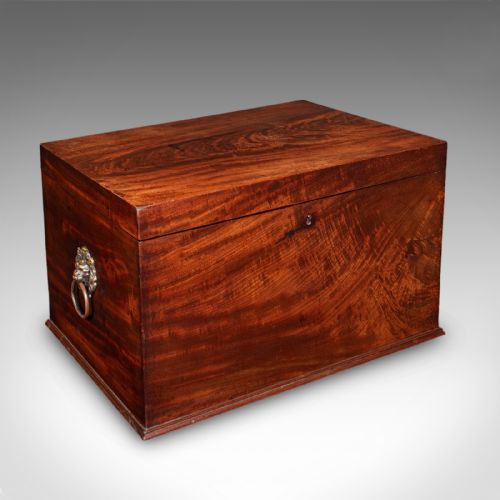
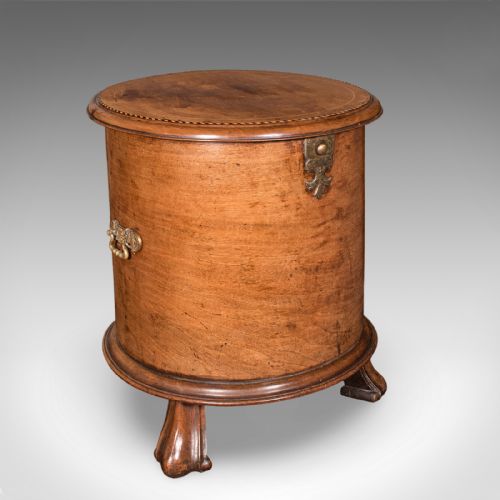
The objects appear as rectangular boxes, oval vessels, and sarcophagus forms, often fitted with internal partitions or metal linings to hold bottles upright. Examples stretch from the eighteenth century through to the Edwardian period, utilising mahogany as the primary timber alongside padouk and walnut.
Most items meeting the search for a vintage mahogany wine chest on this page originate from English and Scottish workshops, with occasional Irish and Anglo-Indian variants. These pieces reflect the dining customs of past centuries where wine was stored close to the table rather than in a cellar.
Materials and Construction
Cabinet makers constructed these wine chests using solid mahogany and figured veneers, frequently banding the surfaces with satinwood and boxwood inlay. The timber was selected for density and grain pattern, giving the boxes the weight required to hold heavy bottles.
Metal fittings such as brass carrying handles, binding bands, and castors are integrated into the design to manage the considerable weight of the timber and its contents. Linings of metal or lead appeared inside the storage compartments to handle ice and water when the box functioned as a cooler.
Vintage Mahogany Wine Chest Retail Price Guide 2026
Typical asking prices for vintage mahogany wine chest among the pieces listed under this phrase on Sellingantiques today, from the lower quarter to the upper quarter. They describe what is for sale here now, not the wider market.
Listings feature mahogany, satinwood, and padouk across Georgian, Regency, and Victorian periods.
Gradations of Craftsmanship
Quality in these pieces rests upon the selection of timber figures, the precision of the cabinet work, and the integrity of the internal fittings. Finer examples display carefully matched mahogany veneers, subtle string inlay, and robust brass mounts rather than plain timber and plated hardware.
The architectural form dictates the level of detail, from simple box shapes to carved sarcophagus bodies with paw feet and panelled sides. Superior pieces retain their original lead or metal linings and internal bottle dividers, while simpler storage chests rely on plain wooden compartments.
Gillingtons·Freemans of Norwich
The Vintage Mahogany Wine Chest Glossary
- Cellarette
- A lockable container used for storing wine bottles near the dining table. These pieces emerged in the eighteenth century and often featured lead linings to hold ice.
- Sarcophagus
- A monumental chest shape with a domed lid and panelled sides resembling a stone coffin, popular during the Regency period. This form gave makers space for bold carving and heavy brass paw feet.
- Padouk
- A dense tropical hardwood with a reddish brown colour, utilised in Anglo-Indian furniture production. It offered similar durability to mahogany and took a high polish.
- Satinwood
- A light yellowish timber used for contrasting stringing and banding on mahogany furniture. Cabinet makers employed it to create decorative borders on lids and drawer fronts.
- Stringing
- A thin inlay of light or dark wood set flush into the surface of a panel to create geometric borders. This technique defined the edges of many Georgian and Edwardian wine chests.
Vintage Mahogany Wine Chest: Frequently Asked Questions
What is a wine chest?
A wine chest is a specialised storage box designed to hold multiple bottles securely within reach of the dining table. These pieces were built with compartments to prevent bottles from rolling and breaking.
During the eighteenth and nineteenth centuries, servants kept wine at the correct temperature inside these chests using ice or cold water placed in metal linings. They served as both functional utility items and decorative furniture in wealthy dining rooms.
How do I date a wine chest?
Dating relies upon examining the timber, the hardware, and the overarching architectural style of the piece. Georgian examples tend to feature straight lines and bracket feet, while Regency items often adopt the sarcophagus shape with brass paw feet.
Secondary woods inside the chest, such as oak or deal linings, also help determine age. Hand-cut dovetails and original brass carrying handles offer further clues to the decade of manufacture.
Were they lined with lead?
Many period wine coolers and cellarettes included metal linings made of lead or zinc to hold melting ice without damaging the surrounding mahogany timber. These linings were soldered at the corners to ensure they remained watertight.
Some surviving pieces retain these original metal inserts, whereas others have had their linings removed or replaced during past repairs. The presence of a metal liner indicates the piece functioned as an active cooler rather than a dry storage box.
Where should I place it?
These chests suit large dining rooms, hallways, or living spaces where their substantial timber presence can anchor the room. Their flat tops allow them to function as side tables or display surfaces for decorative objects.
Keep these pieces away from direct heat sources and strong sunlight to protect the mahogany veneer and prevent the old timber from drying out or splitting.