



Vintage Mahogany Toilet Glass
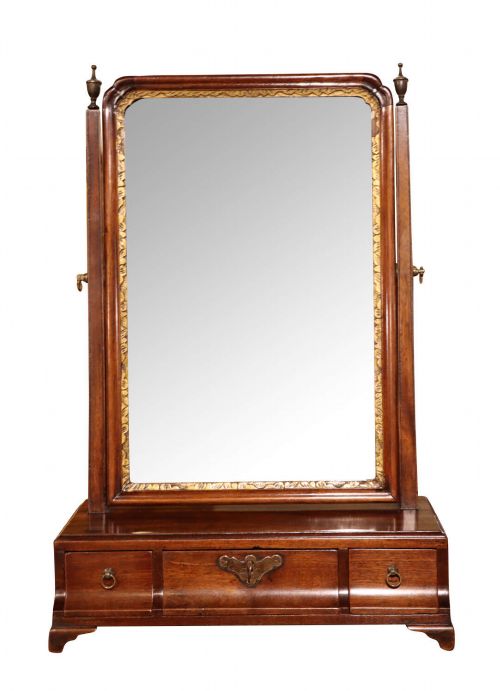
A vintage mahogany toilet glass is a tabletop mirror designed for grooming, combining polished timber and silvered glass to bring period utility and proportion to a room.
Vintage Mahogany Toilet Glass
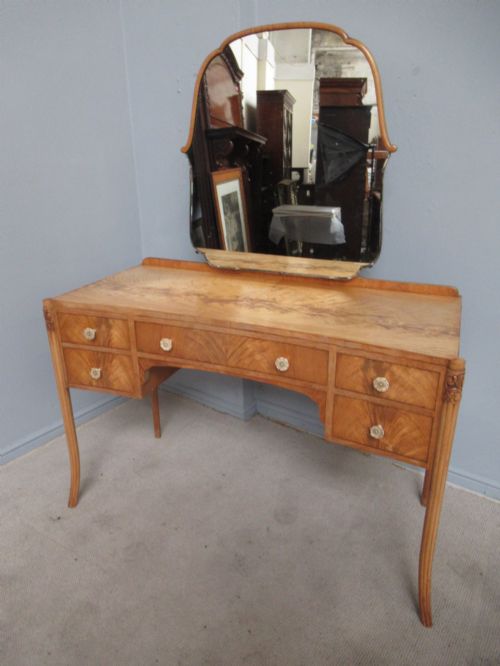
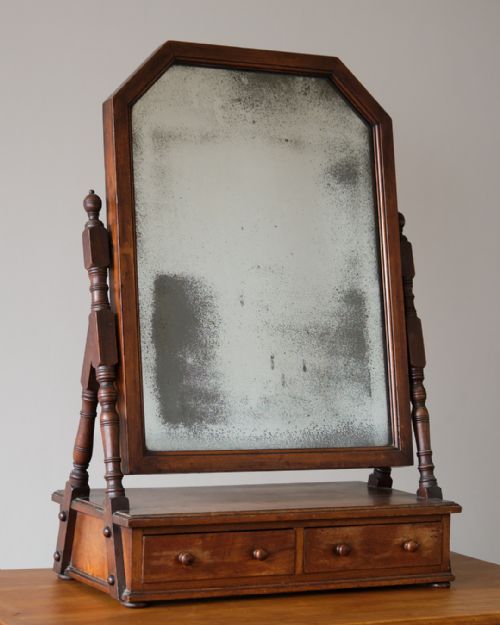
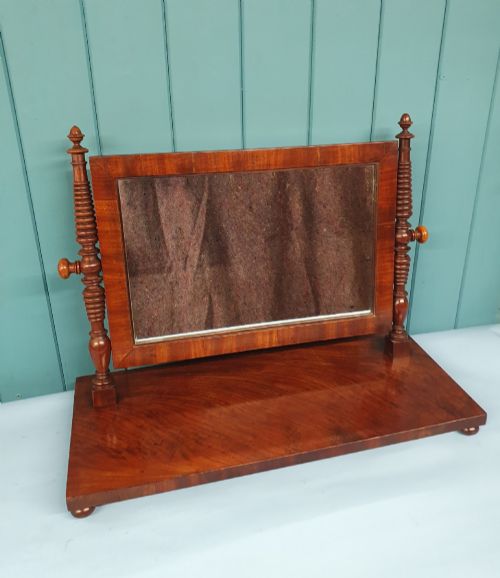
A vintage mahogany toilet glass provides a movable reflection surface mounted on a wooden frame, designed historically to sit upon a chest of drawers or dressing table. When you search for a vintage mahogany toilet glass, you encounter pieces spanning from the eighteenth century through the nineteenth and twentieth centuries, including Georgian, Regency, and Victorian iterations.
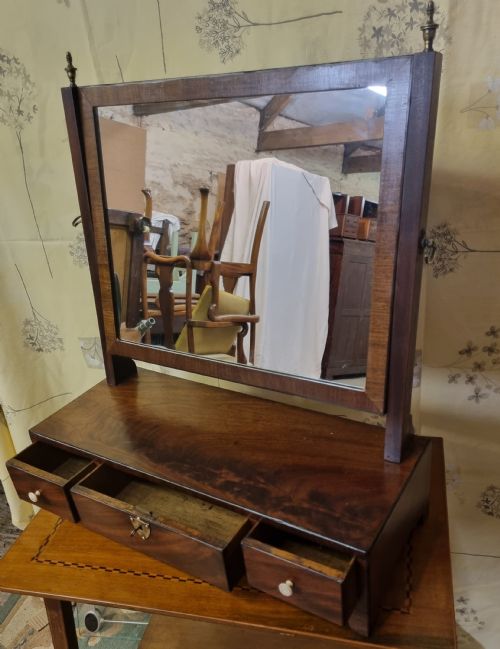
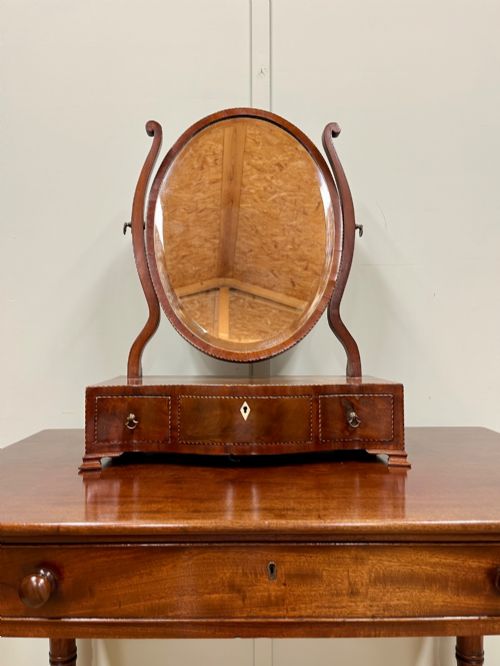
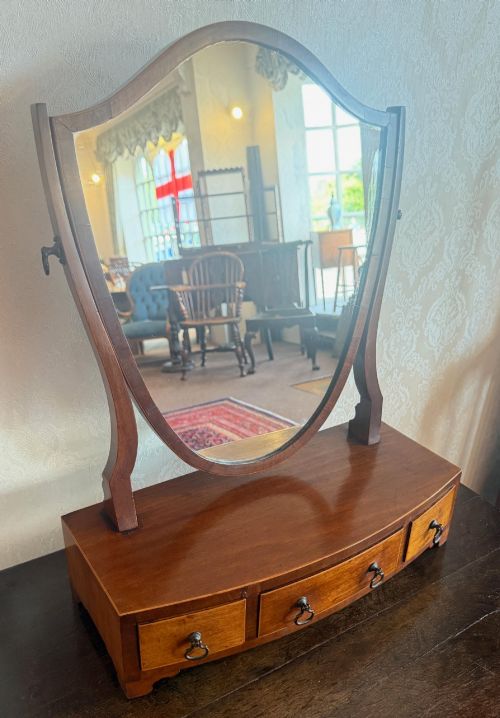
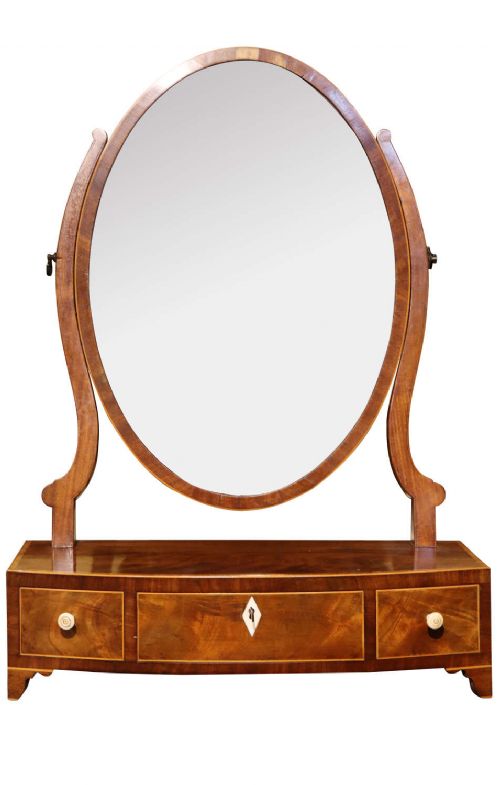
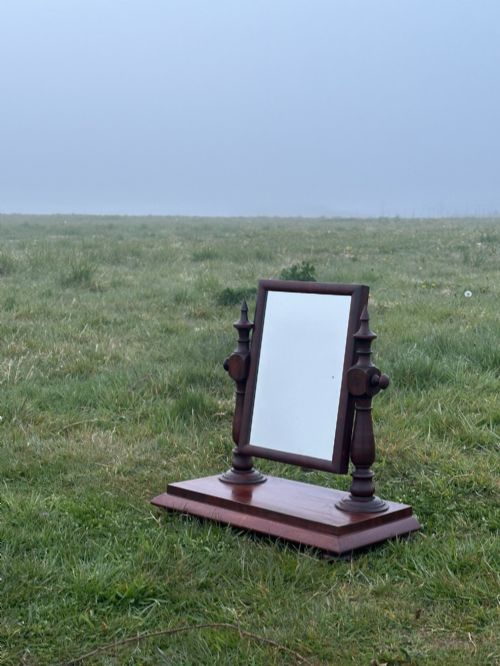
The most common forms on this page include swing mirrors, toilet mirrors, and dressing table mirrors featuring small box bases equipped with drawers. Many examples incorporate adjustable frames held by brass screw pins, allowing the user to tilt the glass to various angles.
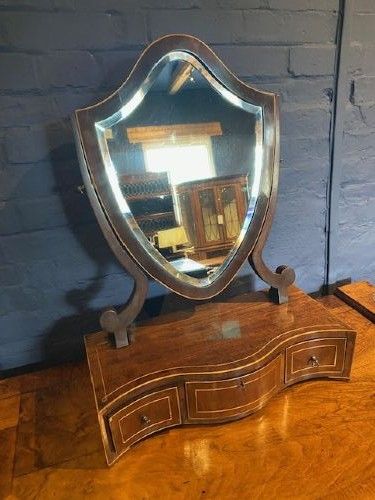
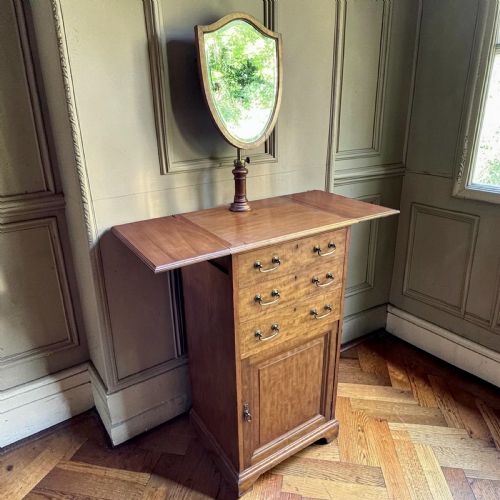
Origins range widely, with regional British variations such as Scottish barrel-fronted examples appearing alongside standard English cabinetwork. Makers and workshops from different eras adapted the fundamental form with serpentine fronts, shield-shaped glasses, or skeleton frames.
Materials and construction
Cabinetmakers constructed these pieces primarily using solid or veneered mahogany, sometimes enhanced with crossbanding, inlay, or secondary timbers like maple and walnut. The timber was selected for its rich grain and warmth, then polished and waxed to a smooth finish.
Metal hardware played an essential structural role, utilising brass for hinges, side arms, articulated candle holders, and drawer pulls. Mirror glass itself was set within moulded wooden frames, sometimes supported by parcel-gilt details or bone escutcheons.
Listings feature mahogany, brass, and mirror glass across periods from the eighteenth-century Georgian era through the Victorian and Edwardian decades.
Defining craftsmanship and distinction
Quality in these mirrors rests upon the precision of the cabinetwork in the base box, particularly the dovetail joints of the drawers and the crispness of any crossbanding or inlay. Superior pieces display thoughtful proportion between the mirror plate and the supporting standards, avoiding heavy or unbalanced frames.
The preservation of the original mirror glass and the integrity of the brass turning on the adjusting arms also distinguish finer examples. Subtle details such as serpentine shaping, carved scrollwork, or secondary woods like maple elevate a piece from simple utility to accomplished furniture.
Heal & Sons·Gillow
The Vintage Mahogany Toilet Glass Glossary
- Toilet glass
- A traditional term for a dressing mirror intended to stand on a table or chest. These pieces were standard bedroom furnishings for personal grooming before fitted wardrobes became common.
- Swing mirror
- A mirror plate hung on pivots between two upright posts so it can tilt. This mechanism allows the user to adjust the angle of reflection.
- Crossbanding
- A border of veneer laid with the grain running perpendicular to the main panel. It frames the surfaces of drawers and tabletops on finer Georgian and Regency furniture.
- Serpentine
- A front contour curving outward in the centre and inward at the sides. This fluid outline requires skilled woodworking to execute cleanly.
- Cheval mirror
- A full-length standing mirror supported by a frame with four legs. Unlike table glasses, these free-standing pieces reflect the entire figure.
Vintage Mahogany Toilet Glass: Frequently Asked Questions
Where should I place a toilet glass?
These mirrors sit naturally on top of a chest of drawers, a sideboard, or a dedicated dressing table. Their compact footprint allows them to bring reflective light into bedrooms and hallways without demanding floor space.
Ensure the surface beneath is level so the base sits firmly without straining the joints. Placing them near a natural light source enhances their original purpose for daily grooming.
How do I date a mahogany mirror?
Dating relies upon observing the construction methods of the base box and the profile of the frame. Georgian pieces often feature fine dovetails and slender uprights, while Victorian examples tend to be heavier with bolder mouldings.
Hardware offers further clues, as brass screw caps, candle arms, and ivory or bone escutcheons shifted in style across the eighteenth and nineteenth centuries.
What is the difference between a toilet mirror and a cheval mirror?
A toilet mirror is designed to sit on a tabletop or cabinet, usually incorporating a small drawer base. A cheval mirror is a tall, free-standing glass that rests on the floor within its own frame.
Both utilise pivoting mechanisms to tilt the glass, but their scale and placement in a room differ entirely.
Can I adjust the mirror angle safely?
Most period mirrors utilise brass side screws or threaded pins that pass through the upright posts into the mirror frame. Tightening or loosening these allows you to set the desired tilt.
Handle the frame with care while adjusting to support the weight and protect the antique wood and glass from sudden strain.