




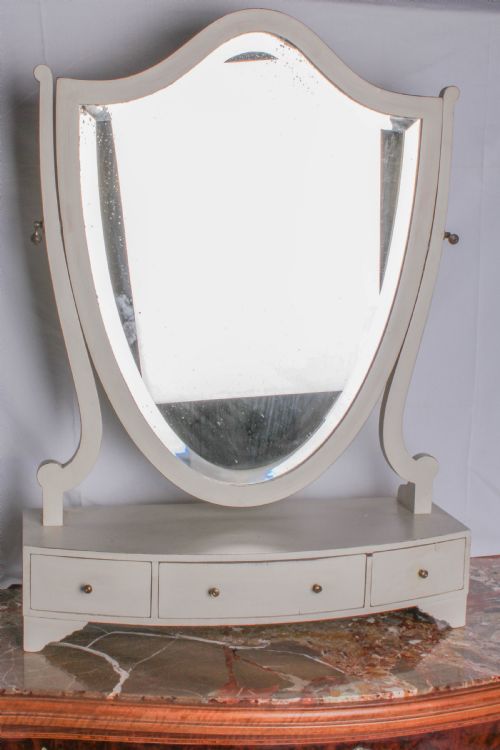

Georgian Shield Swing Mirror
A georgian shield swing mirror brings architectural grace to a dressing table, pivoting smoothly to catch the morning light.
Georgian Shield Swing Mirror
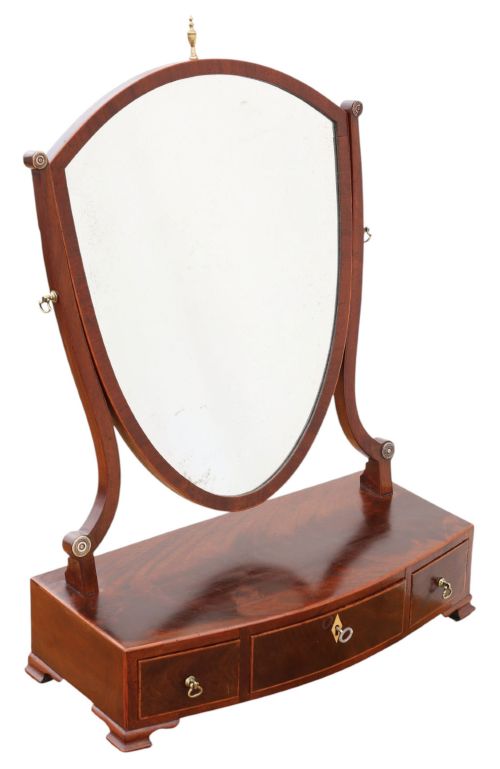
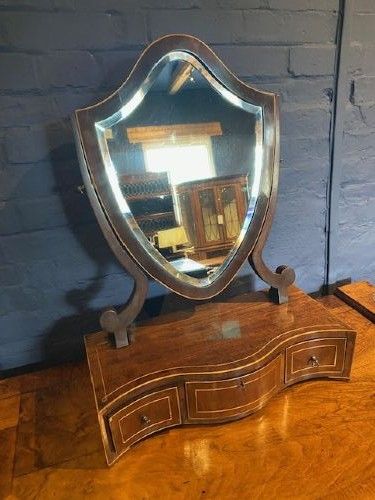
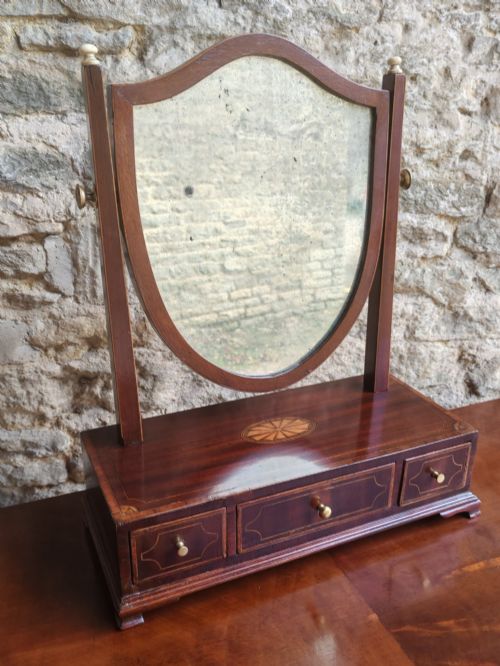
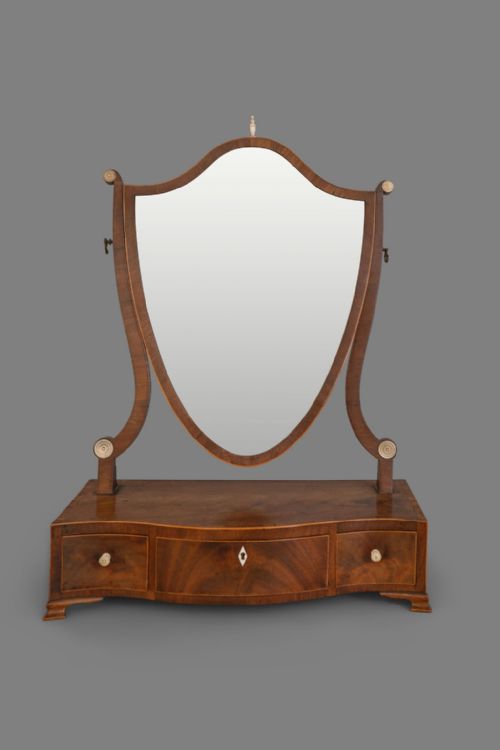
A georgian shield swing mirror sits upon a small box base with drawers, designed to tilt on vertical brass pins set into upright arms. These pieces serve as practical dressing table furniture while adding proportion and balance to a room.
The pieces appearing on this page span the Georgian period, the eighteenth and nineteenth centuries, alongside Edwardian interpretations and Georgian revival examples. The forms range from shield shapes to serpentine and bowfront configurations.
Makers constructed these dressing mirrors in various timber types, employing woods like mahogany, yew, and satinwood, frequently accented with wood inlay. The primary object types include dressing mirrors, toilet mirrors, and table mirrors.
How they were made
Cabinet makers constructed the frames and box bases predominantly using mahogany and yew, often incorporating delicate wood inlay for decorative contrast. The mirror glass itself is mounted within a pivoting shield or shaped wooden frame held by brass adjustment screws.
Support arms rise from the stepped or serpentine base, utilising bone or brass fittings at the pivot points to allow smooth motion. The underlying carcase work relies on traditional joinery methods suited to smaller domestic furniture.
Listings span the eighteenth, nineteenth, and twentieth centuries, featuring mahogany, yew, and satinwood alongside mirror glass and brass.
What varies in quality
The refinement of the base dictates much of the distinction, separating simple box forms from sophisticated serpentine or bowfront designs with multiple functional drawers. Superior examples display carefully chosen timber grain and balanced proportions across the upright supports.
The integration of decorative elements such as wood inlay and original brasswork elevates the piece. Craftsmanship in the cutting of the shield frame and the fit of the pivoting mechanism demonstrate the maker's skill.
The Georgian Shield Swing Mirror Glossary
- Shield mirror
- A dressing glass shaped like a heraldic shield, mounted on upright pivots above a small drawer base. This silhouette defines the classic dressing table glass of the period.
- Toilet mirror
- A smaller mirror designed to sit on a chest or dressing table for grooming. These pieces often incorporate small compartments or drawers for personal items.
- Serpentine
- A front contour that curves outward in the centre and inward at the sides, creating a undulating line. This shape demands high skill from the cabinet maker.
- Bowfront
- A convex curving front profile that projects outward towards the viewer. It softens the corners of the base box.
- Yew
- A dense, figured timber with rich colour variations utilised for select cabinet work. Its distinctive grain patterns make it desirable for decorative furniture.
Georgian Shield Swing Mirror: Frequently Asked Questions
Where did people use these mirrors?
These mirrors stood upon dressing tables, chests of drawers, or dedicated toilet stands in bedrooms and dressing rooms. Their compact footprint allowed them to sit comfortably on top of other furniture.
Owners used them for morning routines, shaving, and arranging wigs or headwear. The adjustable tilt mechanism ensured the glass could be angled to suit the user.
How do I date a swing mirror?
Dating relies on observing the timber species, the contour of the base, and the shape of the mirror frame. Eighteenth-century examples often feature serpentine outlines and fine mahogany.
Later nineteenth-century and Edwardian pieces sometimes adopt simpler geometries or Revival styling. Examining the construction methods inside the drawer boxes also helps confirm the period.
Are the mirror plates original?
Many older mirrors have replacement glass because silvering degrades over long periods. Original plates may show slight clouding, foxing, or minor distortion.
Replacements do not necessarily diminish the decorative value if the frame and base remain period-correct. Collectors look closely at how the glass is secured into the wooden rebate.
How should I clean the wood and glass?
Maintenance requires gentle dusting with a dry, soft cloth to protect the polished wood surfaces. Avoid modern chemical sprays that can strip old wax finishes.
Glass cleaner should be applied sparingly to a cloth rather than sprayed directly onto the mirror, preventing moisture from seeping behind the frame and damaging the backing.