


Regency Mahogany Vanity Glass
Regency mahogany vanity glass brings focused utility and fine timber grain to the dressing table.
Regency Mahogany Vanity Glass
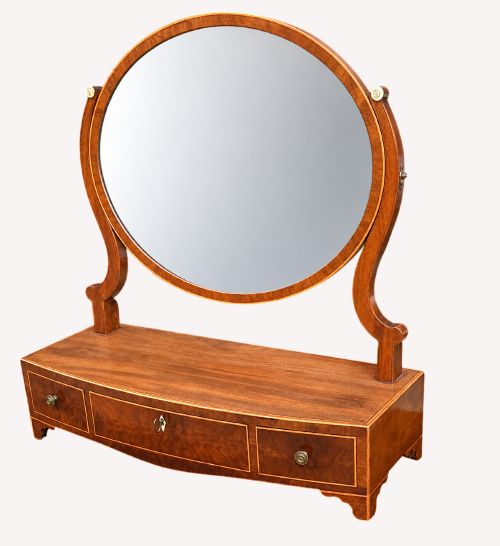
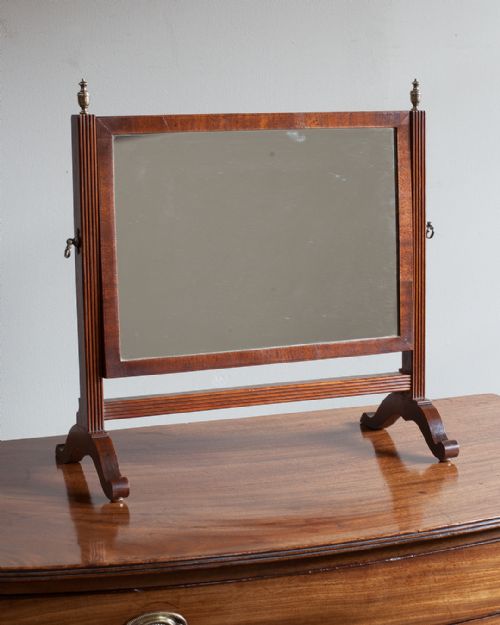
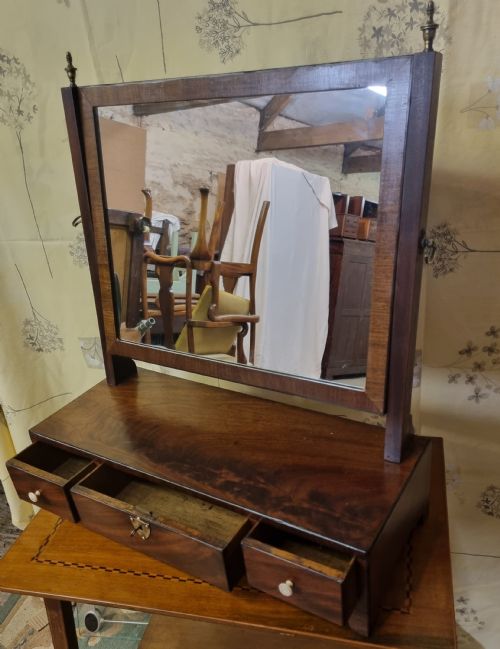
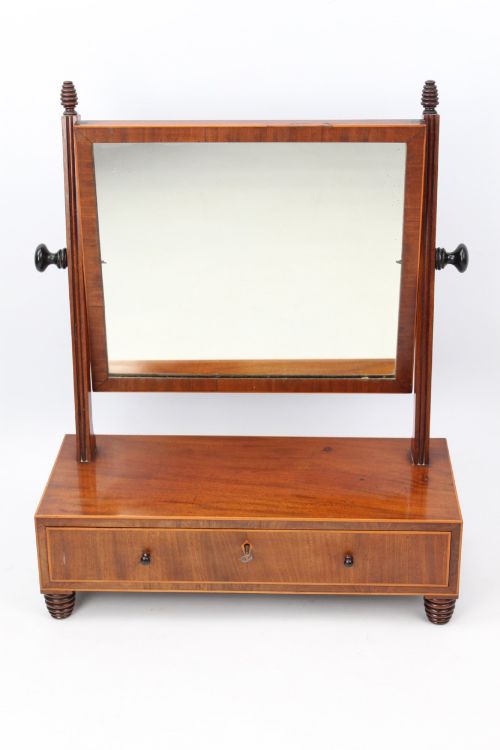
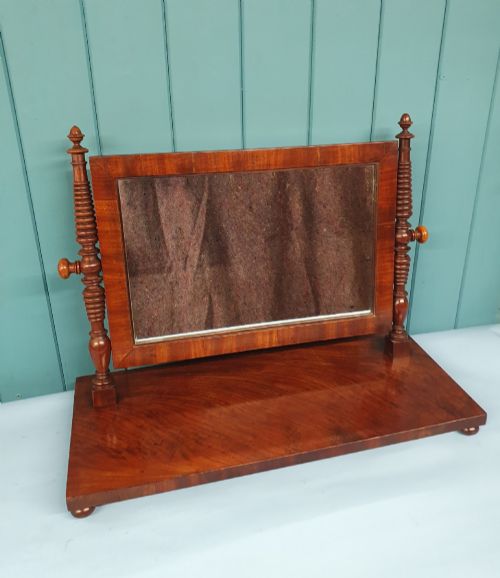
A regency mahogany vanity glass centres on adjustable table mirrors and toilet mirrors designed for personal grooming. These pieces appear frequently as swing mirrors supported by upright frames above small drawer bases.
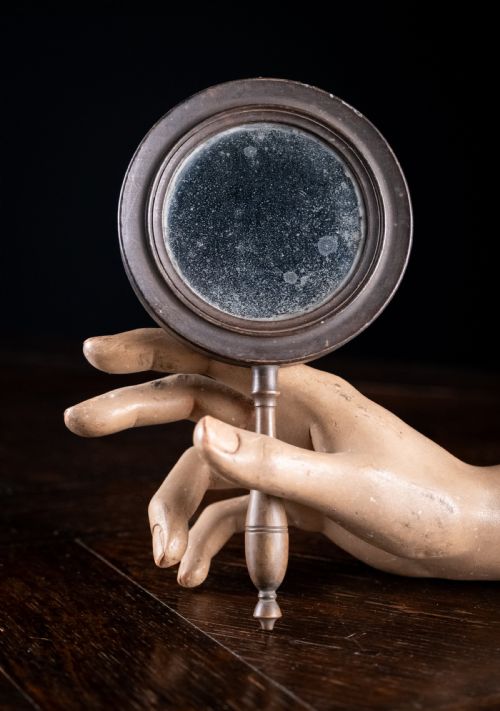
The selection spans periods from the eighteenth century through the nineteenth century, including Georgian, Regency, and Victorian examples. Alongside table mirrors, the listings encompass wall mirrors, hand mirrors, and travelling vanity cases.
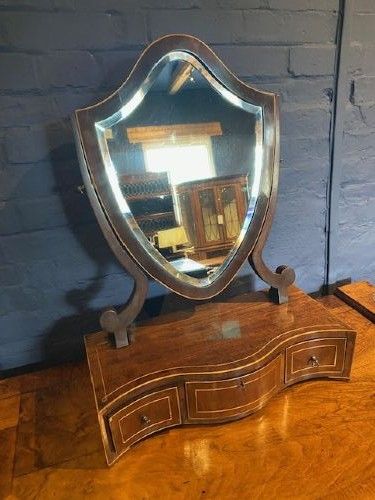
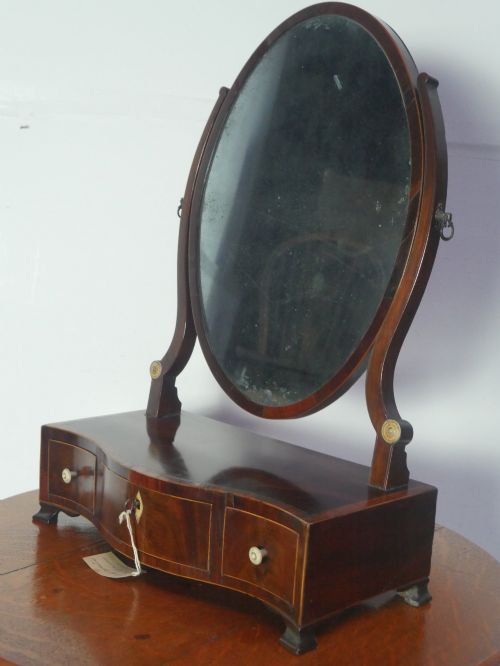
Makers and regional workshops produced diverse formats, from standard bow fronted toilet mirrors to barrel fronted designs and serpentine shapes. Timber selection and inlay work differentiate the regional British output from other styles.
Materials and Construction
Makers utilised solid mahogany and mahogany veneers over secondary timbers to construct the frames and drawer bases. Timber grain was chosen to display rich figuring across the swing mirror surrounds.
Decorative detailing incorporates boxwood inlay, bone, and ebony stringing to accent the edges of the mirror frames and box bases. Brass fittings, including pivot screws and small drawer knobs, provide the mechanical support for the tilting glass.
Reflective surfaces consist of mirror glass mounted within shaped wooden frames, allowing the user to adjust the angle of the glass via side pivots.
The listings show mahogany as the predominant timber, paired with glass and brass across Georgian and Regency periods.
Standards of Quality
Superior examples demonstrate meticulous timber selection with matched mahogany veneers and precise boxwood or ebony inlay. The weight and smoothness of the swivel mechanism also reflect the standard of the workshop.
The construction of the base box, including dovetail joints on the drawers and the thickness of the backing boards, marks the difference between standard production and finer pieces. Original mirror glass and uncompromised brass hardware elevate the integrity of the surviving mirror.
Gillows
The Regency Mahogany Vanity Glass Glossary
- Swing mirror
- A mirror plate mounted on pivots between two upright arms, allowing it to tilt back and forth. This form forms the core of most dressing table and toilet mirror designs.
- Toilet mirror
- A smaller mirror designed to sit upon a chest of drawers or a dedicated dressing table. Many versions include a small box base fitted with drawers for small personal items.
- Bow front
- A curved convex front profile commonly found on the base boxes of Regency dressing mirrors. This shape softens the rectilinear geometry of the table base.
- Boxwood inlay
- Contrasting light wood inserted into recesses in the darker mahogany surface to create geometric borders or decorative motifs. It appears frequently on pieces influenced by Sheraton designs.
- Cheval mirror
- A full length standing mirror supported by a freestanding frame with four legs. This larger format allows a full view of attire rather than just the face and shoulders.
Regency Mahogany Vanity Glass: Frequently Asked Questions
How do I date a mahogany vanity glass?
Dating relies on observing the timber grain, construction joints, and stylistic details such as inlay patterns or brass hardware. Georgian and Regency pieces often feature hand-cut dovetails and lighter proportions compared to later Victorian iterations.
Changes in mirror silvering techniques and backboard construction also help narrow down the period of manufacture.
Where should I place a toilet mirror?
These mirrors sit comfortably on top of chests of drawers, sideboards, or dedicated dressing tables where the height allows for easy grooming. Ensure the surface is level and stable to support the weight of the swing frame.
Keep them away from direct, harsh sunlight to protect the mahogany polish and prevent timber warping over time.
Can the mirror glass be replaced?
While original mirror glass is preferred by collectors for its authenticity and slight imperfections, replacement is possible if the historic glass is broken or deteriorated. A restorer can fit modern or antique-style silvered glass into the existing wooden rabbit groove.
Care should be taken to retain the original frame and pivot hardware during any glass replacement work.