





Vintage Mahogany Lowboy
These vintage mahogany lowboy pieces offer practical surface space and drawers, combining period craftsmanship with traditional elegance for the home.
Vintage Mahogany Lowboy
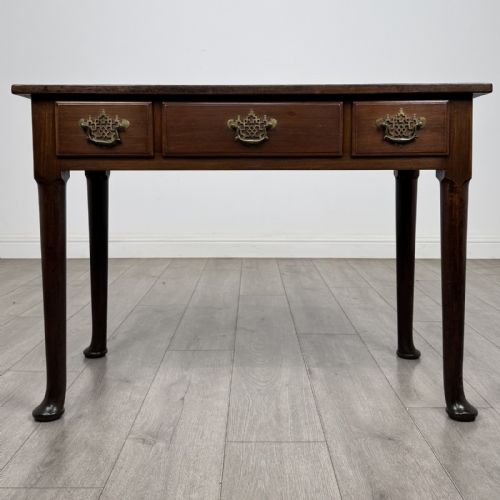
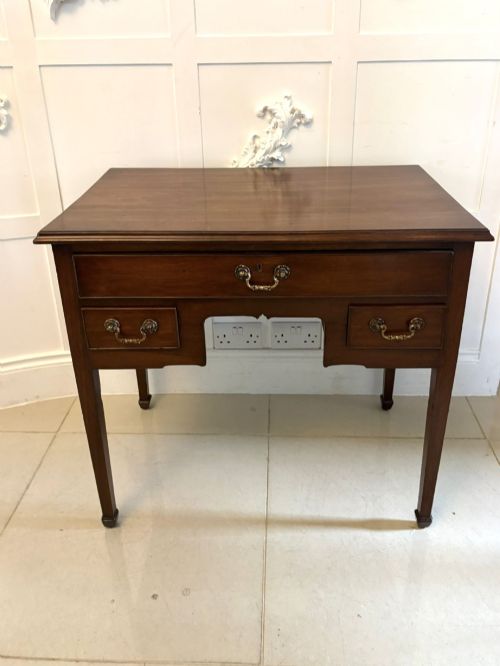
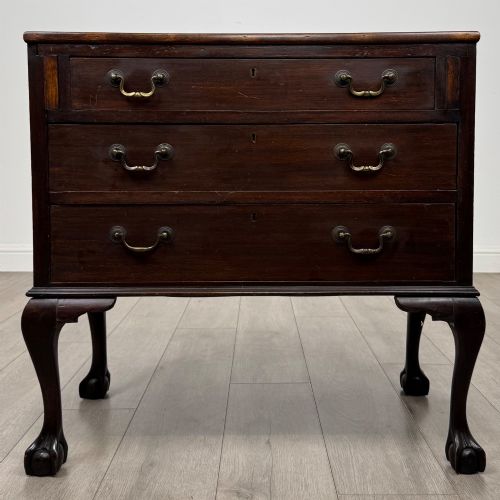
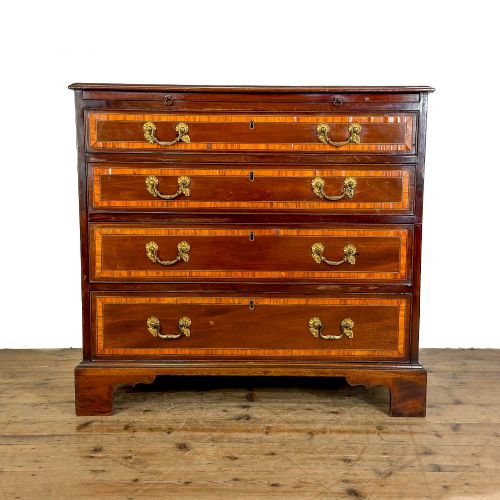
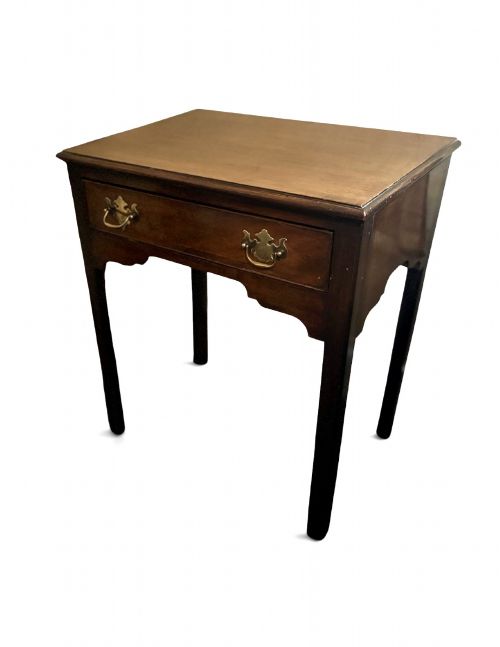
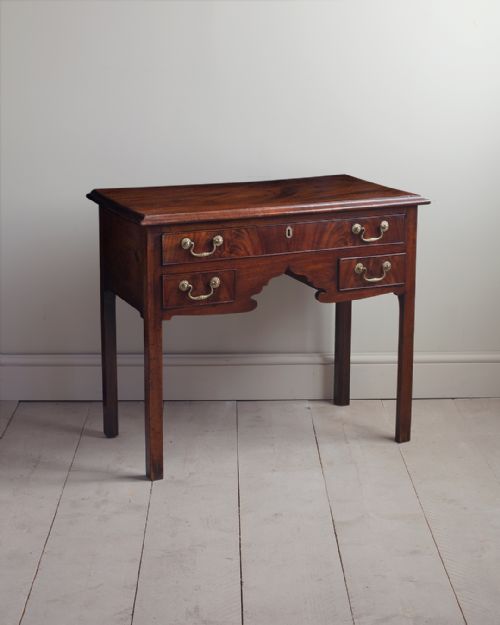
A vintage mahogany lowboy is a compact side table featuring multiple drawers, designed primarily for smaller reception rooms and halls. The pieces appearing here span the eighteenth century up to the nineteen-twenties, reflecting both original period production and later revival styles.
Most examples function as side tables, small hall tables, or compact writing desks. They typically stand on slender legs and offer shallow drawer storage beneath a finished top surface.
Materials and construction methods
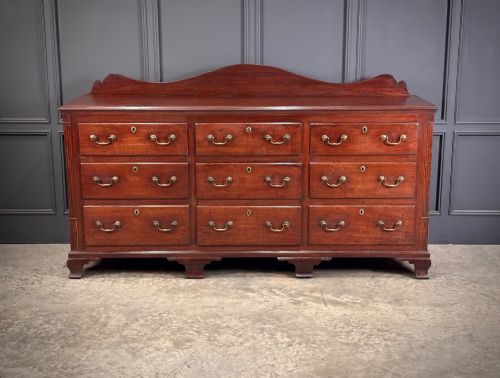
Makers utilised solid mahogany and supporting secondary timbers such as oak, often pairing the dark wood with brass drawer pulls and handles. Certain pieces incorporate subtle satinwood stringing or decorative inlay work to accent the drawer fronts.
Joinery methods rely on traditional drawer construction and frame assembly suited to domestic furniture of the Georgian period and subsequent revival eras.
Vintage Mahogany Lowboy Retail Price Guide 2026
Typical asking prices for vintage mahogany lowboy among the pieces listed under this phrase on Sellingantiques today, from the lower quarter to the upper quarter. They describe what is for sale here now, not the wider market.
One listed lowboy doubles as a reception hall table, ready to catch dropped keys after two centuries of polite society.
Assessing quality and finish
Quality rests upon the selection of the timber grain, the crispness of the drawer mouldings, and the integrity of the original brass hardware. Finer examples display balanced proportions and careful attention to secondary timbers within the drawer linings.
Revival pieces from later periods vary according to how closely they adhere to eighteenth-century proportions and whether the mahogany has retained a deep, natural polish over time.
Whytock & Reid
The Vintage Mahogany Lowboy Glossary
- Lowboy
- A small dressing table or side table featuring a low waist and one or more rows of drawers. This form became popular during the eighteenth century.
- Mahogany
- A durable tropical hardwood valued for its rich reddish-brown colour and stable grain. It served as the primary material for formal English furniture.
- Georgian
- Pertaining to the reigns of the first four British monarchs named George, spanning the eighteenth century. This era defines the classical proportions seen in these tables.
- Stringing
- A narrow inlay of contrasting wood used to create decorative borders on drawer fronts and tabletops. It provides a subtle visual accent.
Vintage Mahogany Lowboy: Frequently Asked Questions
What is a lowboy used for?
A lowboy serves as a versatile side table or small desk in a hallway, reception room, or bedroom. Its surface accommodates lamps or decorative objects while the drawers hold smaller items.
Historically, these tables functioned as compact dressing desks or serving tables before evolving into general furniture for storing letters and personal effects.
How do I date a mahogany lowboy?
Dating relies on examining the construction of the drawer linings, the type of secondary timbers used, and the style of the brass handles. Eighteenth-century pieces exhibit hand-cut joints and distinct patination on the mahogany.
Revival pieces from the nineteen-twenties often display standardised machine-cut joinery and cleaner internal surfaces that distinguish them from earlier examples.
Where should I place a lowboy?
These compact tables fit well in narrow entrance halls, living room alcoves, or behind sofas where full-sized desks or sideboards prove too bulky. Their shallow depth allows them to sit against walls without obstructing pathways.
Pairing the lowboy with a small mirror or a framed picture creates a traditional focal point in a reception space.
What is the difference between Georgian and revival pieces?
Genuine Georgian pieces date from the eighteenth century and show the natural wear, timber shrinkage, and patination accumulated over generations of use. The craftsmanship reflects the tools and working methods of that specific era.
Georgian revival examples date from the early twentieth century, such as the nineteen-twenties, and emulate those earlier aesthetic standards using period-appropriate mahogany.