
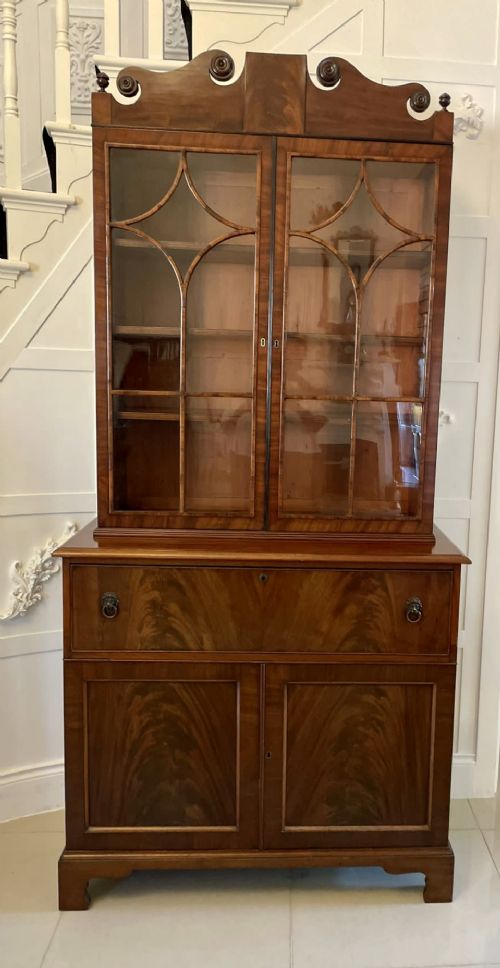
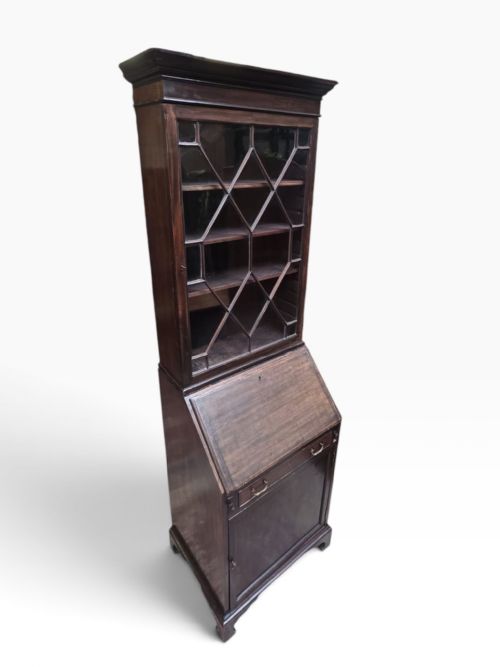
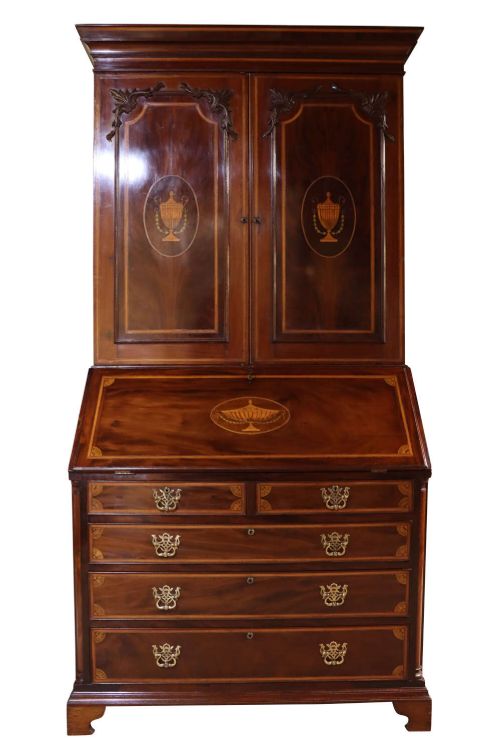
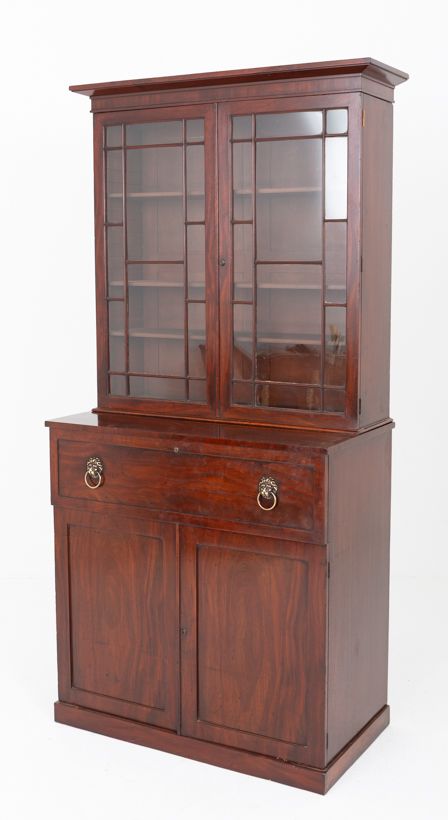
Vintage Mahogany Desk Cabinet
A vintage mahogany desk cabinet brings together timber, brass and fitted drawers for a practical workspace that holds its ground in any room.
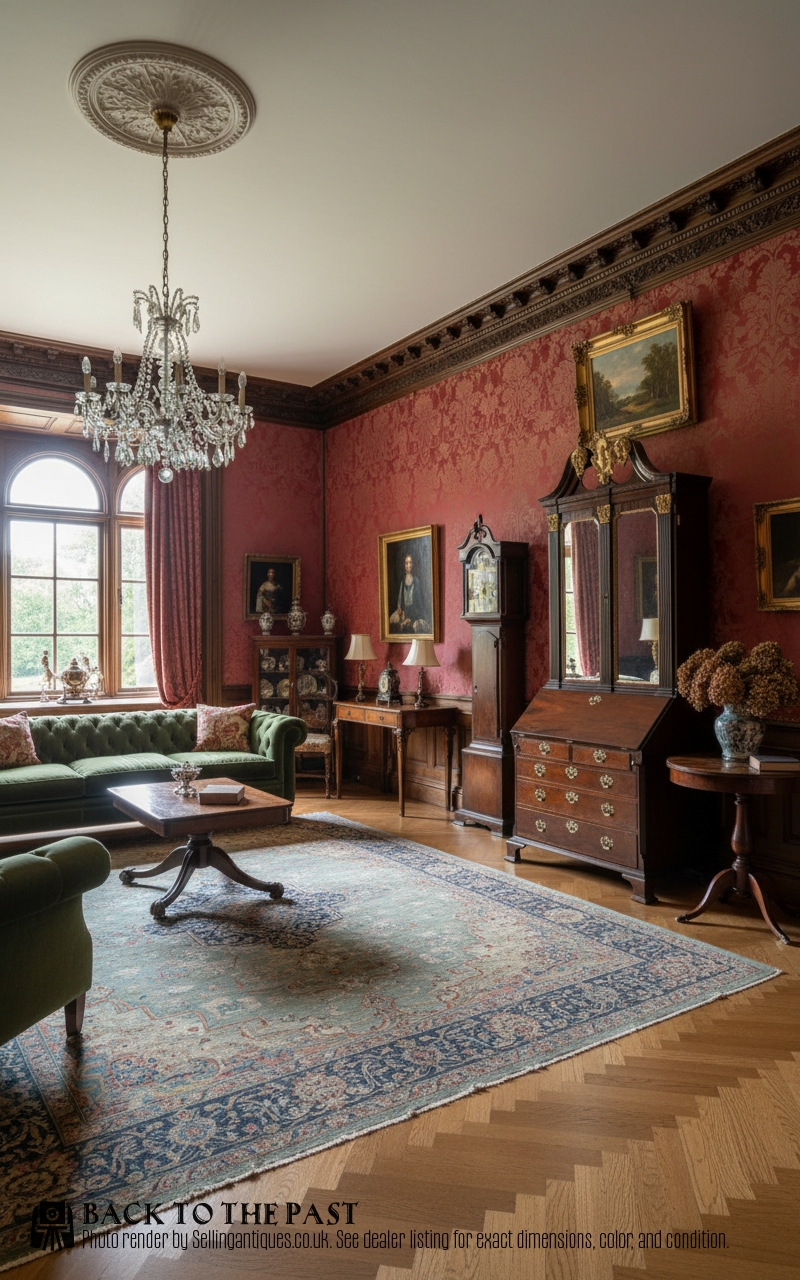
Vintage Mahogany Desk Cabinet
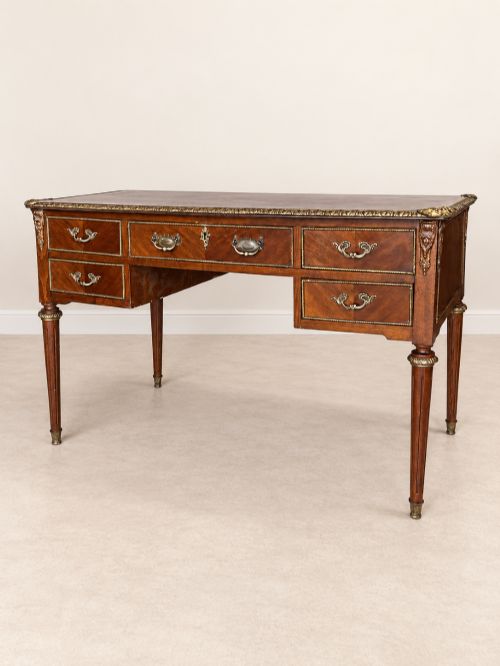
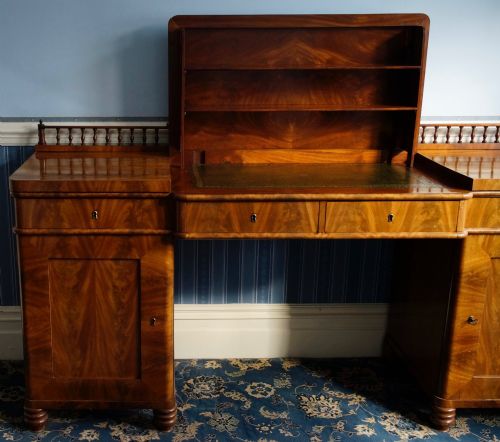
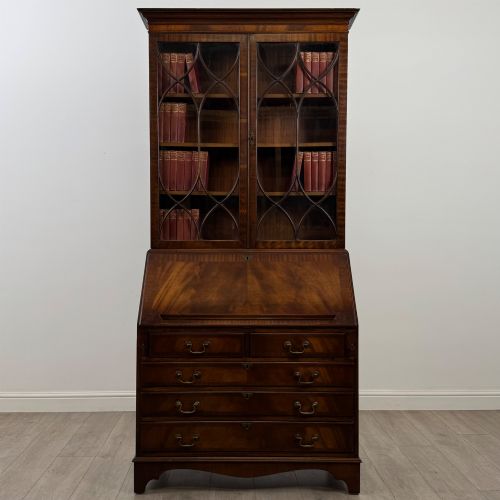
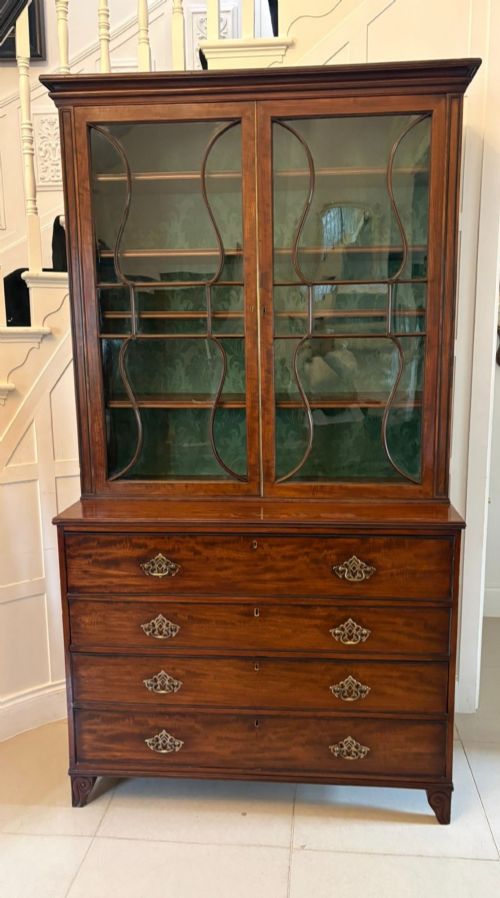
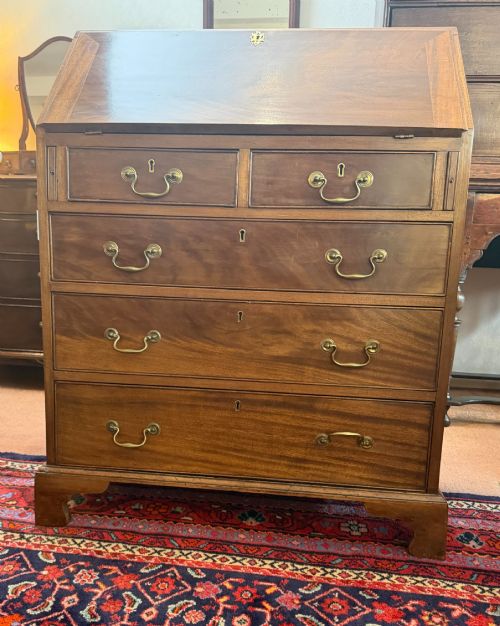
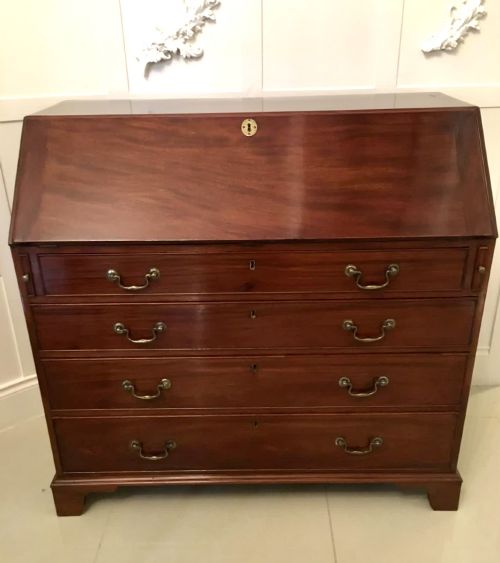
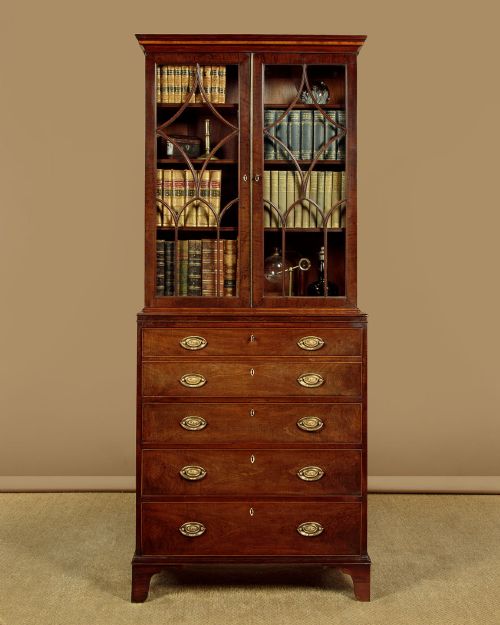
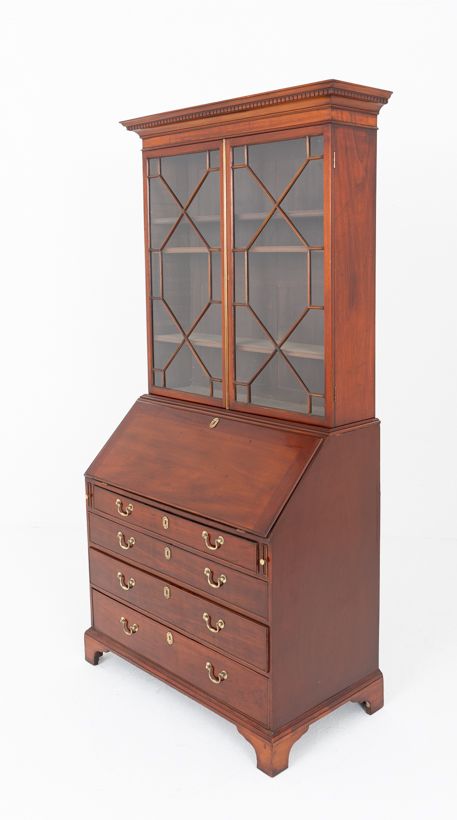
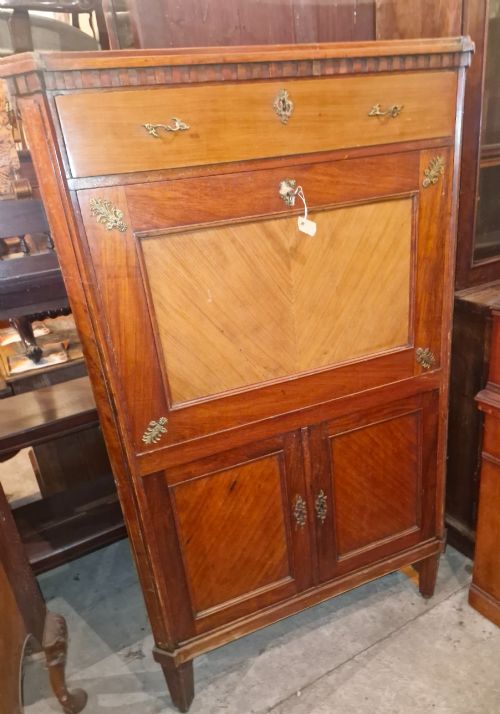
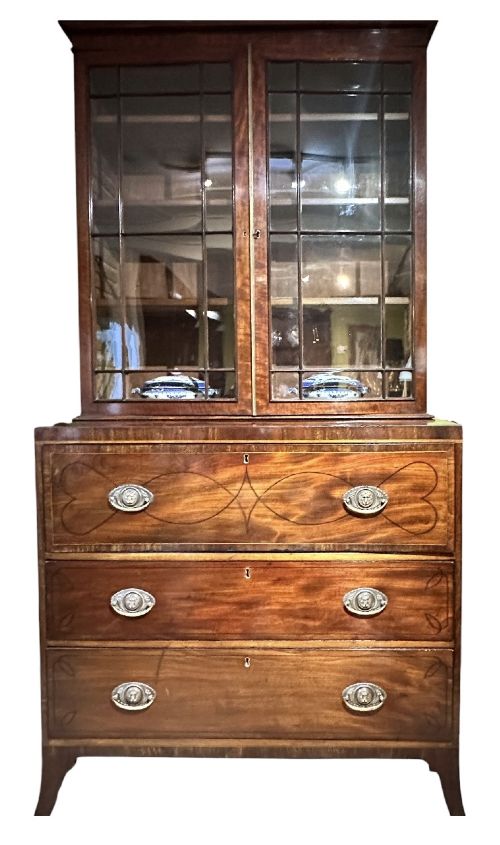
A vintage mahogany desk cabinet combines writing space with enclosed storage, taking forms such as bureau bookcases, secretaire chests and fitted escritoires. These pieces bridge the gap between a display case and a functional workspace.
The selections span periods from the eighteenth century through the Edwardian era and the nineteen-thirties, showing styles from Georgian and Regency to Arts and Crafts. Bureau bookcases and secretaire variants appear most frequently among the offerings.
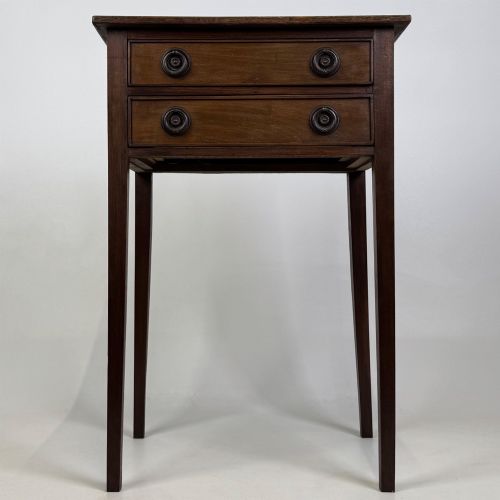
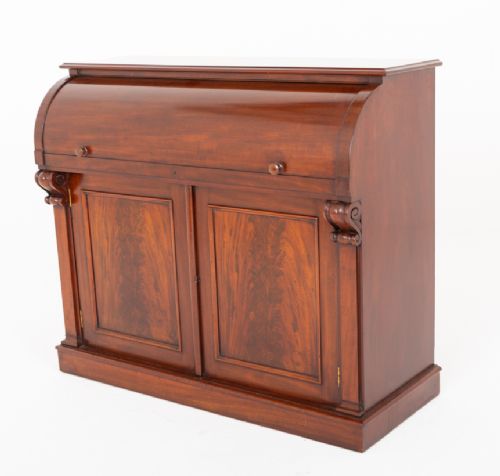
Makers and workshops of the past constructed these items to serve domestic libraries, studies and reception rooms. Buyers encounter everything from tall bureau cabinets to small stationery tidies and cylinder desks.
Materials and construction methods
Makers relied primarily on mahogany, frequently selecting figured timber and flame mahogany veneer to achieve rich grain patterns across large surfaces. Satinwood, boxwood and brass details provided contrast and structural reinforcement.
Glazed doors, drop-front writing surfaces and fitted interiors with secret drawers required precise joinery and hardware integration. Secondary woods and cross-banded veneers appeared alongside hand-carved elements and ormolu mounts.
Listings feature mahogany, flame mahogany veneer, satinwood, boxwood, brass and glass across periods from the eighteenth century to nineteen-thirty.
Distinctions in quality and finish
The tier of a piece rests on the selection of the timber and the crispness of the figure in the mahogany veneer. Finer examples display symmetrical grain matching and subtle inlay work in boxwood or satinwood.
Internal engineering marks the division between standard and superior pieces, particularly in the smooth action of secretaire drawers, pigeonhole arrangements and original brass fittings. The integrity of glazed doors and fitted mirrors further separates workshop output.
Gillows of Lancaster
The Vintage Mahogany Desk Cabinet Glossary
- Secretaire
- A desk or writing cabinet featuring a fall-front drawer that conceals a fitted interior with pigeonholes and small drawers. This mechanism allows a chest or bookcase to function as a writing surface.
- Bureau bookcase
- A piece combining a slant-front or drop-front desk at the base with a glazed or panelled bookcase section above. It served as a multi-purpose storage unit for books and writing materials.
- Flame mahogany
- A veneer cut from timber where the branch meets the trunk, producing a distinctive flame-like ripple in the grain pattern. Cabinet makers used this veneer on prominent drawer fronts and panels.
- Escritoire
- A tall writing cabinet, often French in origin, featuring a drop-front writing flap and internal compartments. These cabinets frequently incorporate marble tops or ormolu mounts.
- Cross-banding
- A decorative border of veneer laid around the perimeter of a tabletop or drawer front with the grain running perpendicular to the centre panel. It frames the primary wood figure.
Vintage Mahogany Desk Cabinet: Frequently Asked Questions
What is a secretaire bookcase?
A secretaire bookcase combines a shelved upper cabinet with a lower section featuring a pull-out writing drawer or drop-front desk. The internal arrangement typically includes small drawers and pigeonholes.
These pieces allowed owners to write letters and store volumes within a single tall item of furniture. They appeared in various forms throughout the eighteenth and nineteenth centuries.
How do I identify a Georgian bureau?
Georgian bureaux feature a slant-front writing flap that opens to reveal fitted interiors with secret compartments and document slots. The base generally incorporates graduated drawers supported on bracket feet.
Construction details such as hand-cut dovetails and solid mahogany boards indicate this period. The proportions remain sturdy and restrained without excessive ornamentation.
What is flame mahogany?
Flame mahogany is a figured veneer harvested from the junction where a branch joins the main tree trunk. The cutting process creates a dramatic, rolling flame effect across the wood surface.
Cabinet makers reserved this striking timber for the most visible exterior panels, such as fall-front desks and drawer fronts. It provides deep visual texture under polished finishes.
Are Edwardian desks different from Georgian ones?
Edwardian desks often incorporate lighter woods, delicate satinwood inlay and cross-banding influenced by revival styles. They tended toward smaller dimensions like workstations, work tables and stationery cabinets.
Georgian pieces rely on heavier solid mahogany proportions and architectural structure. The later Edwardian examples focus on versatility and refined decorative banding.