




Vintage Lustre Decorative Dish
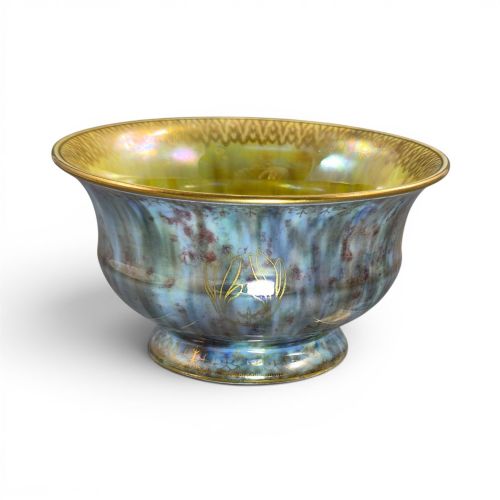
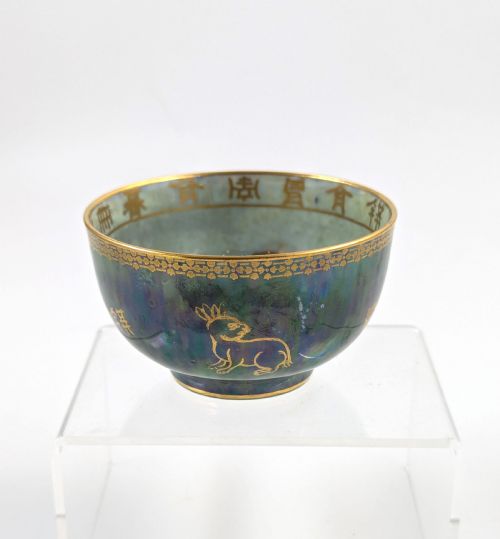
A vintage lustre decorative dish brings iridescent metallic sheen and intricate mythical motifs into a room, capturing the distinct imagination of early twentieth-century ceramic design.
Vintage Lustre Decorative Dish
A vintage lustre decorative dish is primarily represented here by decorative bowls originating from the Edwardian period through the 1920s. These pieces showcase elaborate stylistic movements including Art Nouveau and Art Deco.
Collectors searching this phrase will most frequently encounter bone china and porcelain vessels finished with vibrant metallic glazes. The forms span standard bowls alongside octagonal shapes.
The visual vocabulary relies heavily on fantastical subjects such as dragons, butterflies, and phoenixes rendered in rich colours. Such pieces function primarily as striking ornamental objects rather than utility tableware.
How they were made
The manufacture of these bowls relies on fine bone china and porcelain as the foundational ceramic bodies. Artisans applied specialised metallic glazes and lustre glazes to achieve the signature iridescent surface effects.
Decoration was further enhanced through the application of gold leaf, gilt, and gold gilt accents. These metallic additions were fired to bond permanently with the underlying glaze, creating deep chromatic layers.
Every listing on this page originates from the Edwardian period or the 1920s, employing porcelain or bone china.
What varies in quality
Quality in these decorative dishes rests upon the complexity and precision of the surface decoration. Pieces featuring intricate mythological scenes demonstrate a higher degree of artistic ambition than simple mottled colourways.
The crispness of the gilt work and the depth of the iridescent glaze separation dictate the visual success of the piece. Superior examples maintain sharp definition across elaborate dragon or butterfly motifs without blurring in the kiln.
Daisy Makeig-Jones·James Hodgkiss
The Vintage Lustre Decorative Dish Glossary
- Lustre Glaze
- A type of pottery glaze containing metallic salts that produce an iridescent, pearl-like sheen upon firing. This technique reflects light differently depending on the viewing angle.
- Bone China
- A type of soft-paste porcelain composed of bone ash, feldspathic material, and kaolin. It provides a strong, translucent body suitable for detailed painted decoration.
- Gilt
- A thin layer of gold applied to the surface of the ceramic for ornamentation. It highlights specific design elements such as borders and mythical creatures.
- Octagonal Bowl
- A vessel featuring eight distinct sides rather than a standard circular profile. This geometric form alters how the lustre glaze catches ambient light.
Vintage Lustre Decorative Dish: Frequently Asked Questions
What periods do these lustre bowls come from?
The pieces available here date from the Edwardian era through the 1920s.
They reflect the artistic shifts of the early twentieth century, spanning both Art Nouveau and Art Deco aesthetics.
What materials are used in these dishes?
The primary ceramic bodies are porcelain and bone china.
Surfaces are finished with metallic and lustre glazes, often augmented by gold leaf and gilt details.
How were these decorative bowls used?
These items were created primarily for display and ornamental purposes within the home.
Their complex iridescent glazes and detailed mythological motifs made them centrepieces rather than functional tableware.
What motifs appear on these pieces?
Common decorative subjects include dragons, phoenixes, and butterflies.
These are often set against intricate patterned backgrounds or mottled orange and green grounds.