






Vintage London Architectural Artwork
Vintage london architectural artwork captures the capital through watercolours, etchings and oil paintings that record centuries of urban change.
Vintage London Architectural Artwork
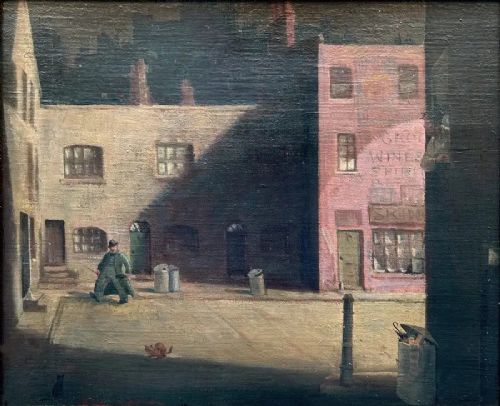
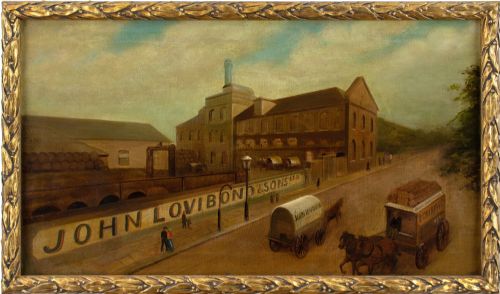
Vintage london architectural artwork comprises framed prints, watercolours, and oil paintings depicting notable capital streetscapes, monuments, and buildings. These works span periods from Georgian and Victorian times through to the early twentieth century.
Buyers will encounter hand-coloured etchings of bridges alongside detailed watercolours of public squares, parks, and institutional facades. Common subjects include specific locations such as Leicester Square, Blackfriars Bridge, and the Palm House at Kew Gardens.
The selection ranges from early nineteenth-century engravings to works produced in the nineteen-thirties, reflecting diverse interpretations of London's changing built environment by British artists and the English School.
Assessing quality
Quality rests upon the precision of the draughtsmanship and the artist's ability to convey architectural scale and perspective accurately. Stronger examples demonstrate deft handling of medium, whether in the crisp execution of a drypoint etching or the controlled washes of a watercolour.
The significance of the subject matter and the clarity of provenance also influence the standing of a piece. Works by named artists with direct historical ties to London subjects hold distinct visual and documentary weight.
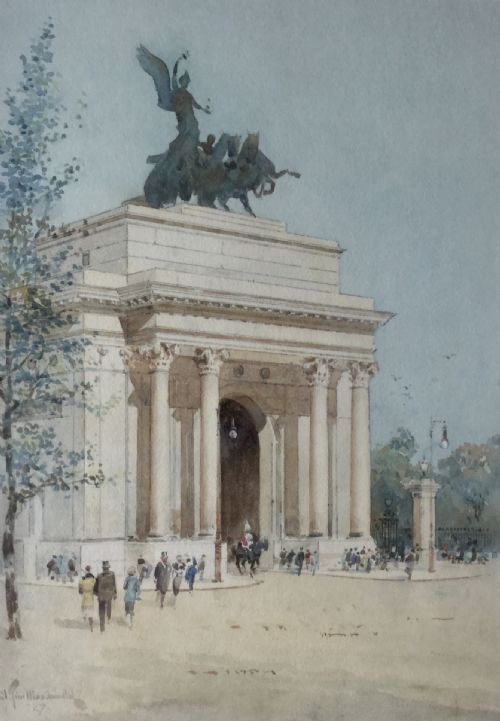
The selection includes depictions of London landmarks such as the Foreign Office, Wellington Arch, and Cannon Street Station.
Charles James Lauder·Edgar J Maybery·Rowland Henry Hill·Beatrice Parsons·Henry J Neave
The Vintage London Architectural Artwork Glossary
- Etching
- A printmaking process where lines are bitten into a metal plate with acid before being inked and pressed onto paper. This technique allows for fine, intricate detail in architectural lines.
- Drypoint
- An intaglio printmaking method where an image is scratched directly onto a metal plate with a sharp needle. It creates characteristic soft, velvety burrs along the printed lines.
- Watercolour
- A paint consisting of pigment suspended in a water-soluble vehicle, applied to paper. It permits transparent washes that capture atmospheric effects of light and weather.
- Engraving
- A method of cutting a design into a hard material, such as metal or wood, to create a printing block. The resulting impressions show high precision and sharp contours.
- Post-Impressionism
- An art movement developing roughly from the eighteen-eighties that rejected naturalistic depiction in favour of expressive forms. It informs some twentieth-century interpretations of urban scenes.
Vintage London Architectural Artwork: Frequently Asked Questions
What periods do these artworks cover?
The pieces span from the Georgian era around eighteen hundred through Victorian times and into the nineteen-thirties. Later works extend into the mid-twentieth century, documenting structural changes across the capital.
This broad chronological range allows collectors to trace shifting artistic styles, from topographical engravings to early twentieth-century realism and post-impressionist interpretations.
Where should I hang these pictures?
These framed prints and paintings suit studies, hallways, and living spaces where their fine details can be appreciated at close range. Because many works utilise paper and watercolour, positioning them away from direct sunlight protects the pigments from fading.
Pairing pieces of similar periods or framing styles creates a cohesive display reflecting London's historical streetscapes.
How do I identify different print types?
Etchings and engravings display precise inked lines under magnification, with engravings showing clean incisions and etchings revealing subtle tonal variations from acid biting. Drypoint prints exhibit a characteristic rich burr along the lines where the metal was displaced.
Watercolours and oil paintings are distinguished by their surface textures, with paint layers sitting visibly upon paper or wood panels rather than resting within incised grooves.