

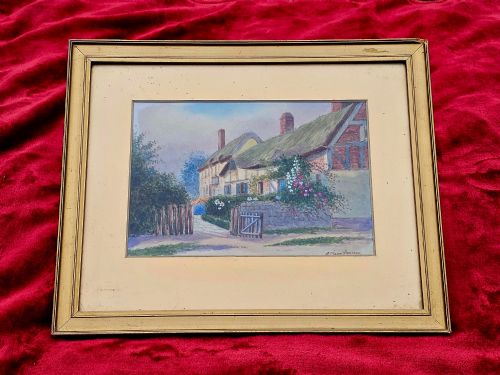
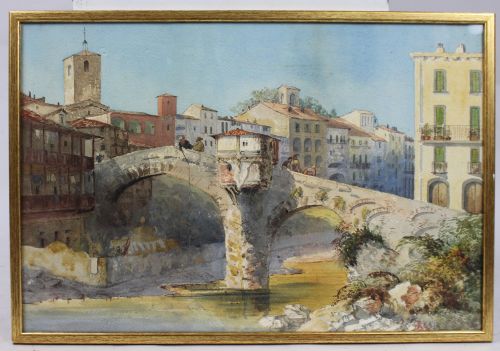
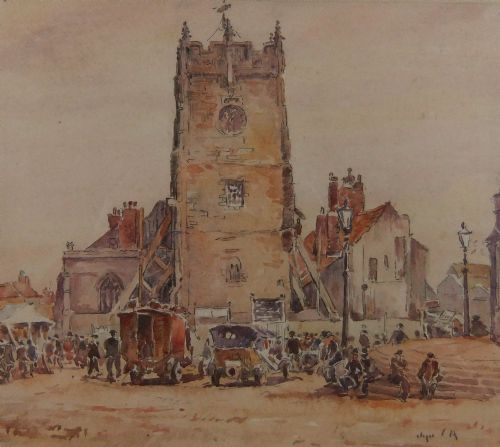
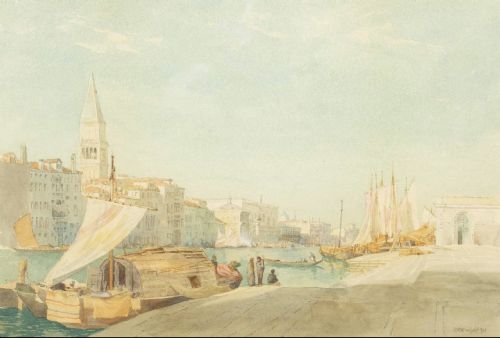
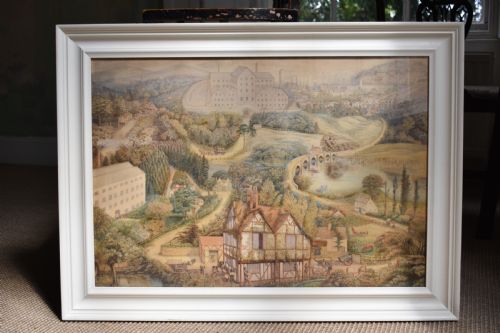
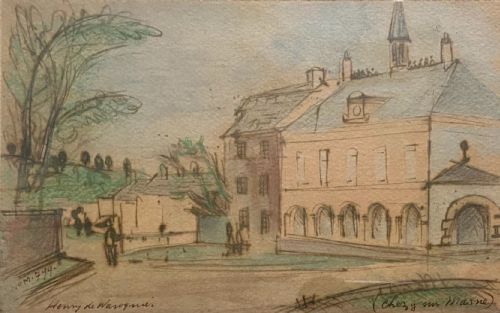
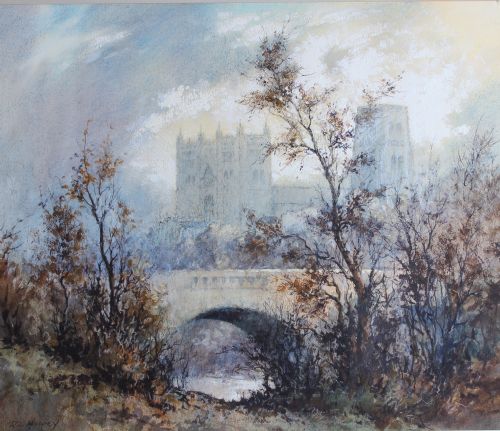


Original Architectural Watercolour Painting
When you search for an original architectural watercolour painting, you are seeking hand-painted works recording historic buildings and streetscapes on paper.
Original Architectural Watercolour Painting
An original architectural watercolour painting captures structural details, civic monuments, and historic streetscapes through pigment applied directly to paper by an artist. These works document cathedrals, abbeys, town halls, and foreign landscapes across distinct periods.
Most examples found in these records date from the nineteenth century through the mid-twentieth century, encompassing Victorian and Edwardian aesthetics alongside British Impressionism. Subjects range from grand Italian canals and French monuments to local Yorkshire market towns and British cathedrals.
Compositions often include surrounding townscapes, figures, and atmospheric weather conditions to provide context to the built structure. Artists frequently signed these sheets, recording specific locations across Britain and continental Europe.
What varies in quality
The precision of perspective and the handling of light separate master architectural studies from routine topographical sketches. Skilled painters capture the texture of stone and the depth of vaulted ceilings with confident brushwork and controlled washes.
Compositional balance and the integration of atmospheric details, such as figures or changing weather, determine the visual strength of the painting. Condition of the paper support and vibrancy of the pigment also influence the overall standard of each piece.
Several artists braved rain and bustling market crowds to paint grand canals and cathedral steps directly from life.
Thomas Ellison·A Marie Parsons·Richard Henry Wright·Henry de Waroquier·Robert Leslie Howey·Alfred George Morgan·Fred Lawson·Sir Thomas Newenham Dean·Charles James Lauder·Rowland Henry Hill·Stanley Orchart·J W Hogley·Louie Stanley Maurice Prince·G Villiers Stuart·George Whyatt·Vittore Zanetti Zilla·Joseph W Milliken·Edith E Caswall·Hercules Brabazon Brabazon·David Small·John Sowden·Jack Merriott·Tom Dudley·David Law·Noel Harry Leaver
The Original Architectural Watercolour Painting Glossary
- Watercolour
- A paint consisting of colour suspended in a water-soluble binder, used on paper supports to create transparent washes.
- Wash
- A technique of applying diluted watercolour to paper to create smooth areas of colour or atmospheric sky effects.
- Topographical
- Representing specific places accurately, often focusing on buildings, landscapes, and local landmarks.
- Mixed media
- An artwork combining more than one medium, such as watercolour paired with ink or pencil lines.
Original Architectural Watercolour Painting: Frequently Asked Questions
What is an architectural watercolour painting?
These works are hand-painted depictions of buildings, monuments, and streetscapes created using water-soluble pigments on paper. They serve as both artistic interpretations and historical records of structural design.
Artists focused on capturing facades, interiors, and urban contexts during travels across Britain and Europe.
How should I frame these watercolours?
Watercolours require conservation framing behind glass to protect the paper and pigments from ultraviolet light and atmospheric moisture. Acid-free mounts should be used to prevent direct contact between the painting and the glass.
Hanging them away from direct sunlight preserves the original tones of the pigments.
How do I date an architectural watercolour?
Dating relies on artist signatures, inscriptions, costume details of any figures present, and stylistic markers of the period. Victorian and Edwardian works often feature specific architectural motifs or handwritten location notes in the margins.
Paper types and framing remnants can also offer clues to the age of the piece.
Where were these paintings produced?
Creators produced these paintings on location during travels or within studios based on preliminary pencil sketches. Subjects span British cities and towns alongside continental destinations like Venice, Paris, and Rome.
Artists recorded both grand civic structures and vernacular architecture.