
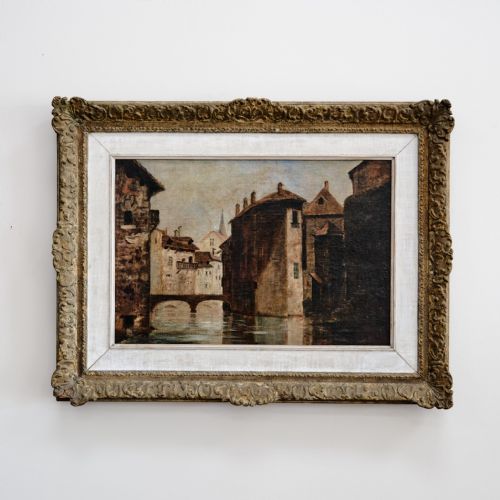
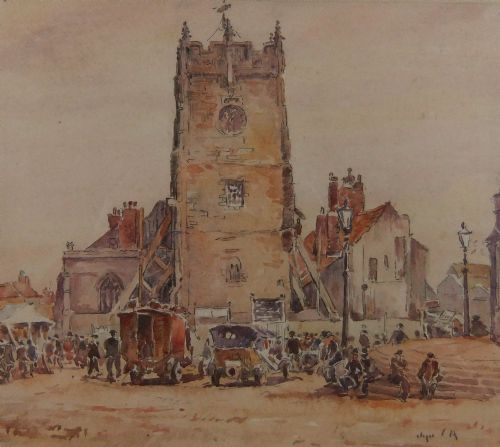
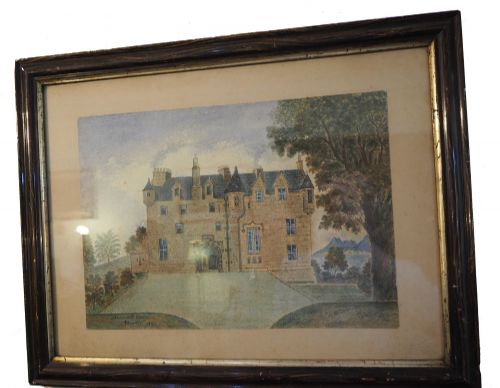


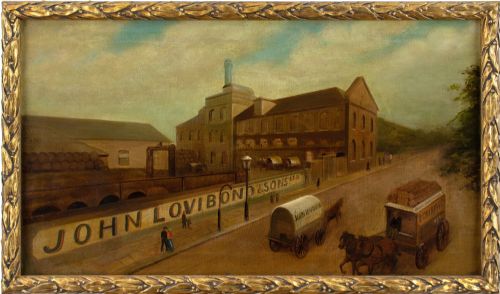

Brown Framed Architectural Painting
Brown framed architectural painting gathers urban landscapes, historic interiors, and city views bound in timber.
How they were made
Artisans applied watercolour or oil paint onto paper, canvas, or board, sometimes building thick textures with impasto techniques. Pigments capture light and shadow across urban facades, bridges, and interior chimneypieces.
Works are typically secured within wooden frames that complement the tones of the painted subjects. Glass often protects works on paper and delicate watercolours from atmospheric damage.
What varies in quality
The sophistication of perspective, handling of light, and the fidelity of architectural detail distinguish finer works from simpler topographical records. Masterful control of brushwork in oils or washes in watercolours elevates an ordinary street scene into a compelling study.
The integrity of the original wooden frame and the preservation of the painted surface contribute significantly to the standing of an artwork. Patina on the timber and stability of the support material reflect careful curation over decades or centuries.
Recorded styles span Victorian, Edwardian, Mid-Century Modern, Impressionism, Realism, and Expressionism.
John Smith Atherton·Lilian Colbourn·Fred Lawson·Ron Folland·E A Minardo·Louie Stanley Maurice Prince·Hein Hoppmann·Phillip Krevoruck·Job de Vogel·Tom Dudley·Walter Sickert·Maurice Asselin·Frank Moss Bennett·WD Scull·Peter Greenham·Victor Haddrell·Henry J Neave·Margaret Thompson·Elinor Margaret Charteris
The Brown Framed Architectural Painting Glossary
- Topographical
- Depicting specific physical locations, buildings, or landscapes with a high degree of accuracy. These works often serve as historical records of towns and architecture.
- Impasto
- Paint applied thickly to a canvas or board, standing out in relief from the surface. This technique adds tactile depth and catches light across architectural elements.
- Watercolour
- Pigments suspended in a water-based, translucent solution applied to paper. It allows for delicate washes and luminous depictions of light.
- Oil on Canvas
- Pigments mixed with a drying oil, applied to a stretched fabric surface. This medium offers rich colour saturation and longevity.
- Grand Tour
- A traditional trip of Europe undertaken by upper-class European young men of means. Souvenirs often included architectural paintings and watercolours of classical sites.
Brown Framed Architectural Painting: Frequently Asked Questions
What periods do these paintings cover?
The works span from the eighteenth century through the nineteenth and twentieth centuries, including Regency, Victorian, and mid-century modern examples.
Each period brings distinct stylistic approaches, ranging from precise topographical watercolours to expressive twentieth-century oil paintings.
How should I care for a framed watercolour?
Keep watercolours away from direct sunlight to prevent the pigments and paper from fading over time. Maintaining a stable room temperature helps protect both the paper support and the wooden frame.
Ensure the glass is clean and check that the backing board remains secure to protect the artwork from dust and moisture.
Are these paintings original artworks?
The collection consists of original hand-painted works in oil and watercolour rather than modern reproductions. Artists utilised various supports including canvas, board, and paper.
Signatures, dates, and inscriptions often appear on the pieces, providing provenance and context regarding their creation.
What subjects are most common?
Common subjects include European cityscapes, historic British buildings, castles, cathedrals, and grand interior rooms. Industrial scenes and architectural details also feature prominently.
These depictions range from documentary views of specific streets to impressionist interpretations of urban life.