



1950s British Art
These pieces of 1950s British art capture the shifting landscape, portraiture, and abstract impulses of a post-war nation.
1950s British Art
When you search for 1950s British art, you encounter a focused selection of paintings created during a distinct post-war decade. The works range from mid-century realisms and naturalism to constructivism and mid-century modernism.
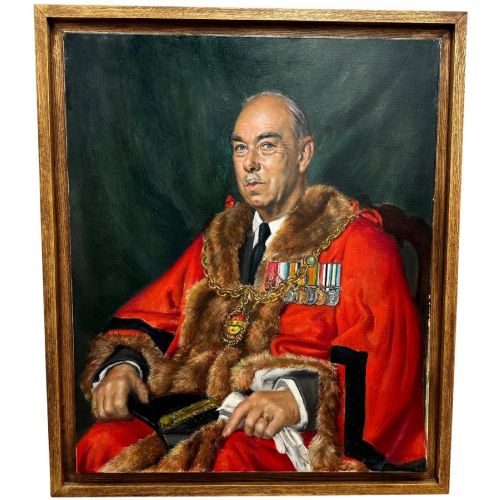
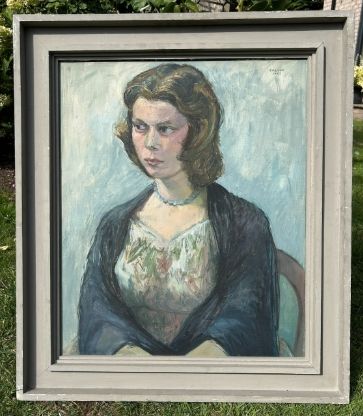
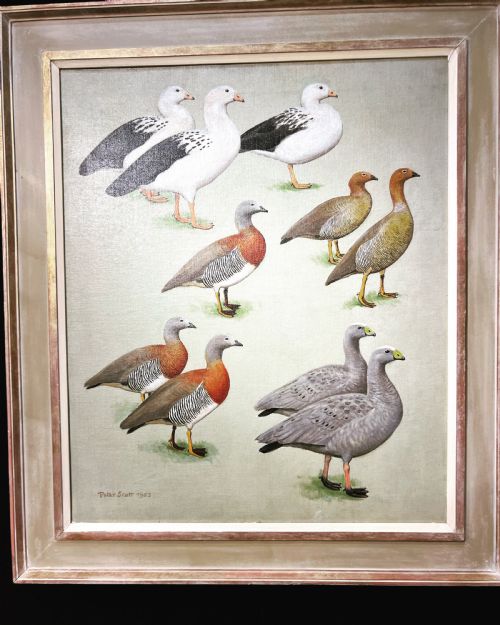
You are most likely to meet original oil paintings on board or canvas, alongside watercolours on paper. Subjects span maritime landscapes, industrial scenes, farm views, and characterful portraits.
The objects recorded here reflect both regional English scenery, such as Yorkshire and Dorset, and urban industrial subjects. Works frequently arrive in period wood frames that complement the canvas or board.
How They Were Made
Artists of this period applied oil paint and watercolour across traditional supports like canvas, paper, and board. Certain works utilise impasto techniques to build heavy texture, notably visible in harbour and factory scenes.
Constructivist and relief pieces introduce sculptural depth to the surface, while standard brushwork handles delicate portraits and landscape details. The physical construction relies on period wooden framing to house the paintings safely.
Listings incorporate both oil paint and watercolour mediums applied to canvas, board, and paper supports across the nineteen-fifties and nineteen-sixties.
What Varies in Quality
The strength of a composition lies in the handling of light, structure, and subject matter by the individual painter. Works that capture distinct architectural or maritime details demonstrate stronger execution than generic sketches.
The condition of the original paint layer and its associated board or canvas support determines the preservation state. Original framing that suits the era also contributes to the integrity of the piece.
Kenneth Cozens·Bernard Hailstone·Sir Peter Markham Scott·James Fry·Louie Stanley Maurice Prince·Adrian Heath·John Frederic Greenwood·Winston Churchill·Lillian M Harrison·Henry J Neave·R Goodhind
The 1950s British Art Glossary
- Impasto
- Paint applied thickly to a canvas or board, standing out from the surface. This technique creates a tangible sense of texture and depth.
- Constructivism
- An artistic style focused on abstract forms, industrial materials, and geometric structure. It emerged strongly in post-war British visual culture.
- Mid-Century Modern
- A design and art movement spanning the middle decades of the twentieth century. It prioritises clean lines and modern interpretations of traditional subjects.
- Watercolour
- A paint consisting of water-soluble pigments used on paper supports. It allows for translucent washes and delicate atmospheric effects.
1950s British Art: Frequently Asked Questions
What styles define 1950s British art?
The category encompasses mid-century modernism, post-war realism, naturalism, and constructivist abstract works. Painters recorded both rural landscapes and industrial environments during this decade.
Subjects range from Yorkshire dales and Dorset harbours to London station interiors and formal portraits.
Are these paintings original works?
The selection consists of original oil paintings and watercolours created directly by artists active in the nineteen-fifties. Works are executed on canvas, board, and paper supports.
Signatures and dates frequently appear on the pieces, linking them to specific years within the decade.
How should I frame these paintings?
Many pieces retain their original period wood frames, which suit the mid-century aesthetic. Preserving these frames maintains the historical context of the artwork.
When framing unframed boards or canvases, select mouldings appropriate to post-century British design.
Where do these subjects come from?
Painters documented various British locations, including Suffolk, Yorkshire, Dorset, and London. Industrial sites and maritime views formed major subjects alongside portrait sitters.
This geographical spread reflects the varied concerns of artists working across England after the Second World War.