



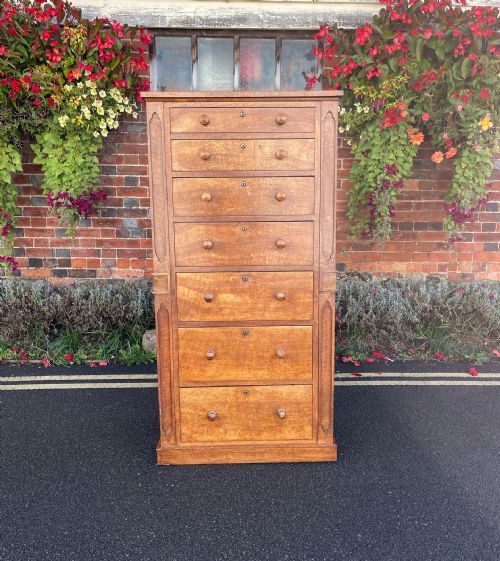

Vintage Locking Tallboy
These vintage locking tallboy pieces, chiefly tall Wellington chests and vertical chests of drawers, offer secure storage and a commanding presence in any room.
Vintage Locking Tallboy
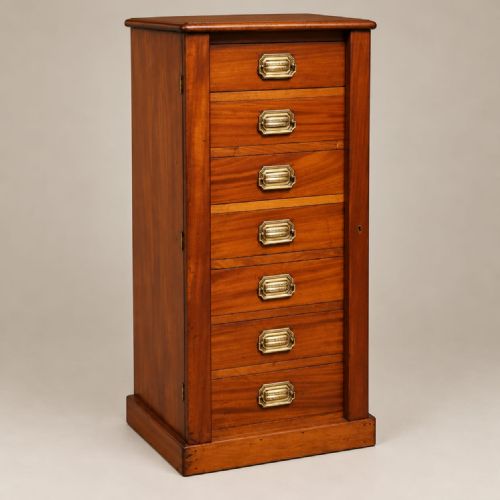
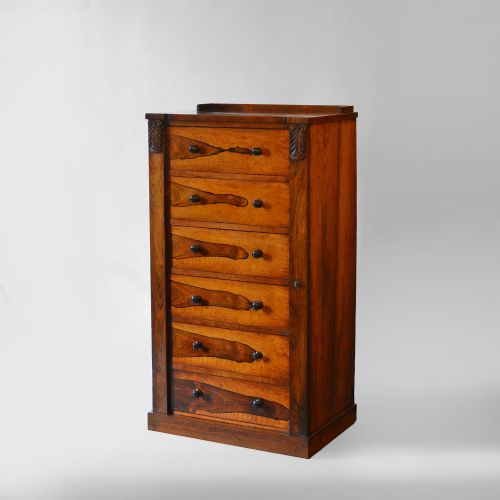
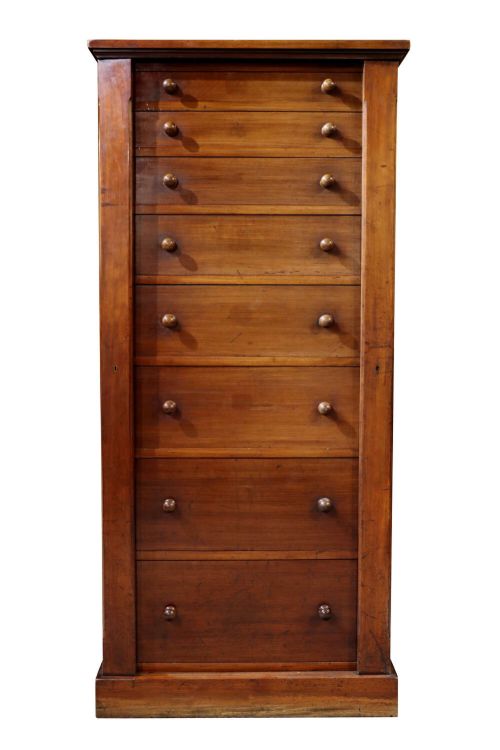
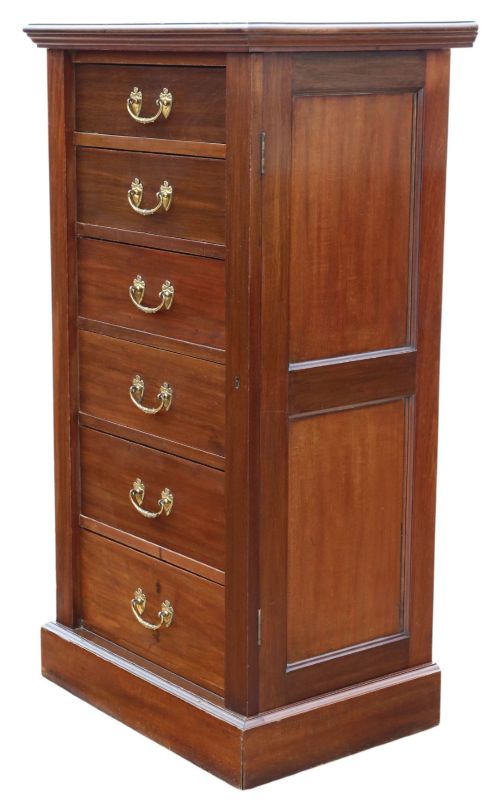
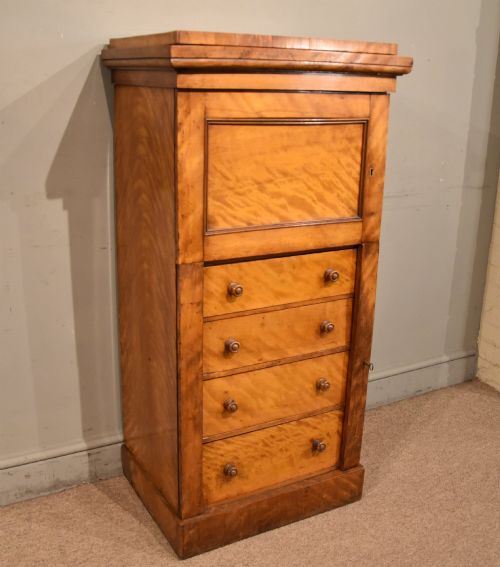
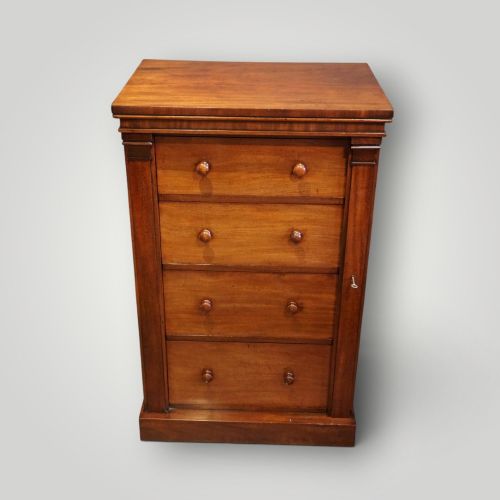
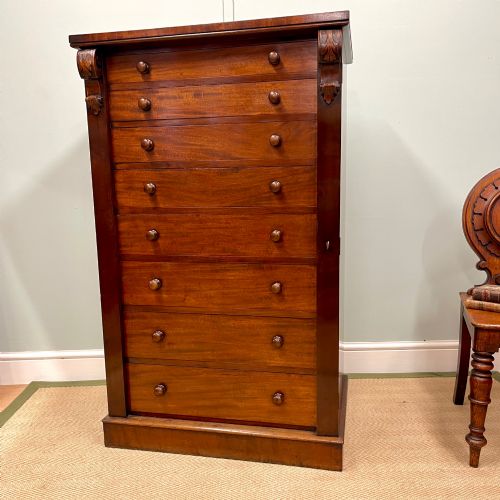
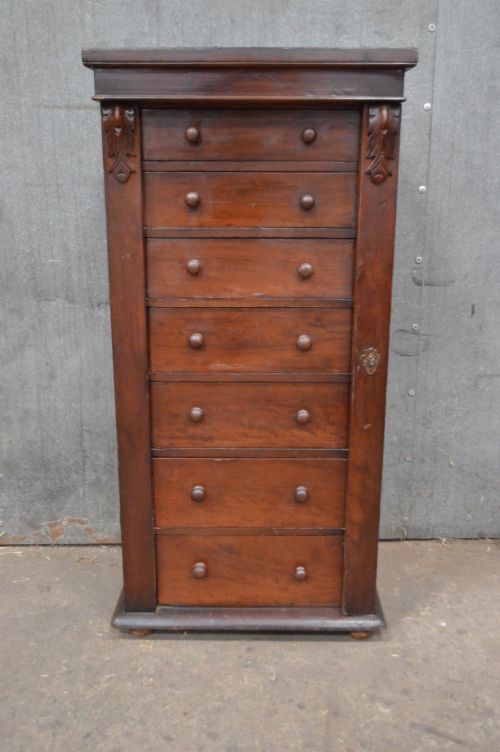
A vintage locking tallboy is predominantly represented here by the traditional Wellington chest, a tall and narrow set of drawers secured by a hinged locking side stile. These upright cabinets emerge most frequently from the Victorian and nineteenth-century periods, alongside Edwardian examples.
The form prioritises vertical capacity over floor space, housing multiple drawers within a slender timber carcase. Buyers encounter variations including secretaire drawers with hinged falls, collectors cabinets, and double-width French formats.
How they were made
Surface treatments range from polished timber grains and satin birch finishes to country house scumble paint. Interior drawer construction relies on traditional dovetailed joints designed to withstand the daily use demanded of tall storage furniture.
Vintage Locking Tallboy Retail Price Guide 2026
Typical asking prices for vintage locking tallboy among the pieces listed under this phrase on Sellingantiques today, from the lower quarter to the upper quarter. They describe what is for sale here now, not the wider market.
The listings show nineteenth-century and Victorian pieces dominating the tallboy selection, constructed primarily in mahogany, walnut, and oak.
What varies in quality
Quality in a vintage locking tallboy is determined by the selection of timber figures, such as highly figured mahogany or burr walnut veneers, and the integrity of the locking mechanism. The smoothness of the side stile operation and the snug fit of the drawers within the carcase distinguish finer cabinet work.
Proportion and detailing further separate standard pieces from exceptional examples, including inlaid woodwork, secret writing compartments, and robust brass fittings. The depth of the polished finish and the preservation of original surfaces dictate the standing of each piece.
Maple and Co·Druce and Co
The Vintage Locking Tallboy Glossary
- Wellington chest
- A tall, narrow chest of drawers secured by a hinged vertical locking flap on one side that fastens over the drawer edges. This specific form allows all drawers to be locked with a single key.
- Secretaire
- A cabinet or chest incorporating a pull-down writing flap that conceals small interior drawers and pigeonholes. In these tall forms, one drawer front hinges down for writing.
- Scumble paint
- A decorative surface finish applied with a translucent glaze over a lighter base coat to imitate natural wood grain. It appears on country house furniture.
- Flame mahogany
- A veneer cut from the fork of the mahogany tree where the branch meets the trunk, producing a distinctive, flickering flame-like grain pattern. Cabinet makers reserved this timber for principal drawer fronts.
Vintage Locking Tallboy: Frequently Asked Questions
How do you lock a Wellington chest?
The locking mechanism relies on a hinged vertical wooden stile attached to one side of the chest frame. When the drawers are fully pushed in, this side flap swings into place and is secured with a key, blocking the drawer edges from opening.
This single lock secures the entire stack of drawers at once. It provided Victorian owners with a practical way to keep valuables secure within a tall, slender footprint.
What is the difference between a tallboy and a Wellington chest?
A traditional tallboy usually consists of one chest of drawers stacked directly on top of a larger base chest. A Wellington chest is a single tall, narrow carcase fitted with multiple drawers and the signature locking side bar.
While both offer vertical storage, the Wellington chest is narrower and defined by its side-locking mechanism. The pieces listed under this search phrase lean heavily toward the single tall Wellington format.
What rooms suit a vintage locking tallboy?
The slender proportions of these tall chests make them ideal for bedrooms, dressing rooms, or hallways where floor space is limited. Their vertical height provides substantial storage without dominating the room.
Living with these pieces involves using the narrow drawers for accessories, documents, or folded garments. The locking feature remains fully functional for keeping private items secure.
How do I identify a Victorian tallboy?
Victorian pieces typically feature dense native or imported hardwoods like mahogany, oak, and walnut, often complemented by hand-cut dovetail joints on the drawer construction. The presence of traditional patination and period brass hardware helps confirm the era.
Examining the backboards and interior secondary timbers provides further clues to the nineteenth-century origins. Makers of this period frequently paired robust carcases with highly figured timber veneers.