
Antique Mahogany Side Chest
An antique mahogany side chest offers compact storage with the rich grain of traditional timber, bringing period character and practical surface space into a room.
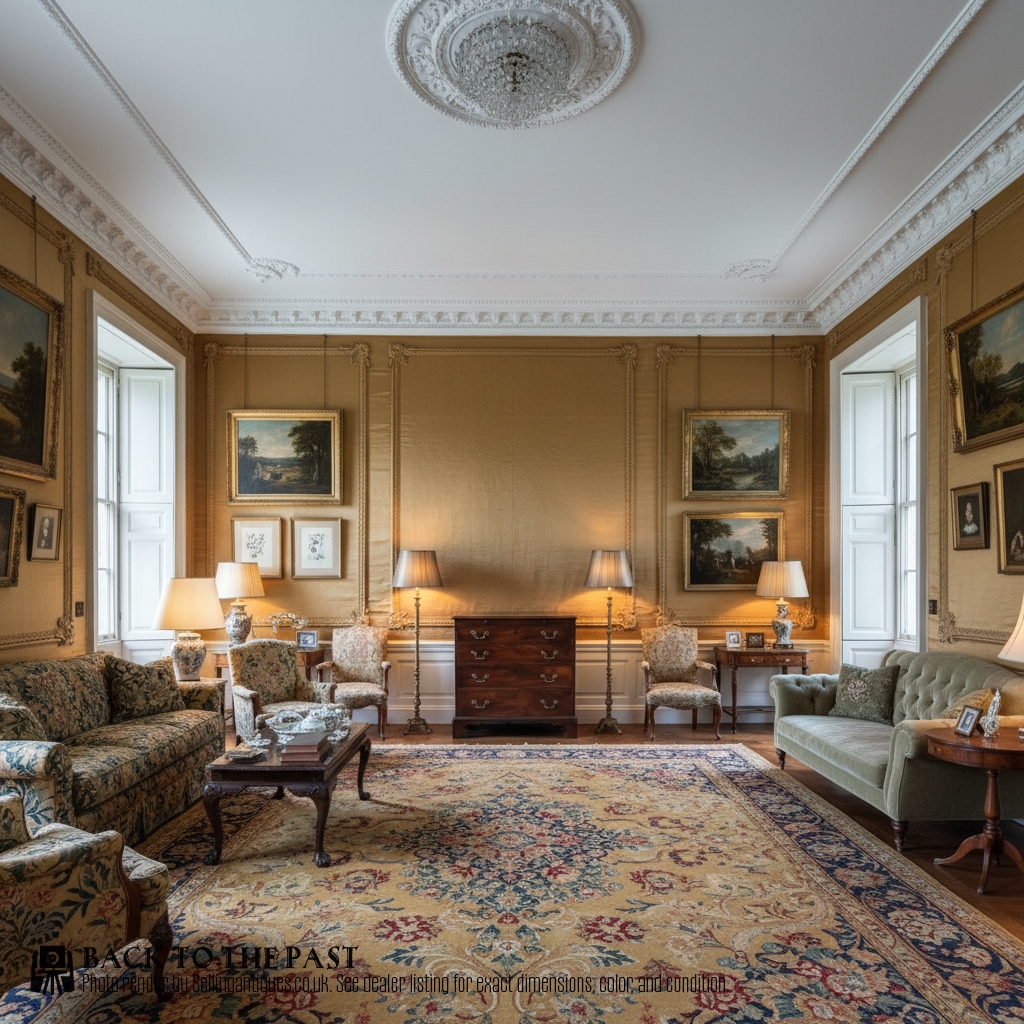
Antique Mahogany Side Chest
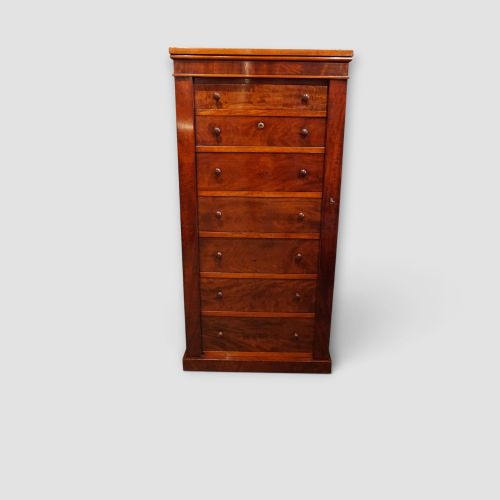
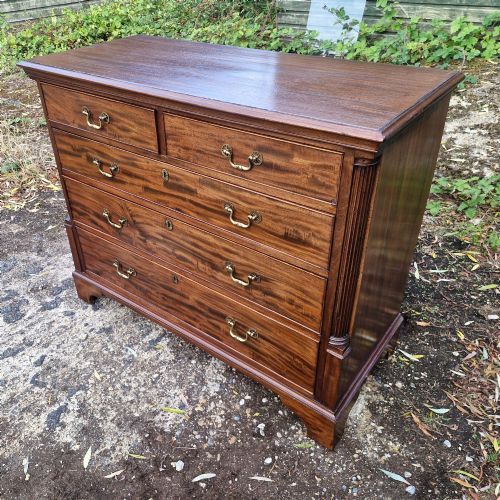
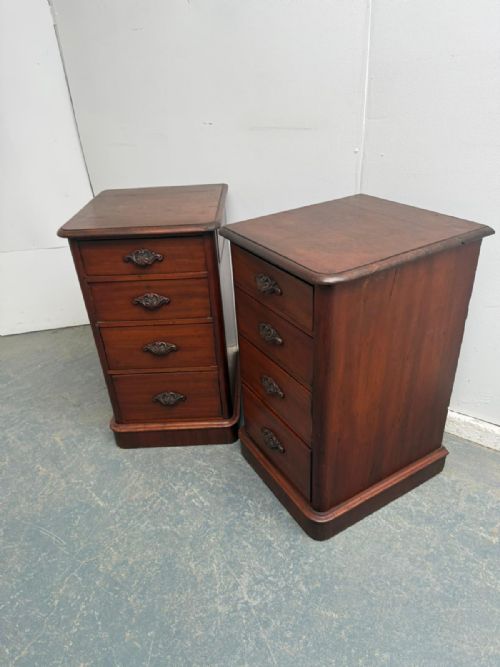
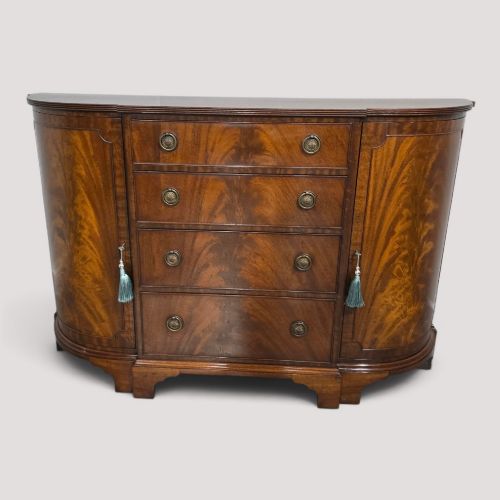
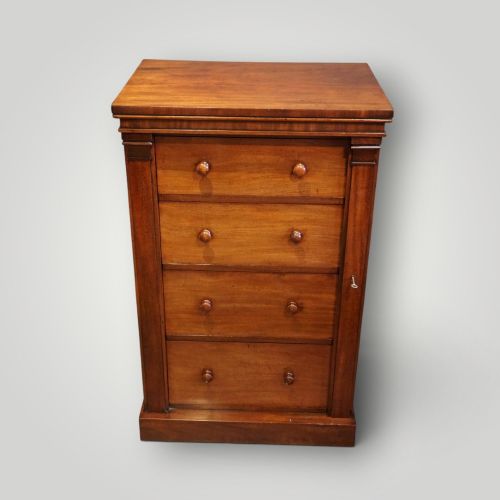
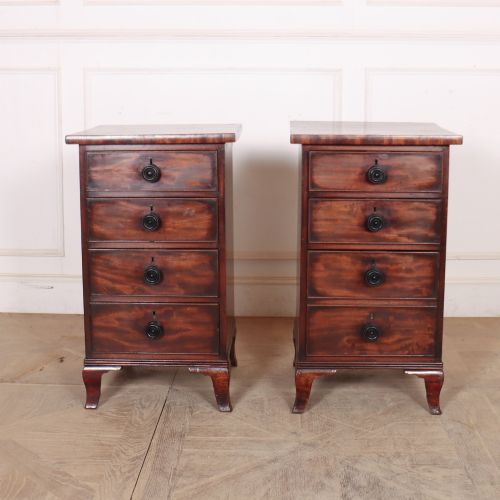
An antique mahogany side chest combines the storage of a small chest of drawers with the compact proportions needed for placement beside a bed or against a hallway wall. This selection encompasses Georgian, Victorian, and Edwardian examples alongside later twentieth-century interpretations, taking forms such as bedside chests, Wellington chests, and small side cabinets.
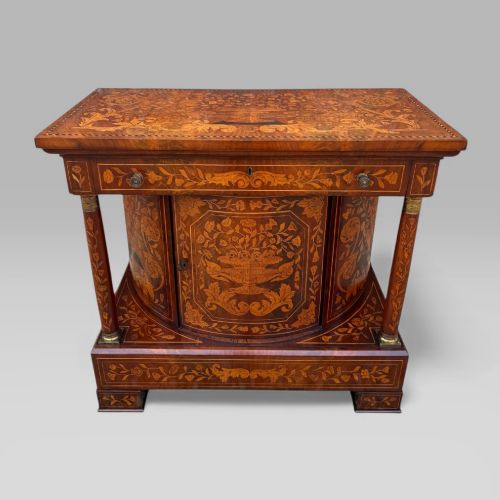
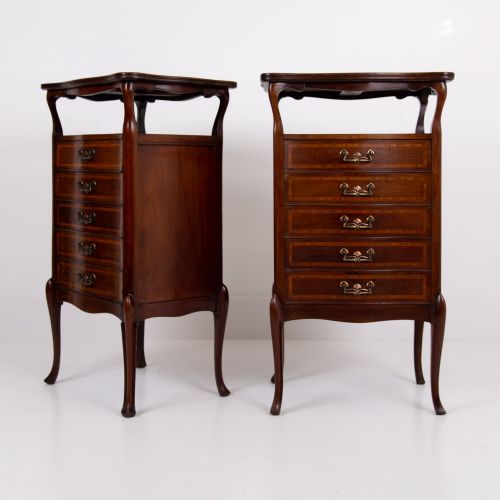
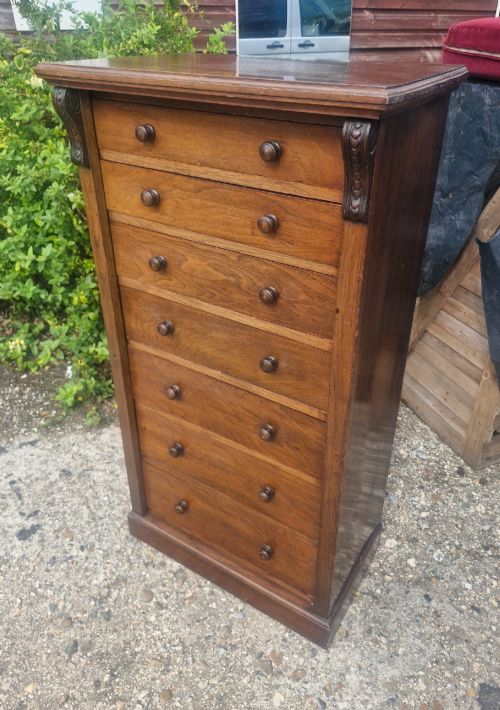
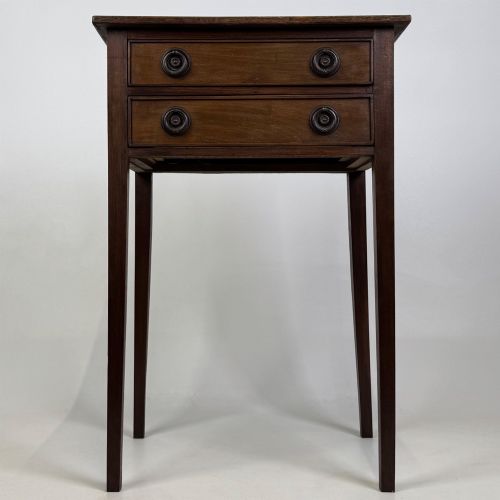
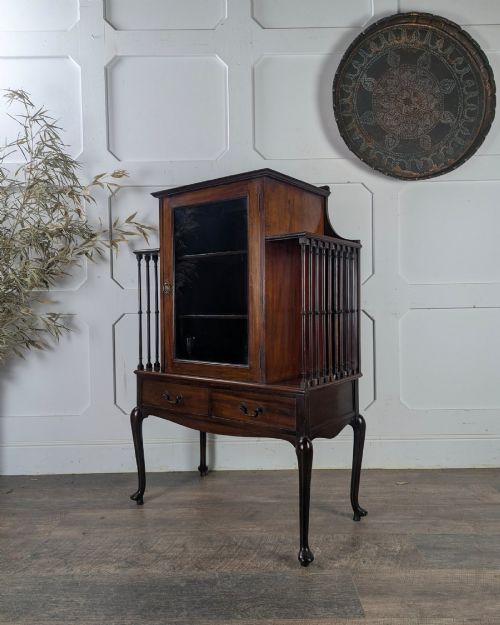
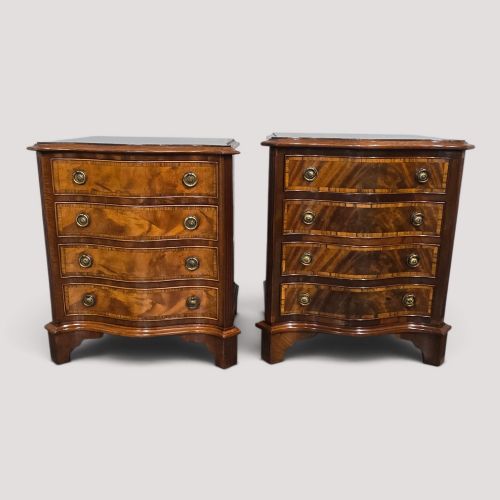
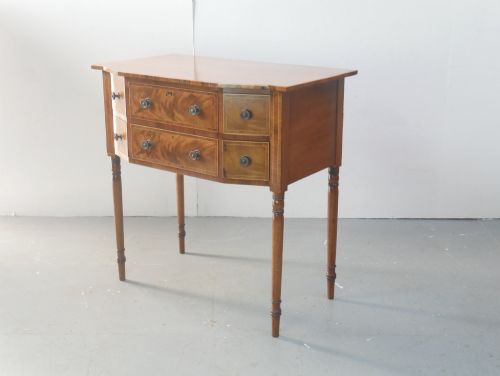
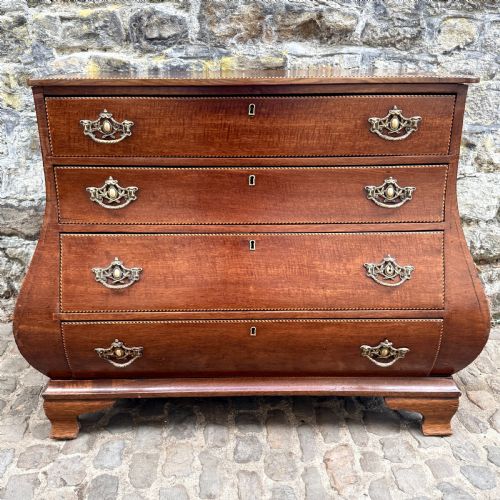
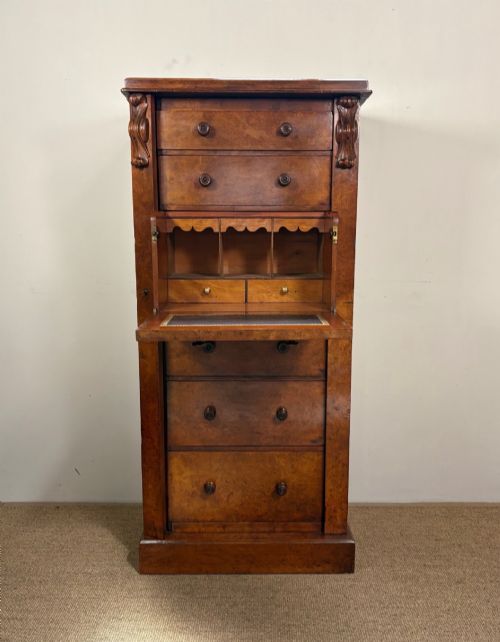
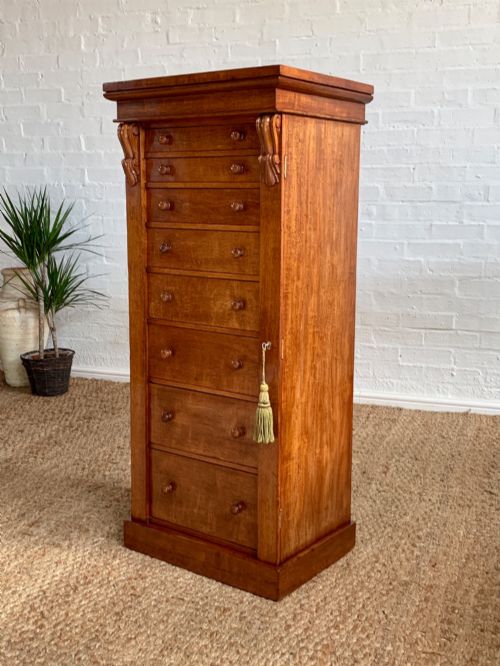
Buyers will encounter various configurations within this search phrase, ranging from tall, narrow Wellington chests fitted with locking flaps to compact bedside tables and serpentine commodes. The pieces span periods from the eighteenth century through to the early twentieth century, showing influences from Dutch baroque, Regency, and Sheraton revival styles.
These items serve practical storage needs while displaying distinct regional and period characteristics, such as bowed fronts, inlaid satinwood details, and original brass hardware. The surviving examples demonstrate how cabinetmakers adapted standard drawer forms into smaller formats suited for auxiliary placement in bedrooms and reception rooms.
How they were made
Makers constructed these pieces primarily using solid mahogany and flame mahogany veneers applied over secondary woods, often accentuating the surfaces with satinwood inlay or contrasting banding. Cabinetmakers utilised brass for handles, key escutcheons, and occasional campaign-style corner mounts, while glass sometimes featured in panelled or display doors.
Construction techniques evolved across the periods represented, moving from heavier eighteenth-century framing to the refined drawer linings and specialised mechanisms of Victorian Wellington chests. Joinery relied on dovetailed drawer construction and framed panels, ensuring structural stability across smaller items that experienced frequent daily use.
Listings feature mahogany side chests spanning from the eighteenth century through to the Edwardian period and the 1930s.
What varies in quality
The degree of figuration in the mahogany veneer dictates much of the visual appeal, with richly patterned flame mahogany marking out finer examples from plain stock. The crispness of inlaid satinwood stringing and the retention of original turned knobs or brass hardware further separate standard pieces from workshop productions of higher ambition.
Structural integrity reveals itself in the smooth running of drawers, the tightness of corner joints, and the precision of fitted locking mechanisms found on pieces like Wellington chests. Secondary woods and internal linings show the care taken by the maker, distinguishing well-executed provincial or metropolitan items from utilitarian production.
Lamb of Manchester
The Antique Mahogany Side Chest Glossary
- Wellington chest
- A tall, narrow chest of drawers featuring a hinged locking flap on one side that secures all the drawers simultaneously. This form typically dates from the Victorian period.
- Flame mahogany veneer
- A sliced wood veneer displaying a distinctive, flickering flame-like grain pattern prized by cabinetmakers. It was frequently utilised on drawer fronts during the Georgian and Victorian eras.
- Lowboy
- A small pedestal table or low chest with drawers, originating in the eighteenth century. It usually stands on slender cabriole or straight legs.
- Serpentine front
- A furniture front curved in a convex-concave-convex shape, creating a gentle undulating line. This treatment requires skilled woodworking and appears on finer case pieces.
- Satinwood inlay
- Contrasting light-coloured wood inserted into recesses within the darker mahogany surface to create geometric borders or floral motifs. It is characteristic of Sheraton revival and Edwardian pieces.
Antique Mahogany Side Chest: Frequently Asked Questions
What is a Wellington chest?
A Wellington chest is a tall, narrow style of drawer unit that traditionally incorporates a hinged vertical locking timber flap down one side. This bar secures the entire stack of drawers when locked in place with a key.
Originally designed in the nineteenth century, these pieces provided secure storage for papers or personal items in bedrooms and studies. Their slender footprint made them particularly useful for tight spaces where a standard chest would not fit.
How do I date a mahogany side chest?
Dating relies on examining the construction methods, secondary woods used inside the drawers, handle styles, and overall aesthetic details. Eighteenth-century pieces often show hand-cut dovetails and solid timber carcases, while Victorian examples frequently employ machine-sawn elements and flame veneer.
Style markers also help narrow the period, such as the inlaid satinwood typical of Edwardian pieces or the heavy proportions associated with mid-Victorian workshop output. Comparing the hardware and internal linings to established historical benchmarks provides a reliable guide to age.
How should I care for antique mahogany?
Maintaining antique mahogany involves keeping the timber away from direct heat sources and strong sunlight, which can dry out the wood and fade the polish. Consistent indoor humidity prevents the timber and any applied veneer from warping or splitting.
Routine maintenance requires only a soft, dry cloth to remove dust, avoiding silicone-based polishes that build up over time. Natural wax applied occasionally helps nourish the surface and preserve the finish.