

Antique Wellington Drawers
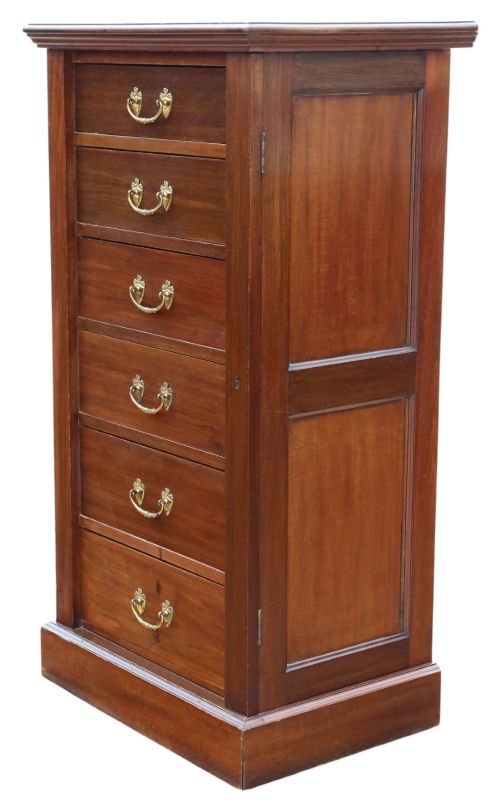
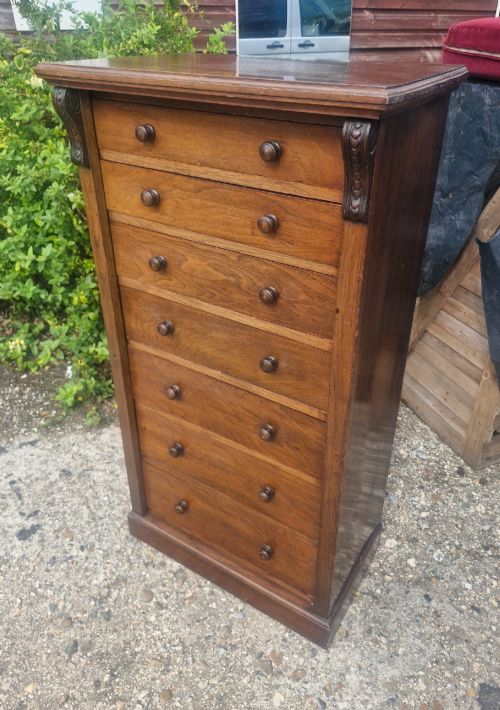
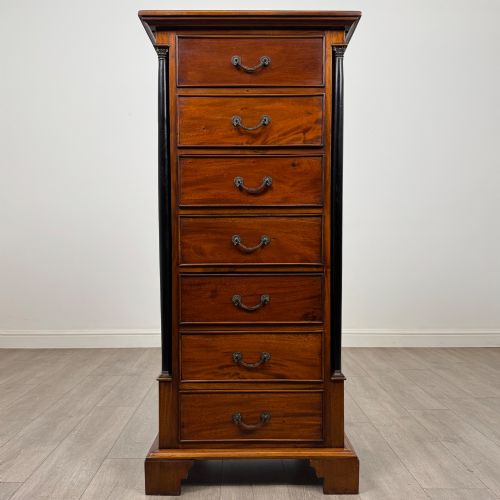
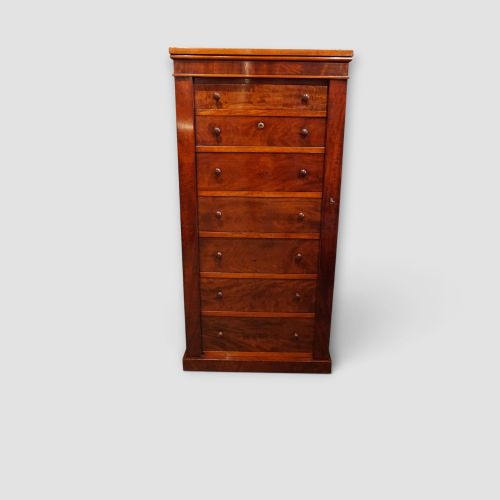
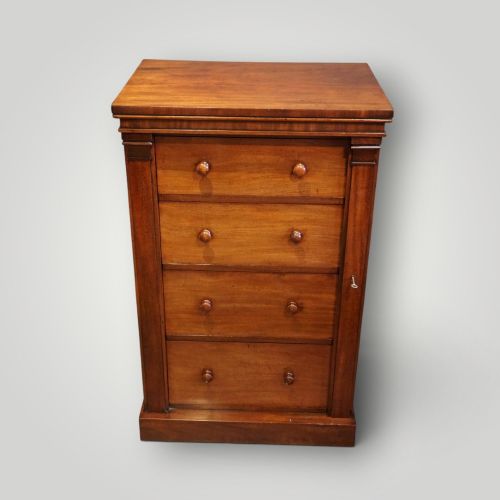
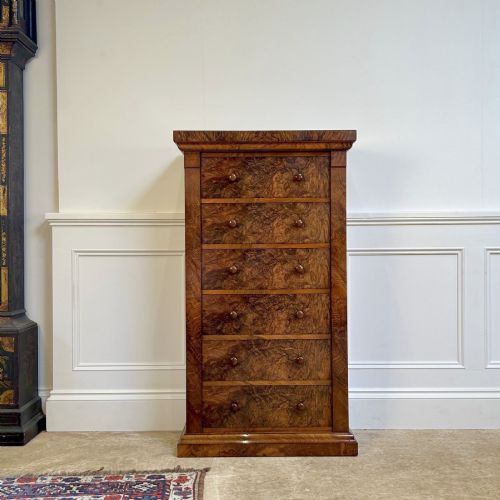
Antique wellington drawers are narrow, tall chests defined by a hinged locking stile that secures all the drawers at once.
Antique Wellington Drawers
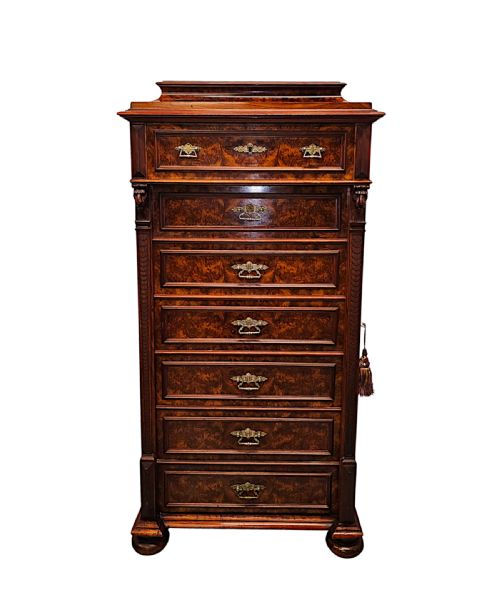
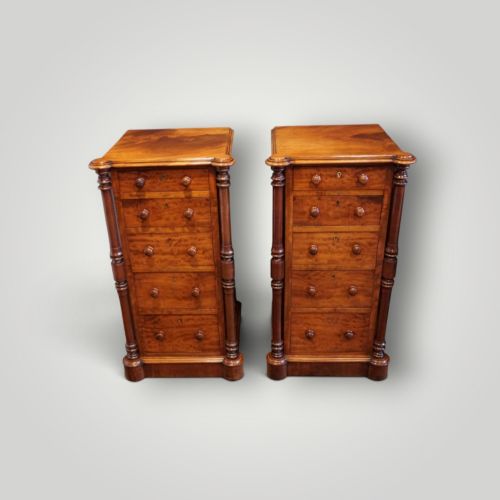
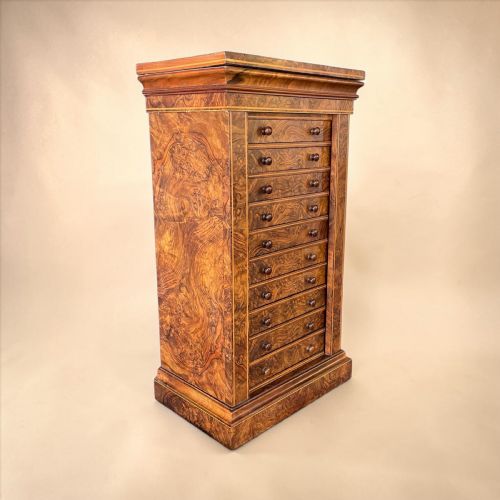
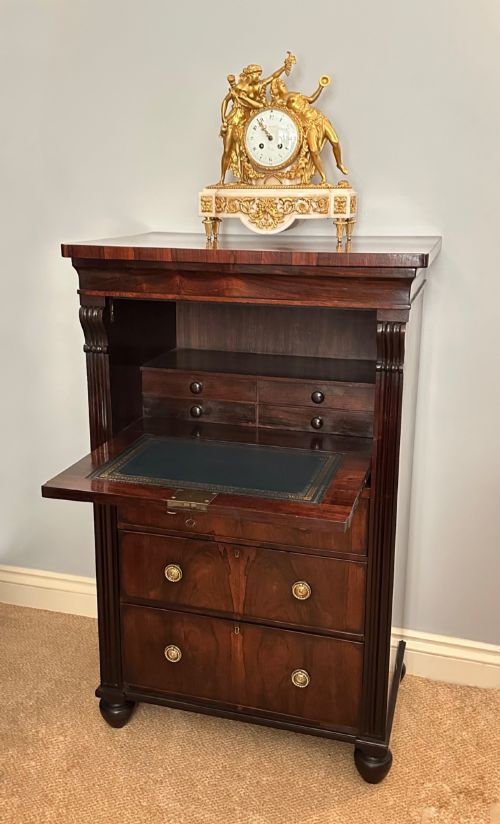
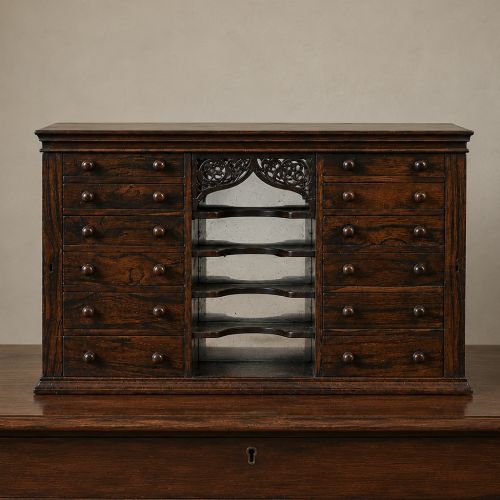
The version you are most likely to meet on this page dates from the Victorian period, though examples span from the Regency era through to the Edwardian period and early twentieth century. These pieces appear in forms ranging from standard tall chests to bedside cabinets, writing cabinets, and specialised collectors cabinets.
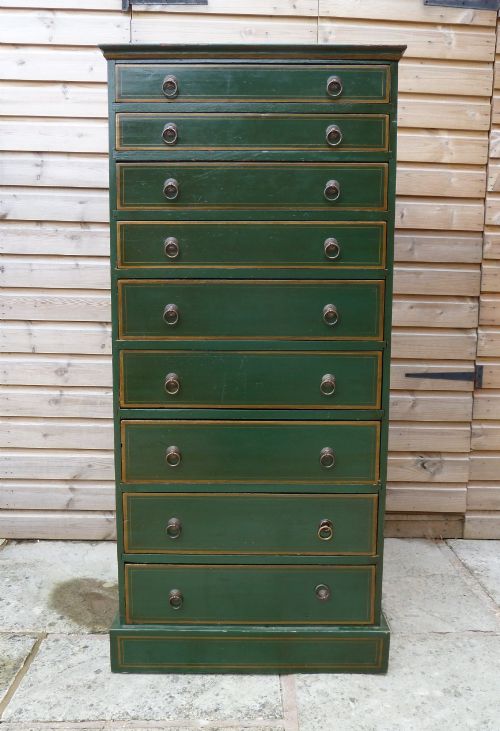
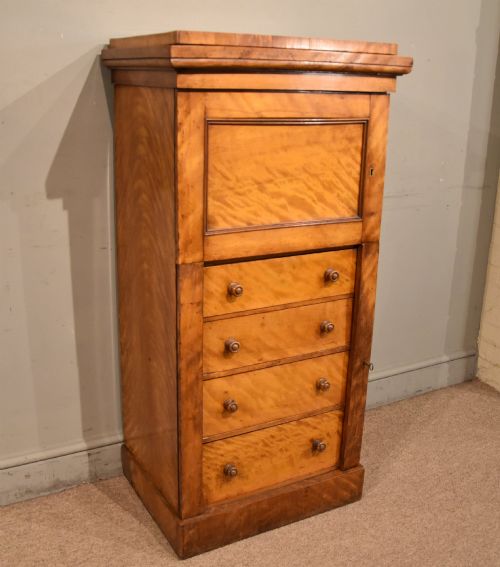
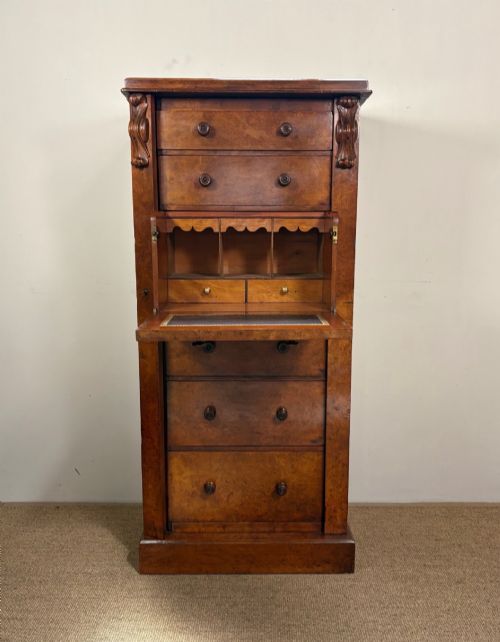
Makers utilised various secondary functions within the classic silhouette, including secretaire drawers with fitted writing interiors and filing compartments. While mahogany remains the predominant timber, you will also find walnut, burr walnut, rosewood, oak, and pine.
Materials and Construction
Cabinetmakers constructed these chests around sturdy pine carcases faced with choice timber veneers such as flame mahogany, burr walnut, and rosewood. Solid mahogany and oak also form the primary structure of many nineteenth-century pieces, finished with turned wooden knobs or brass fittings.
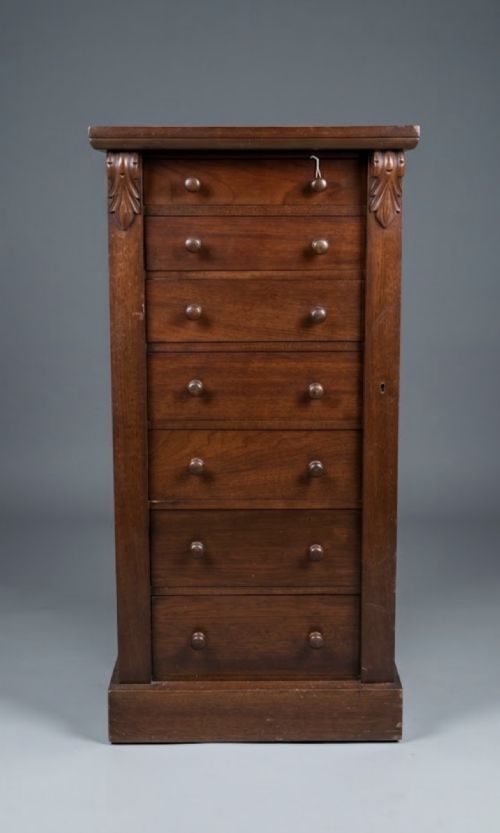
The defining mechanical feature is the hinged locking stile, which swings outward only when the top drawer is unlocked, releasing the remaining drawers down the stack. Advanced examples incorporate secret locking mechanisms operated via concealed latches or hinges hidden within the pillar.
Forms range from standard tall seven-drawer chests to compact bedside cabinets and specialised filing configurations.
Judging Quality and Craftsmanship
Quality in these chests rests upon the selection of timber veneers and the precision of the locking mechanism. Uniform grain matching across the drawer fronts and a smooth, unbroken action in the hinged pilaster distinguish superior cabinetwork.
Interior construction reveals the standard of manufacture, marked by hand-cut dovetails on the drawer sides and solid secondary timbers. Subtle enhancements such as marquetry inlay, mirrored doors, and original turned knobs indicate workshops of higher distinction.
Warings Liverpool·Gillows·J Shoolbred·Maple and Co·Holland and Sons·Edwards and Roberts
The Antique Wellington Drawers Glossary
- Wellington chest
- A tall, narrow chest of drawers featuring a hinged locking flap down one side that secures all the drawers simultaneously.
- Secretaire
- A desk drawer or compartment fitted with small pigeonholes and a writing surface, often incorporated into the upper section of the chest.
- Pilaster
- A vertical architectural support or pillar attached to the front edge of the chest that swings outward to unlock the drawers.
- Specimen cabinet
- A specialised piece designed for storing natural history collections or small valuables in shallow, numerous drawers.
- Burr walnut
- A highly figured timber veneer prized for its swirling grain patterns derived from the knot growths of the walnut tree.
Antique Wellington Drawers: Frequently Asked Questions
Why do they have a locking bar?
The locking bar secures all drawers simultaneously with a single turn of a key, safeguarding confidential papers and valuables.
This clever mechanism prevented unauthorised access when the owner was away from the room, making the design popular in nineteenth-century studies and bedrooms.
How do I open the drawers?
You must first unlock and swing open the vertical locking pilaster on the right side of the chest.
Once this side stile is moved clear of the drawer fronts, individual drawers pull out freely from the stack.
Where were they placed in a home?
Their narrow footprint allowed these chests to fit comfortably into tight corners, dressing rooms, and alcoves where standard wider furniture would not go.
Pairs frequently served as bedside cabinets in larger Victorian bedrooms, holding personal items within easy reach.
How can I tell the period?
Earlier Regency and William IV examples often display rosewood veneers, brass mounts, and heavier classical proportions.
Late Victorian and Edwardian pieces shift towards lighter satin birch, elaborate marquetry inlay, and simpler structural lines.