


Vintage Locking Cabinet
A vintage locking cabinet brings secure storage and period craftsmanship into a room, offering fitted drawers or compartments behind a protected door.
Vintage Locking Cabinet
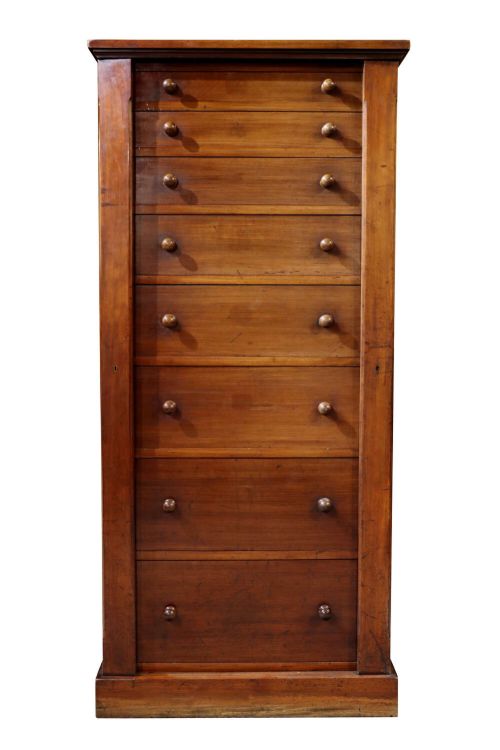
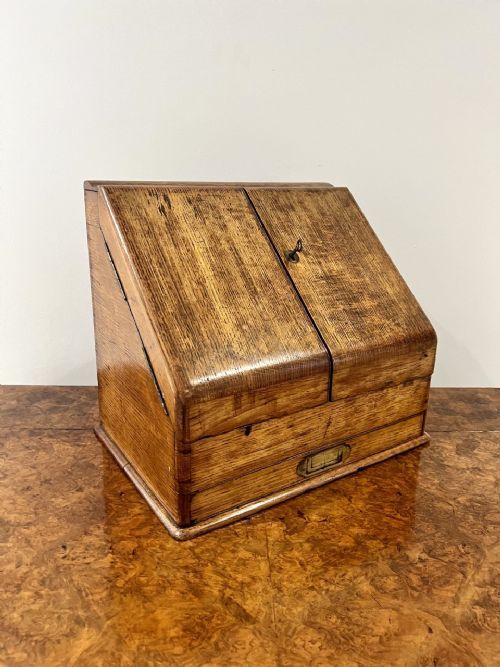
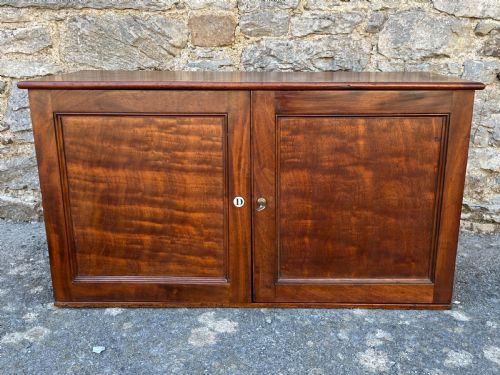
A vintage locking cabinet encompasses secure storage pieces designed to protect valuables, documents, or collections behind a keyed mechanism. When searching for a vintage locking cabinet, buyers encounter vertical forms such as Wellington chests and filing cabinets, alongside horizontal sideboards, humidors, and desktop stationery boxes.
The pieces span the Victorian and Edwardian eras through to the early twentieth century, originating from British workshops, French makers, and traditional Chinese provinces. Mahogany and oak dominate the selection, accompanied by burr walnut, elm, and pine, often fitted with brass hardware.
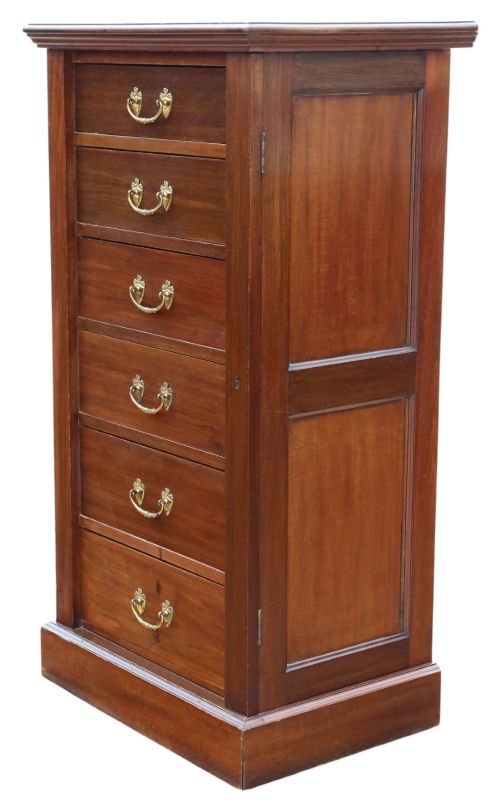
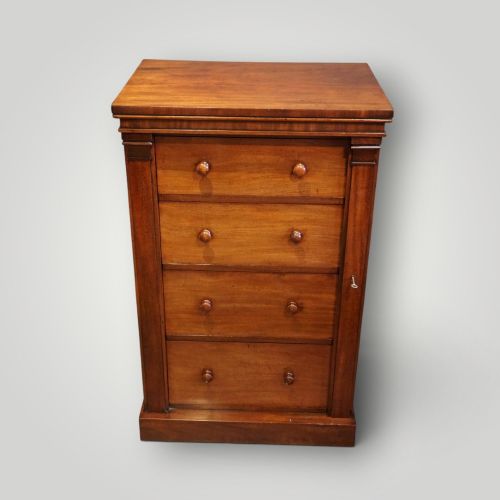
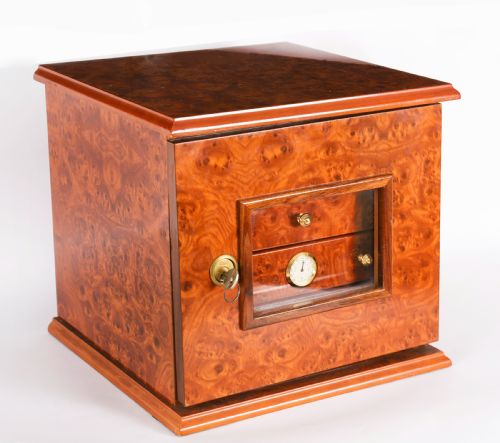
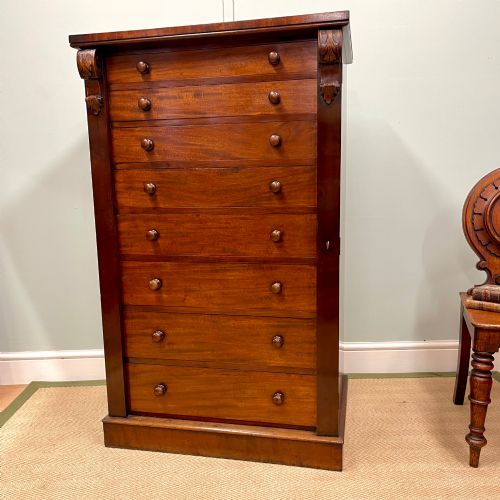
Buyers are most likely to meet mahogany or oak Wellington chests featuring locking side stiles, alongside compact desktop stationery boxes, cigar humidors, and tall filing furniture. These pieces reflect the domestic and professional storage needs of the nineteenth and early twentieth centuries.
Materials and Construction
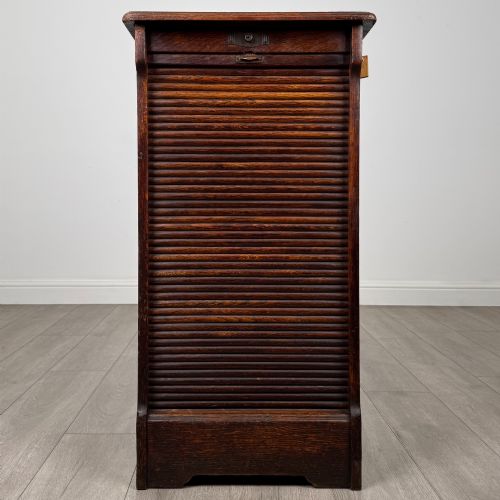
Cabinet makers utilised dense timbers such as mahogany, oak, and burr walnut, often selecting highly figured veneers to cover structural carcases. Drawers and internal compartments rely on traditional dovetail joinery, whilst exterior doors utilise fielded panels or slatted tambour construction.
Security relies on brass lever locks, frequently integrated into a hinged side stile that bars the drawer fronts when secured. Metal components include cast iron safes and brass mounts, hinges, and escutcheons.
Carpenters stored their pride and craft in solid elm joiner's toolboxes equipped with locks for trade secrets.
Markers of Quality
The distinction between ordinary utility items and exceptional examples lies in the selection of timber figure, such as highly grained burr walnut or blonde oak. Superior pieces demonstrate precise dovetailing, intact original brass hardware, and fully functioning locking mechanisms with matching keys.
Maker attribution elevates a piece, with work from established firms displaying refined proportions, superior interior compartmentalisation, and meticulous secondary wood selection in drawer linings.
Collinson & Lock London·Chubb·Waring & Sons·Gillows of Lancaster·George Price·Milners Safe·Druce & Co·Maple & Co
The Vintage Locking Cabinet Glossary
- Wellington chest
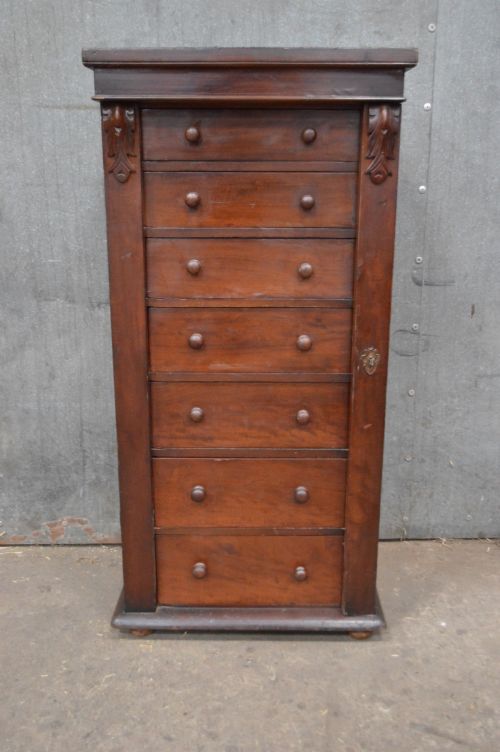
- A tall, narrow chest of drawers secured by a hinged locking stile on one side that fastens over the drawer edges. This form originated in the nineteenth century for compact storage.
- Tambour
- A flexible shutter door formed of narrow strips of wood glued to canvas or leather backing, allowing it to slide smoothly around a curved track. It is commonly found on filing cabinets and desks.
- Tantalus
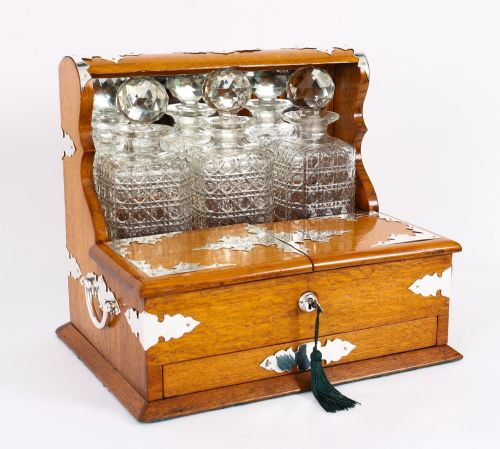
- A locking beverage stand holding decanters in a frame that prevents their removal until the top bar is unlocked. It typically houses cut glass bottles for spirits.
- Humidor
- A specialised cabinet or box designed to keep cigars at a controlled humidity, frequently lined with Spanish cedar and fitted with a secure lock. These pieces often feature burr elm or walnut exteriors.
- Escutcheon
- A flat plate of brass or other metal surrounding a keyhole to protect the surrounding wood from wear. Elaborate examples form part of the decorative scheme on nineteenth-century storage pieces.
Vintage Locking Cabinet: Frequently Asked Questions
What is a Wellington chest?
A Wellington chest is a tall, narrow set of drawers featuring a hinged locking flap or stile down one vertical edge. When locked with a key, this bar fastens over the drawer ends to secure all the contents at once.
Originating in the nineteenth century, these pieces were designed to hold linen, papers, or valuables securely in a compact footprint.
How do tambour doors work?
Tambour doors consist of narrow vertical slats of wood fixed to a flexible fabric backing, allowing the entire panel to slide smoothly along a curved track. This mechanism conceals interior shelving or filing slots without requiring clearance for swinging doors.
Cabinet makers utilised this technique on oak and mahogany office furniture from the late Victorian and Edwardian periods.
Where were tantalus cabinets used?
A tantalus was typically kept in a gentleman's study, dining room, or drawing room to display and secure decanters of spirits. The locking metal framework prevented guests or servants from helping themselves without authorization.
These pieces usually combine oak or mahogany woodwork with brass mounts and cut glass decanters.
How do I care for antique wood?
Antique mahogany, oak, and walnut benefit from stable indoor humidity away from direct heat sources and sunlight, which can dry out timber and fade finishes. Regular dusting with a soft, dry cloth preserves the polished surface without the buildup of modern silicones.
Applying a traditional beeswax periodically nourishes the grain and maintains the natural lustre of the timber.