




Vintage Library Swivel Chair
A vintage library swivel chair brings solid period timber and practical movement to a home study.
Vintage Library Swivel Chair
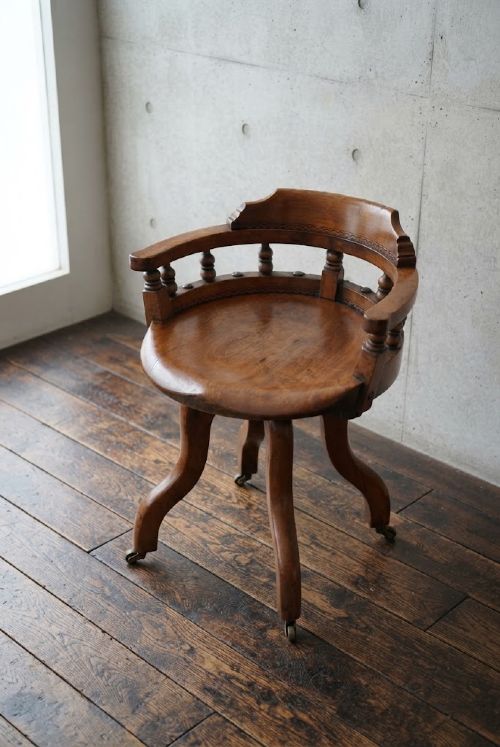
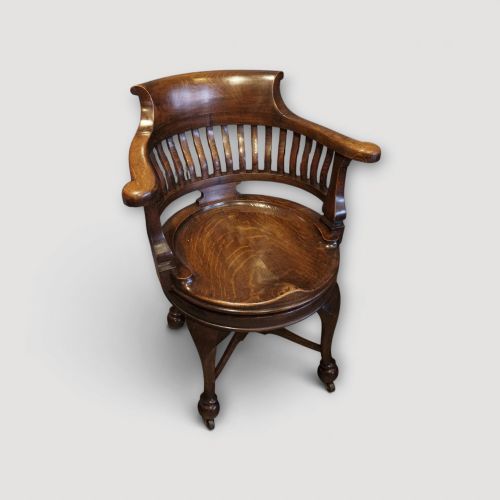
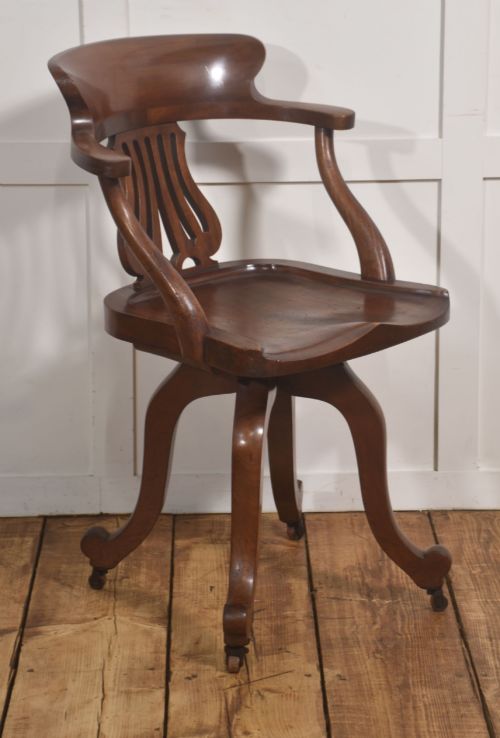
When you search for a vintage library swivel chair, you are looking at rotating seating designed for writing rooms and studies, spanning the Victorian, Edwardian, and interwar periods. The pieces appearing here most often are revolving desk chairs constructed from oak or mahogany, frequently fitted with mechanical height adjustment.
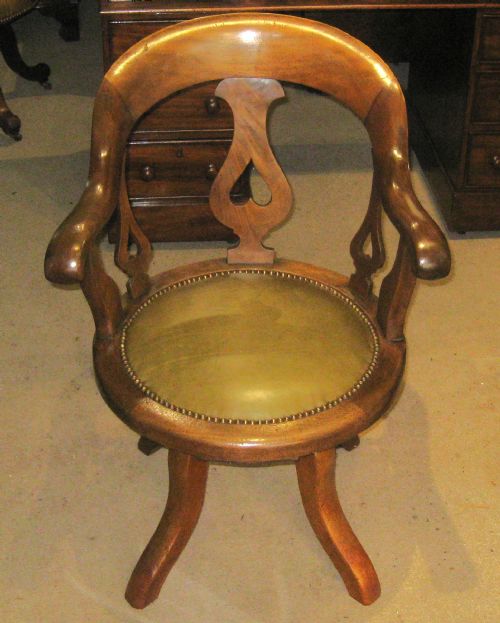
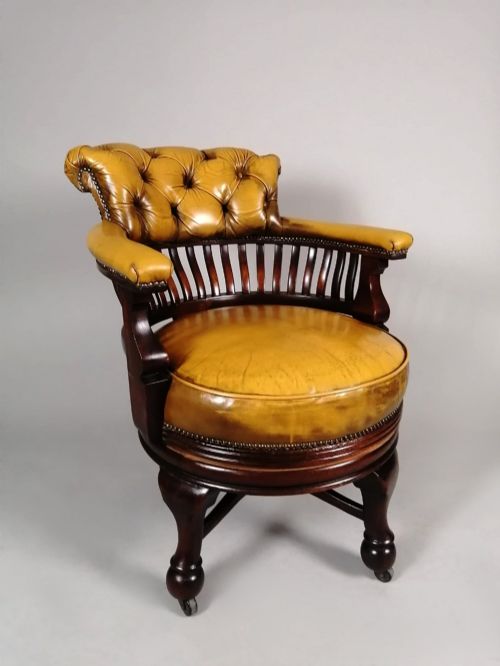
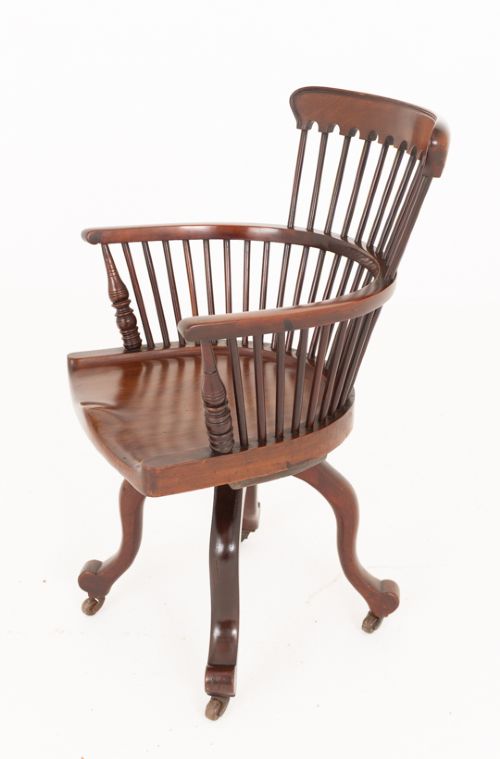
Makers built these desk chairs to function day in, day out, resulting in robust forms such as captain's chairs and open armchairs. You will encounter models ranging from plain timber seats to those featuring buttoned leather upholstery.
The origins stretch from the late nineteenth century through to the 1920s, reflecting the heavy functional requirements of period offices and libraries. Oak and mahogany dominate the offerings, matched with beech and walnut frames.
What varies in quality
The distinction between ordinary and superior pieces rests on the selection of timber and the complexity of the revolving mechanism. Dense, figured mahogany or quarter-sawn oak combined with smooth, robust swivel hardware elevates a chair above basic utility models.
Refinement in the carving, the quality of the leather hide, and the presence of original cast brass castors also separate standard office seating from finer library armchairs. Original adjustments and sound structural integrity define the better examples.
Vintage Library Swivel Chair Retail Price Guide 2026
Typical asking prices for vintage library swivel chair among the pieces listed under this phrase on Sellingantiques today, from the lower quarter to the upper quarter. They describe what is for sale here now, not the wider market.
Materials span solid oak, mahogany, walnut, beech, leather, brass, and cast iron across Victorian and Edwardian periods.
George Bartholomew and Co
The Vintage Library Swivel Chair Glossary
- Revolving desk chair
- A seat fitted with a central pivot mechanism that allows it to turn through a full circle.
- Captain's chair
- A sturdy wooden armchair with a rounded, curved backrest supported by vertical spindles.
- Quarter-sawn oak
- Timber cut radially from the log to produce a distinct, durable grain pattern with prominent flecks.
- Castor
- A small wheel mounted on a swivel attached to the base of each leg for easy movement across floors.
- Buttoned leather
- Upholstery pulled deep with buttons arranged in a geometric pattern to secure internal padding.
Vintage Library Swivel Chair: Frequently Asked Questions
Are these chairs comfortable for daily desk work?
These seating pieces were engineered for long hours of writing and administration in period offices and libraries.
Many examples feature supportive curved backrests and padded leather seats that suit modern working habits.
How do I adjust the height on these swivel chairs?
Most period models utilise a central threaded steel spindle hidden beneath the seat, which raises or lowers the chair when turned.
Some later versions from the early twentieth century rely on mechanical spring or lever systems.
What timber types should I look for?
Mahogany and oak are the most common woods found in these designs, offering substantial weight and lasting durability.
Walnut, beech, and ash also appear frequently across Edwardian and Victorian workshop productions.
How can I tell a Victorian chair from an Edwardian one?
Victorian models tend to display heavier proportions, darker finishes, and deep buttoned leather upholstery.
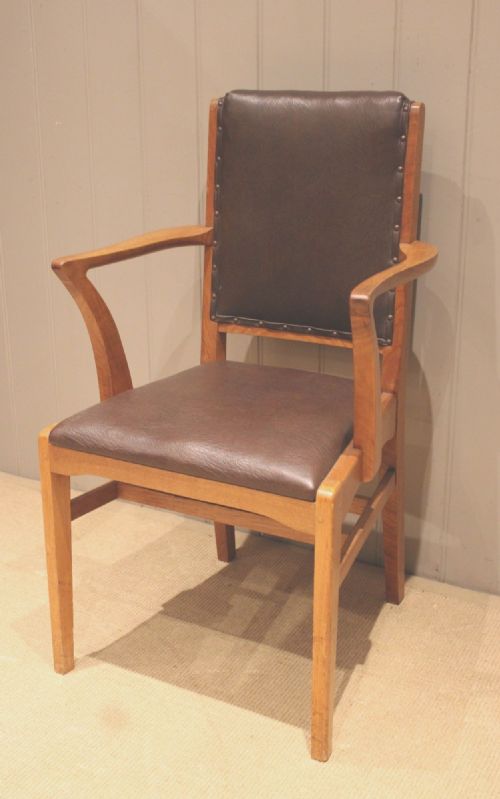
Edwardian pieces often show lighter oak frames, simpler lines, and influences from the Arts and Crafts movement.