



Slatted Back Desk Chair
A slatted back desk chair combines sturdy timber construction with straightforward support, offering both reliable everyday use and traditional character for a workspace.
Slatted Back Desk Chair
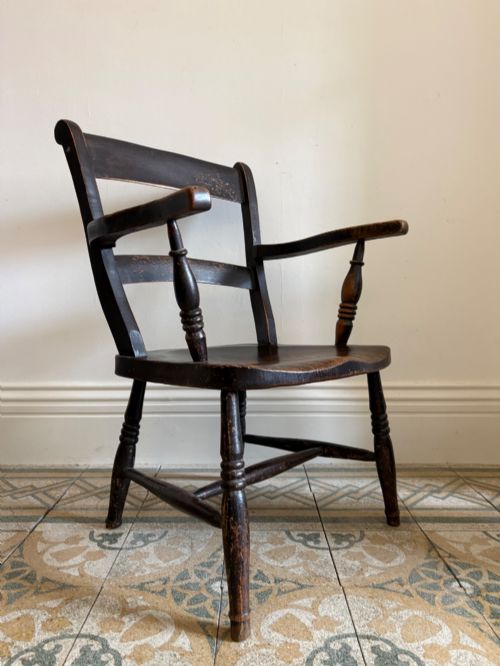
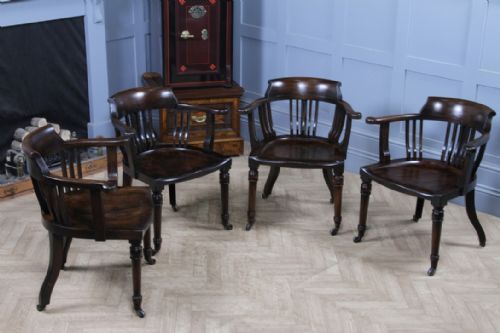
A slatted back desk chair is a practical seating option found across several historical periods, most commonly appearing in Victorian, Edwardian, and Georgian styles. Buyers encounter various formats on this page, ranging from standard wooden office chairs and swivel models to solid elm Windsor chairs and regional vernacular armchairs.
Makers utilised durable local timbers like oak, elm, ash, and mahogany to build these desk chairs for both domestic studies and commercial offices. The selection includes simpler country pieces alongside more refined styles influenced by the Arts and Crafts movement and George III designs.
Materials and Construction
Makers constructed these chairs primarily from solid hardwoods such as oak, mahogany, birch, and beech, often pairing elm or ash seats with turned wooden spindles and slats. Joinery relied on traditional methods, securing upright slats into bentwood or steam-bent frames, while revolving office versions incorporated early brass and metal swivel mechanisms.
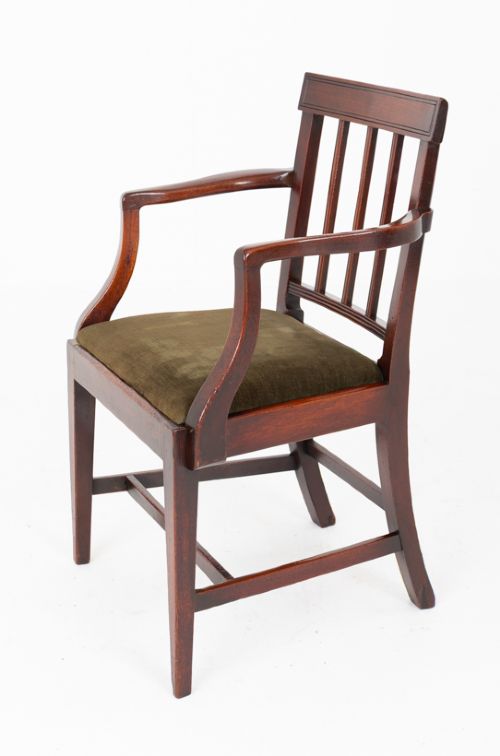
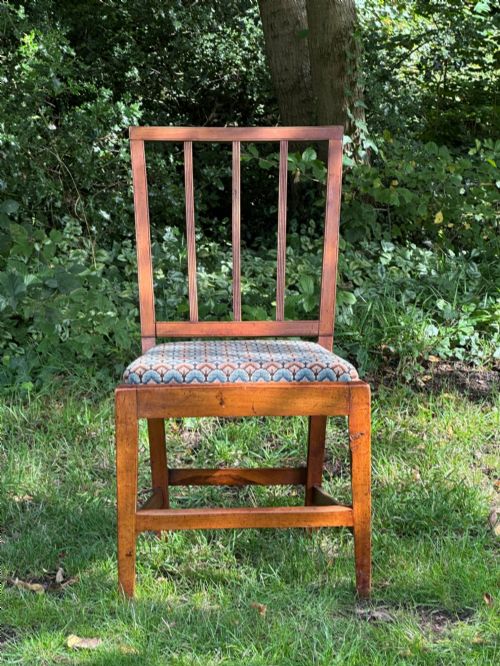
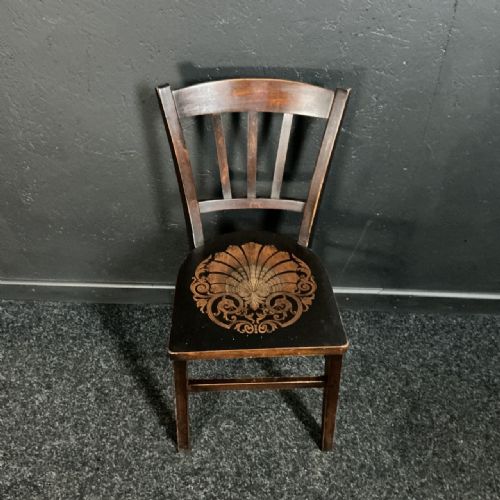
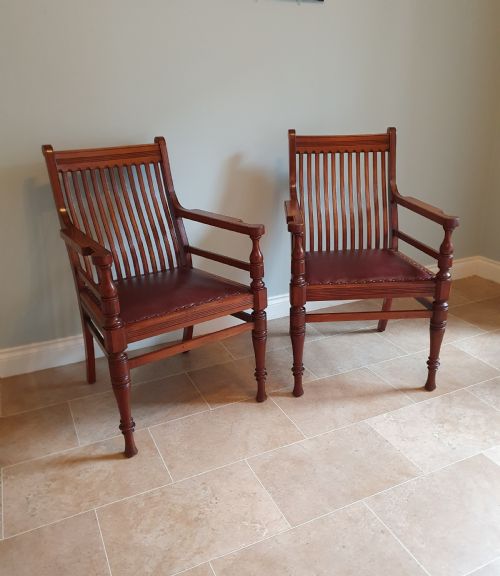
Upholstery appears on select examples in the form of drop-in seats covered in leather, fabric, or velvet, though many variations preserve plain timber or splat seats. Surface finishes range from ebonised treatments and inlaid mahogany details to natural waxed oak and pitch pine.
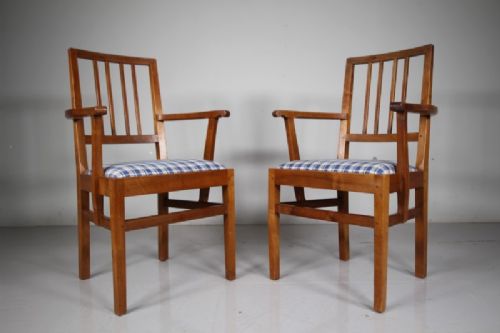
Listings feature oak, mahogany, elm, and ash chairs spanning the Georgian, Victorian, and Edwardian periods.
Assessing Quality
Quality in a slatted back desk chair depends on the integrity of the timber selection and the resilience of the original joinery. Better examples demonstrate careful selection of figured mahogany or well-seasoned oak, with tight joints in the slatted backrest and stable construction in the arms and legs.
The sophistication of the turning, the presence of maker stamps or specific regional characteristics, and the retention of original swivel mechanisms elevate certain pieces above standard utility seating. Lesser quality is seen in replacement components or poorly stabilized frames that compromise the chair's structural balance.
The Slatted Back Desk Chair Glossary
- Slatted back
- A chair back constructed from a series of vertical wooden slats or bars secured between top and bottom rails.
- Windsor chair
- A chair built with a solid wooden seat into which the legs and back spindles are directly bored.
- Swivel mechanism
- The mechanical hardware beneath the seat that allows a desk chair to rotate fully on its base.
- Carver chair
- An armchair, typically designed in a lighter proportion to match a set of smaller dining or side chairs.
- Vernacular
- Objects made by local craftsmen using regional traditions and readily available native timbers rather than strict academic styles.
Slatted Back Desk Chair: Frequently Asked Questions
Are these chairs comfortable for daily work?
Many of these chairs provide solid lower back support through their upright wooden slats, making them suitable for regular desk use. Some versions include padded leather or upholstered drop-in seats for added comfort during longer periods of sitting.
Revolving and swivel models offer extra mobility for office environments. Buyers can also add loose cushions to wooden-seated variants without altering the antique frame.
How do I tell an Edwardian desk chair from a Victorian one?
Victorian desk chairs often feature heavier proportions, darker mahogany or walnut finishes, and traditional spindle or lath back designs built for durability. Edwardian pieces tend to show lighter construction, frequently incorporating inlaid mahogany, satinwood stringing, or simplified Arts and Crafts influences.
Examining the turning on the legs and the style of the wood grain helps distinguish between the two eras. Cabinetmakers of the Edwardian period also leaned towards revived Sheraton or Regency forms.
What woods were commonly used for these chairs?
Makers relied on native and imported hardwoods, with oak and mahogany being the most widespread choices for formal and office settings. Elm and ash frequently appear in country-made regional armchairs and Windsor variations due to their toughness.
Beech and birch served as sturdy alternatives for bentwood components and swivel frames. Walnut and pitch pine appear less commonly in specific stylistic niches like Gothic revival or late nineteenth-century seating.
Can I use a swivel desk chair on modern flooring?
Most antique swivel chairs operate on traditional wooden or metal spindles without modern casters, meaning they function best on protective rugs or carpets. Placing felt pads under the feet helps prevent scratching on polished wooden floors.
Because nineteenth and early twentieth-century mechanisms differ from modern office hardware, users should check the rotation range before placing the chair on delicate surfaces.