




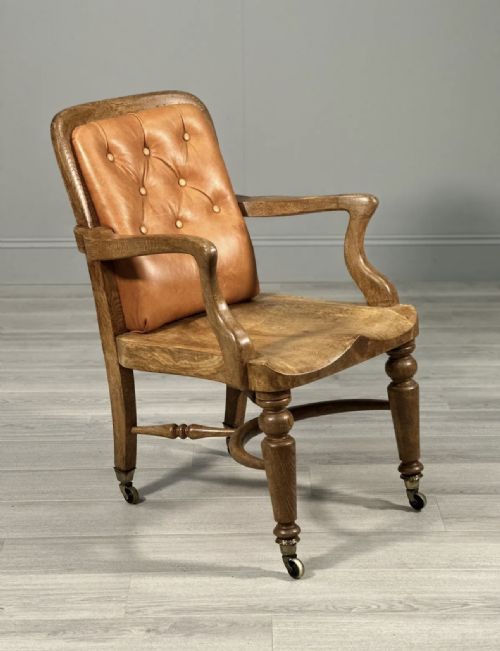
Traditional Oak Swivel Armchair
These traditional oak swivel armchair examples bring solid construction and adjustable comfort to your study.
Traditional Oak Swivel Armchair
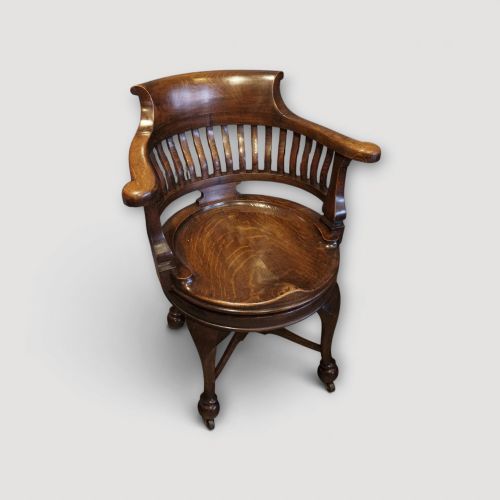
A traditional oak swivel armchair is a sturdy seating option designed for office and desk use, combining timber frames with rotating mechanisms. When searching for a traditional oak swivel armchair, you will encounter pieces spanning from the late nineteenth century through to the interwar period.
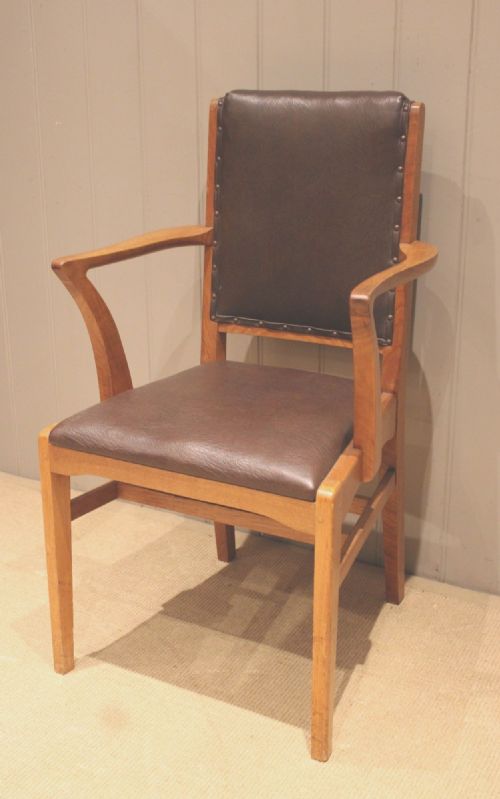
The prevailing styles on this page belong to the Edwardian era, alongside Late Victorian, Arts and Crafts, and Aesthetic Movement designs. These pieces function primarily as desk chairs or office chairs, featuring pivoting bases and supportive armrests.
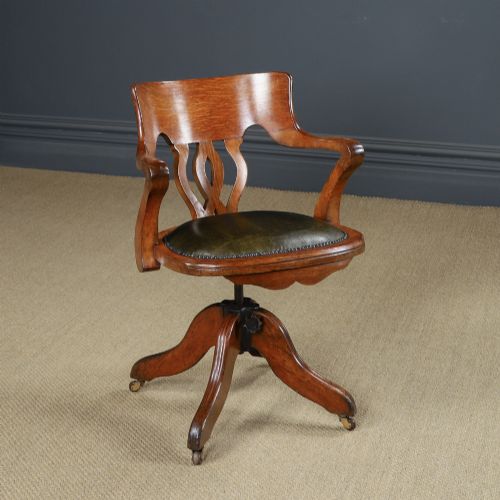
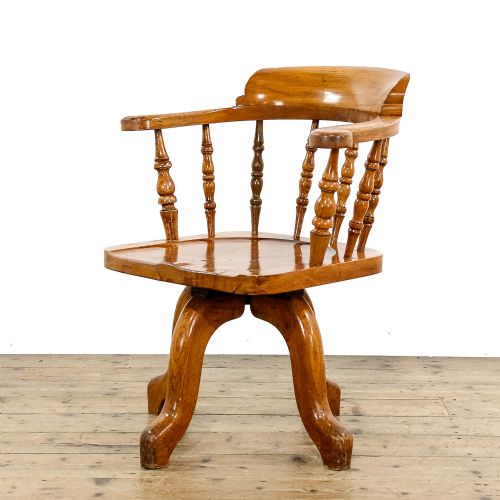
Most examples rely on solid timber frames paired with metal swivel and tilt hardware beneath the seat. You will find variations ranging from plain wooden seats to upholstered hide pads.
Materials and construction
The primary structural timber used across these pieces is oak, frequently supplemented by beech for internal framing or secondary components. Metal and cast iron mechanisms provide the underlying pivot and tilt functionality hidden beneath the seat.
Upholstered variants incorporate leather, sometimes in specific shades like green or tan hide, fastened with metal tacks. Joinery techniques from the period ensure stability during constant rotation and adjustment at a desk.
Traditional Oak Swivel Armchair Retail Price Guide 2026
Typical asking prices for traditional oak swivel armchair among the pieces listed under this phrase on Sellingantiques today, from the lower quarter to the upper quarter. They describe what is for sale here now, not the wider market.
Listings span the late nineteenth century through to the nineteen-thirties, featuring Edwardian, Arts and Crafts, and Aesthetic Movement designs.
Assessing quality and craftsmanship
Quality in these desk chairs rests on the robustness of the timber frame and the smoothness of the underlying swivel and tilt mechanism. Better examples display refined joinery and thoughtful proportions, whereas simpler pieces utilise plain wooden seats and straightforward turning.
The integration of the revolving pivot dictates how well the chair functions in daily use. Retaining original leather upholstery and period metal hardware elevates the integrity of the piece.
Edward William Godwin
The Traditional Oak Swivel Armchair Glossary
- Revolving desk chair
- A seat fitted with a central spindle that allows the top portion to rotate freely. This configuration was designed for office environments where mobility was necessary.
- Tilt mechanism
- The mechanical assembly beneath the seat that permits the user to lean backward at an angle. It often operates alongside the primary swivel action.
- Hide
- The natural leather used to cover upholstered seat pads and backrests on office chairs. Tan and green varieties are common on Edwardian examples.
- Captain's chair
- A sturdy timber armchair with a rounded back rail supported by spindles. These forms were frequently adapted into revolving desk configurations.
Traditional Oak Swivel Armchair: Frequently Asked Questions
What is a traditional oak swivel armchair?
A traditional oak swivel armchair is a desk or office seat built primarily from oak with a mechanical pivot base. These pieces date predominantly from the late nineteenth and early twentieth centuries.
They combine domestic seating comfort with the mobility required for administrative work. The design typically incorporates supportive armrests and a rotating spindle beneath the seat.
How do I date an oak desk chair?
Dating relies on stylistic details, timber selection, and the type of metal hardware used in the swivel mechanism. Edwardian and Late Victorian examples show distinct turnings and joinery methods.
Looking at the construction of the base and the wear on the wood helps confirm the manufacturing period. Design movements like Arts and Crafts also provide clear chronological markers.
Were these chairs used in offices?
These pieces were built specifically for administrative spaces, counting rooms, and studies. The revolving function allowed clerks and professionals to reach different parts of a desk easily.
Office chairs of this era prioritised durability and ergonomic support during long working hours. Their solid oak frames were designed to withstand heavy daily use.
How should I care for leather seats?
Leather seat pads benefit from gentle cleaning and occasional conditioning to maintain the material's flexibility. Avoiding direct sunlight prevents the hide from drying out over time.
Regular dusting keeps the wooden frame and metal mechanism working smoothly. Preserving the original surface maintains the character of the piece.