

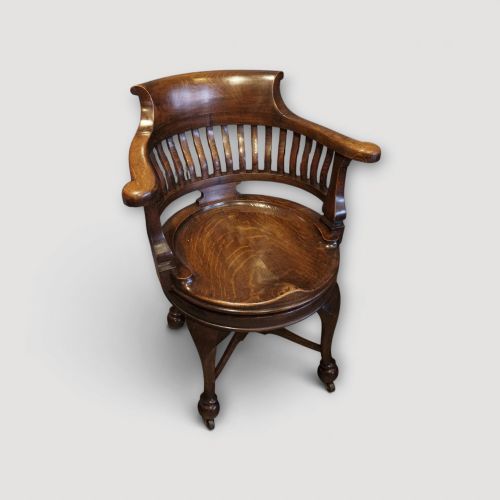


Revolving Oak Study Chair
A revolving oak study chair brings working comfort and period character to a room, built to turn and tilt for daily desk use.
Revolving Oak Study Chair
When searching for a revolving oak study chair, you examine functional seating built for late Victorian, Edwardian, and early twentieth-century offices and studies. These pieces combine sturdy timber frames with mechanical swivel actions to meet the practical demands of writing desks and library tables.
You most frequently encounter Edwardian and George V designs alongside Victorian examples on this page. The typical piece uses a solid timber framework paired with adjustable height mechanisms and pivoting seats for workspace utility.
Makers and designers of the period applied styles ranging from straightforward Arts and Crafts utility to Gothic Revival and Aesthetic Movement ornamentation. Each revolving oak study chair reflects the workspace requirements of its era through robust construction and swivel engineering.
How they were made
Makers built the primary frames of these desk chairs using solid oak, chosen for its density and durability under constant movement. Joinery methods included steam-bent components and secure framing to support the stresses of swiveling and tilting.
Metal mechanisms involving cast iron, brass, and iron provided the swivel and height-adjustment functions beneath the timber seat. Upholstery options commonly featured leather or fabric pads fixed to the wooden bases, whilst certain versions retained plain wooden seats.
Revolving Oak Study Chair Retail Price Guide 2026
Typical asking prices for revolving oak study chair among the pieces listed under this phrase on Sellingantiques today, from the lower quarter to the upper quarter. They describe what is for sale here now, not the wider market.
Victorian office clerks discovered that a well-greased swivel chair sped up ledger work considerably, though it occasionally sent unwary apprentices spinning into the inkwells.
What varies in quality
Quality in these swivel chairs depends on the sophistication of the under-seat mechanism and the integrity of the timber frame. Smoother revolving action and more robust cast iron or brass adjustment hardware separate finer examples from standard commercial seating.
The refinement of the stylistic details, such as carved Gothic Revival motifs or Aesthetic Movement lines, distinguishes workshop pieces from simpler office furniture. Superior construction is evident in the tightness of the joints and the quality of the leather or moulded bentwood elements.
Kendrick & Jefferson·Edward William Godwin
The Revolving Oak Study Chair Glossary
- Swivel desk chair
- A seating form fitted with a central pivot mechanism allowing the top to rotate through a full circle. This design suited office clerks and scholars who needed access to surrounding surfaces.
- Bentwood
- Wood softened through steaming and then bent into curved structural shapes. This technique created comfortable, rounded backrests and supports on Victorian and Edwardian chairs.
- Gothic Revival
- A nineteenth-century design style drawing inspiration from medieval architecture and ornamentation. Pieces in this aesthetic feature pointed arches, heavy mouldings, and geometric tracery.
- Aesthetic Movement
- A late nineteenth-century artistic direction emphasising visual beauty and refined craftsmanship over historical revivalism. Furniture from this movement displays clean lines and thoughtful proportions.
- Arts and Crafts
- A design philosophy championing traditional hand-craftsmanship and simple functional forms. Objects produced under this ethos reject mass-produced ornamentation in favour of honest material expression.
Revolving Oak Study Chair: Frequently Asked Questions
How do I adjust the height on these chairs?
Most of these chairs utilise a threaded steel spindle beneath the seat that raises or lowers the user when turned. Some examples incorporate iron spring mechanisms to permit tilting.
Older mechanisms require manual rotation of the seat top whilst holding the base steady to reach the desired working height.
Were these chairs used only in studies?
Whilst termed study or office chairs, these revolving seats served in administrative banks, legal chambers, and home libraries alike. Their mobility suited tasks requiring interaction with multiple ledgers or writing surfaces.
Their robust oak construction ensured they withstood the rigours of commercial environments as well as private domestic rooms.
How do I care for the leather seats?
Leather seat pads benefit from occasional application of suitable conservation wax or leather food to prevent the hide from drying out. Avoid harsh chemical cleaners that strip natural oils from the material.
Keeping the underlying iron and brass swivel components lightly lubricated ensures the turning action remains smooth and quiet during use.
How do I distinguish Edwardian from Victorian examples?
Victorian revolving chairs often display heavier ornamentation such as Gothic Revival carvings or darker, denser timber finishes. They frequently incorporate complex bentwood assemblies.
Edwardian and George V versions tend toward lighter proportions, simpler Arts and Crafts influences, and streamlined office utility suited to early twentieth-century desks.