


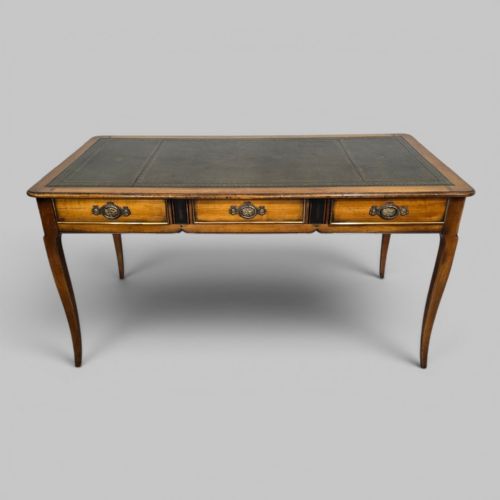

Vintage Library Partners Desk
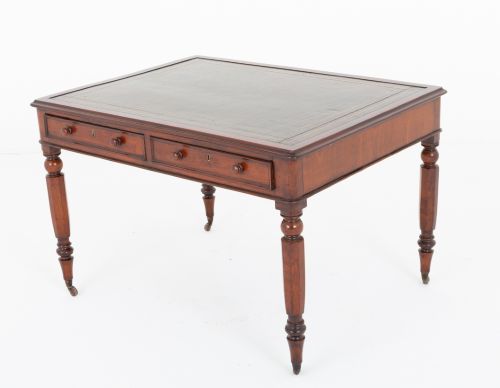
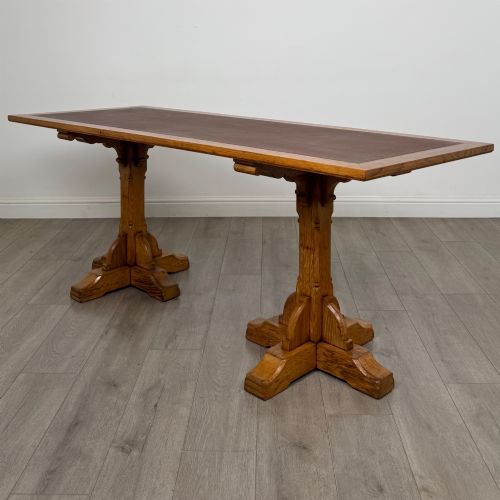
A vintage library partners desk provides two opposing workspaces with generous proportions, built for shared use in a grand room.
Vintage Library Partners Desk
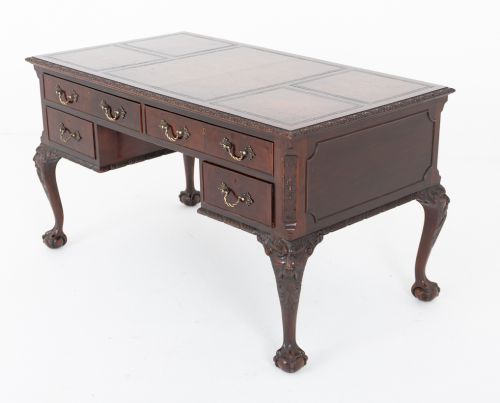
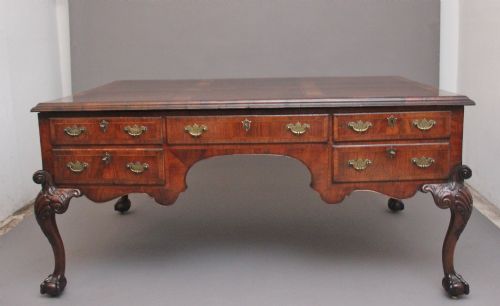
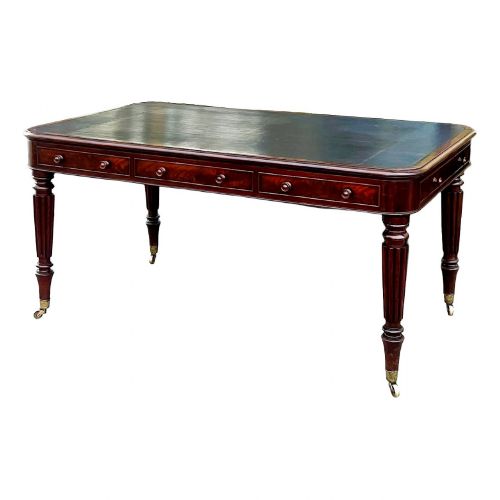
A vintage library partners desk stands as a substantial dual-sided workspace designed for two people to sit opposite one another. These pieces emerge from the nineteenth and early twentieth centuries, spanning periods from the Victorian era through Edwardian times.
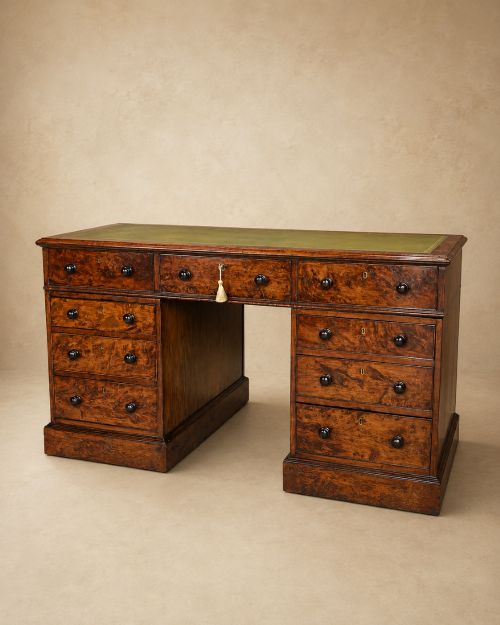
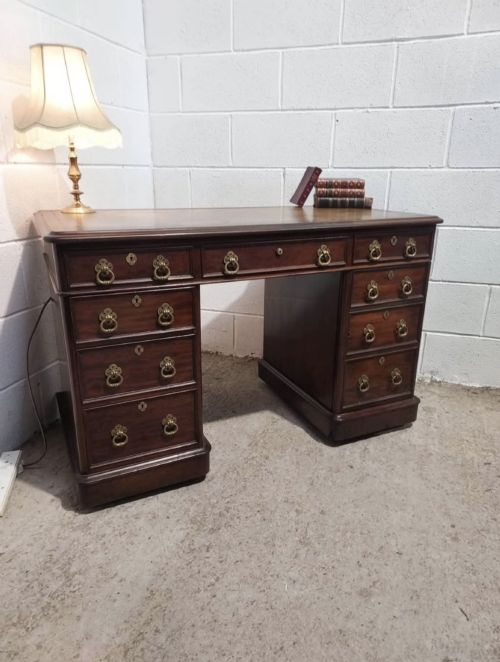
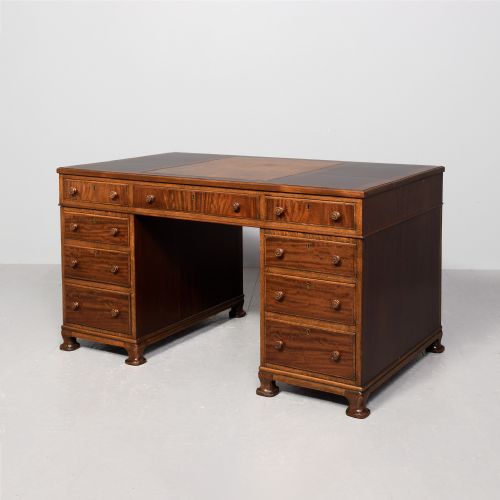
Most examples encountered here take the form of pedestal desks and writing tables featuring banks of drawers on both sides. Cabinetmakers constructed them for studies, libraries, and boardrooms where colleagues or spouses worked face to face.
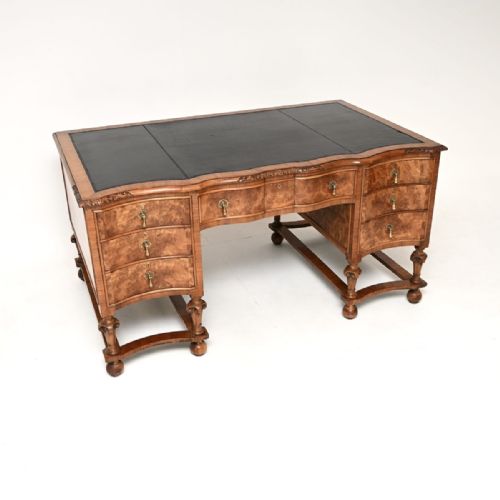
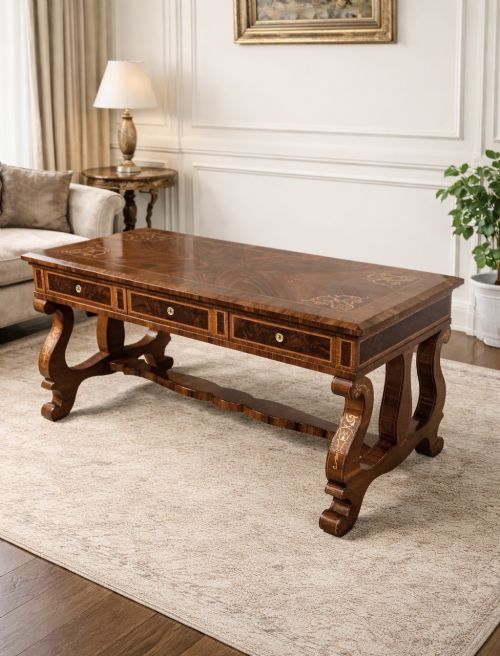
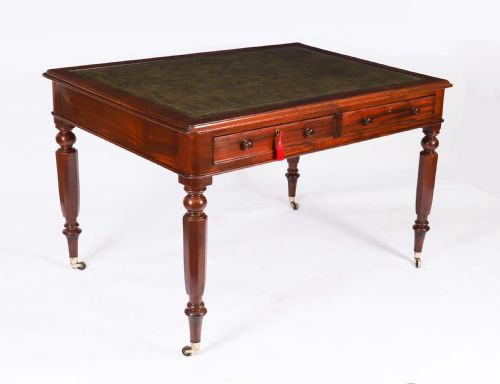
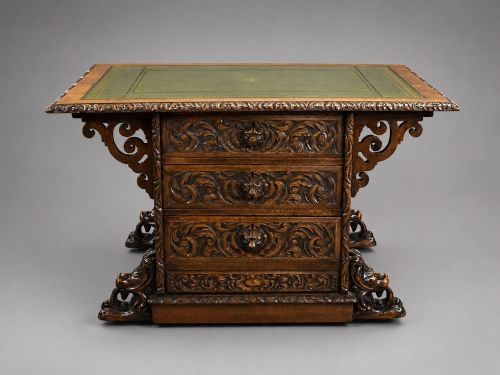
The dominant timbers appearing across these listings are mahogany and oak, frequently paired with inset leather writing surfaces. Variations include burr walnut, elm, and marquetry details, reflecting the diverse tastes of nineteenth and twentieth century workshops.
Materials and construction methods
Makers relied heavily on solid and veneered timbers, selecting dense mahogany, oak, and walnut to handle heavy daily use. Cabinetmakers applied decorative veneers such as flame mahogany and burr walnut to primary display surfaces to create striking grain patterns.
Working surfaces typically incorporate inset tooled leather bordered by blind or gilt tooling. Brass hardware, including drop handles and drawer pulls, complements the dark timbers, while traditional dovetail joinery secures the drawer carcases.
Workshop origins span British cabinetmakers as well as continental and Anglo-Indian regional production centres.
What separates the finest examples
Quality rests upon the selection of timber figures and the precision of the cabinetwork. Fine pieces display matched grain patterns across the primary drawers and panels, demonstrating deliberate planning by the maker.
The depth of carving, the integrity of the original leather writing surface, and the retention of signed maker marks elevate certain desks above standard utilitarian office furniture.
Trollope and sons·Maple and Co·Whytock and Reid of Edinburgh·Cookes of Finsbury London·T Wilson
The Vintage Library Partners Desk Glossary
- Partners desk
- A double-sided writing desk featuring drawers and cupboards on both front and back faces, allowing two people to work opposite each other. This form originated to accommodate business associates sharing a single large table.
- Pedestal desk
- A freestanding desk comprising a top surface supported by two separate pedestals or banks of drawers. These units stand apart from simpler writing tables by offering substantial enclosed storage beneath the main board.
- Dovetail
- An interlocking joint formed by interlocking wedge-shaped fingers, utilised in drawer construction. Traditional hand-cut versions indicate older cabinetmaking methods.
- Burr walnut
- A highly figured wood grain obtained from the abnormal growth of a walnut tree, prized for decorative veneer work. Cabinetmakers used it selectively on prominent drawer fronts and panels.
Vintage Library Partners Desk: Frequently Asked Questions
How do I place a partners desk in a room?
A partners desk demands a central position in a room rather than sitting against a wall, because finished drawers appear on both sides. This freestanding placement allows access to storage from all angles.
Ensure adequate floor space surrounds the piece so chairs pull out comfortably on opposing sides without obstructing doorways or walking routes.
How do I care for the leather top?
The leather writing surface requires gentle cleaning with a damp cloth and occasional treatment with appropriate leather balms to prevent drying and cracking. Avoid harsh chemical cleaners that strip the original gilt tooling.
Using blotters or desk pads during daily writing tasks protects the antique leather from ink stains and deep scratches.
How do I identify the wood used?
Examine the grain patterns, colour tones, and weight of the timber across visible unpolished areas such as drawer interiors and carcass backs. Mahogany presents a reddish-brown hue with straight or ribbon grain, while oak displays prominent medullary rays.
Figured woods like burr walnut show swirling, organic patterns created by tree growths rather than standard longitudinal grain.