





Colonial Carved Writing Table
A colonial carved writing table brings centuries of global trade and rich dense timbers straight into a study.
Colonial Carved Writing Table
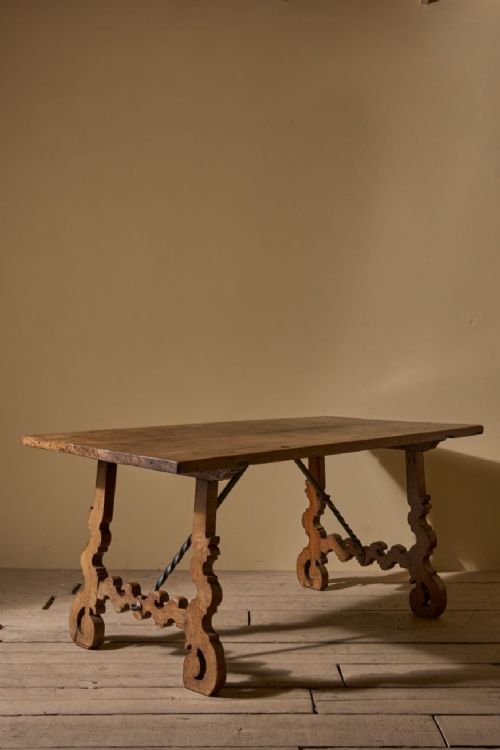
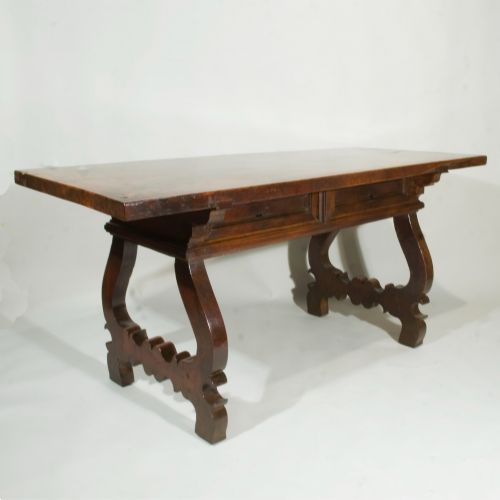
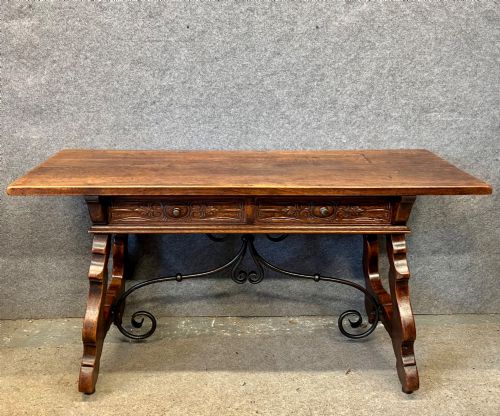
A colonial carved writing table is a sturdy working desk shaped by global empire and local craftsmanship, spanning the seventeenth century through to the Edwardian era. You will encounter forms ranging from heavy Spanish walnut tables to intricately carved nineteenth century padauk partners desks and library tables.
The materials reflect far-flung workshops, utilising durable exotic woods like padauk and rosewood alongside traditional European oak and walnut. These pieces served administrators and merchants across Portuguese, Spanish, and British territories, combining European furniture forms with deeply carved indigenous motifs.
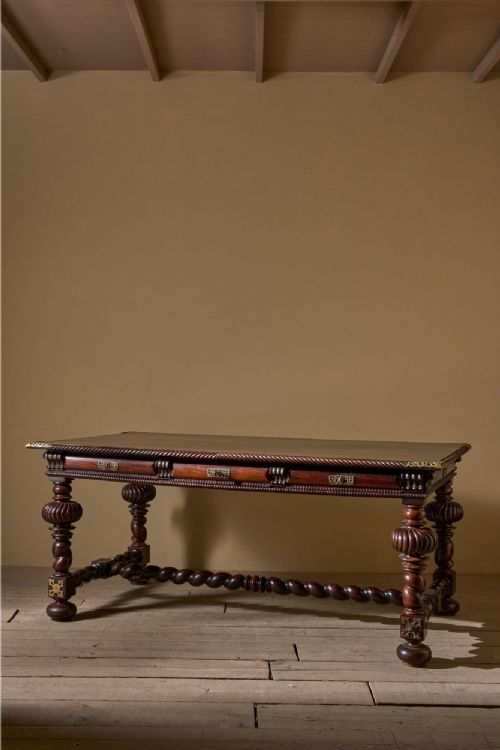
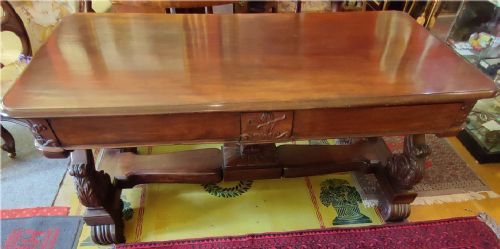
The selection on this page leans heavily toward nineteenth century Anglo-Indian and Portuguese colonial pieces, often featuring pedestal bases or spacious tops designed for heavy administrative work. Alongside these desks, buyers find library tables and occasional sideboards that share the same characteristic carved enrichment.
Materials and construction
Cabinetmakers constructed these writing tables from dense tropical hardwoods such as padauk and rosewood, as well as European walnut and oak. These timbers provided the necessary weight and structural stability for large partners desks and library tables.
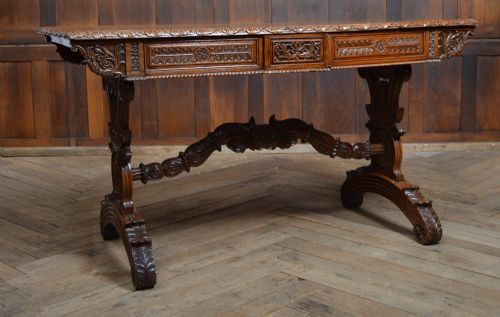
Carving was executed directly into the solid wood rather than applied as separate mouldings, creating deep relief patterns across pedestals, friezes, and drawer fronts. Iron and brass hardware, including handles and key escutcheons, fastened the heavy timber components together securely.
Even administrative desks demand drama, as seen in the heavy carved padauk and rosewood surfacing on these colonial tables.
Assessing quality and execution
The distinction between average and exceptional work lies in the crispness and depth of the wood carving. Superior examples display sharp, well-defined motifs across the padauk or walnut, whereas lesser pieces show softer, shallower detailing.
Structural integrity and the retention of original brass or iron hardware heavily influence the standing of a desk. Tables that preserve their original timber patination and drawer linings command greater respect among collectors than those with excessive modern repairs.
Currie And Co Calcutta
The Colonial Carved Writing Table Glossary
- Padauk
- A heavy, durable tropical timber with a reddish hue favoured in Anglo-Indian furniture. It takes fine carving exceptionally well and darkens gracefully over time.
- Partners desk
- A large double-sided writing table designed for two people to work opposite one another. These typically feature drawers and cupboards on both long sides.
- Breakfront
- A piece of furniture where the central section projects forward from the flanking sides. This layout adds architectural depth to pedestals and sideboards.
- Frieze
- The horizontal band of wood running directly beneath the top surface of a table or desk. On these pieces, the frieze often houses drawers and carries continuous carved decoration.
- Patina
- The surface sheen and softening of colour developed by wood over decades of handling and wax polishing. A natural patina signals age and regular use.
Colonial Carved Writing Table: Frequently Asked Questions
What is a partners desk?
A partners desk is a large double-sided writing table built with drawers and storage accessible from both the front and the back. This layout allowed two people to sit opposite each other and work simultaneously.
These pieces were typically used in banks, government offices, and large private libraries during the eighteenth and nineteenth centuries.
How do I care for padauk and rosewood?
Keep tropical hardwood furniture away from direct heat sources and sudden temperature changes to prevent the timber from splitting. Dust regularly with a dry cloth and apply a quality beeswax sparingly to nourish the grain.
Avoid using modern silicone sprays or household polishes that can damage the traditional finish and dull the natural patina.
Are these desks suitable for daily work?
Many of these tables and desks remain robust enough for daily computer and paperwork use, provided the joints and drawers are stable. Their generous proportions often offer ample surface area for modern office equipment.
Consider the working height and knee clearance before purchasing, as older desks can occasionally sit lower than modern standard office chairs allow.
How can I tell the period of a table?
Dating relies on examining the timber species, construction methods, and the style of the carving. Seventeenth and eighteenth-century examples often use Spanish walnut in simpler, rustic or baroque forms, while nineteenth-century Anglo-Indian pieces typically employ padauk with dense foliate carving.
Internal drawer construction, such as hand-cut dovetails and secondary woods, also provides reliable clues to a piece's age of manufacture.