
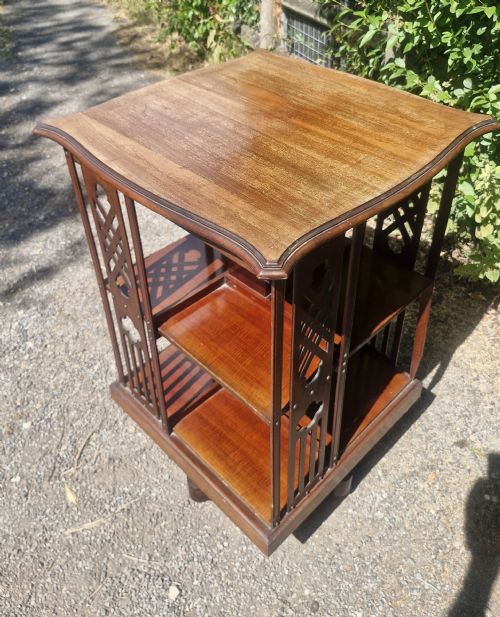
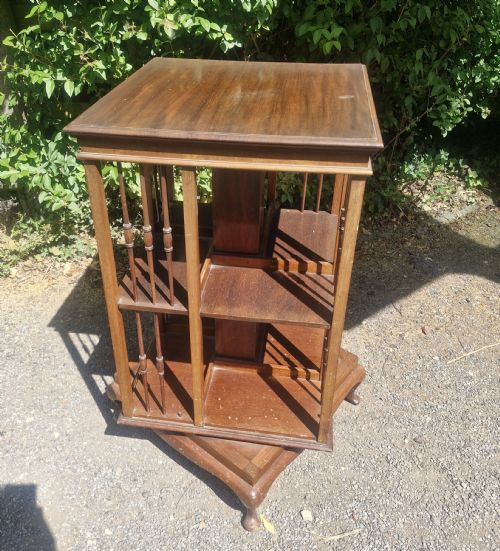
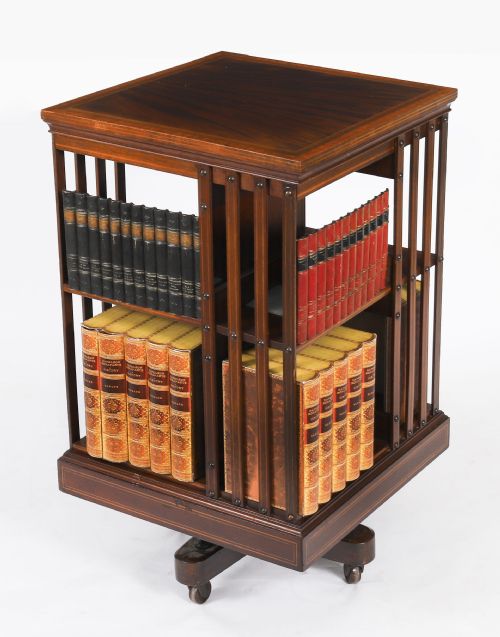
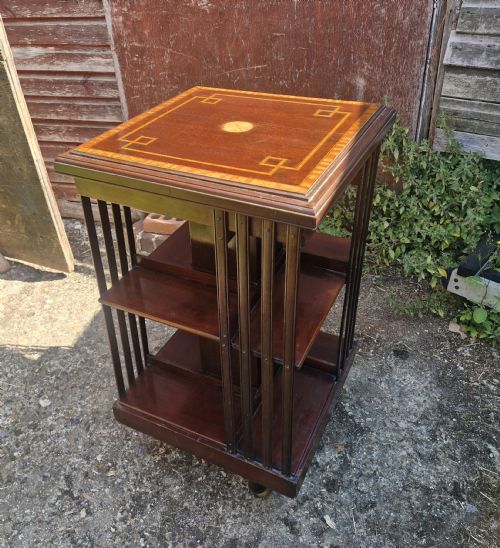
Vintage Library Bookstand
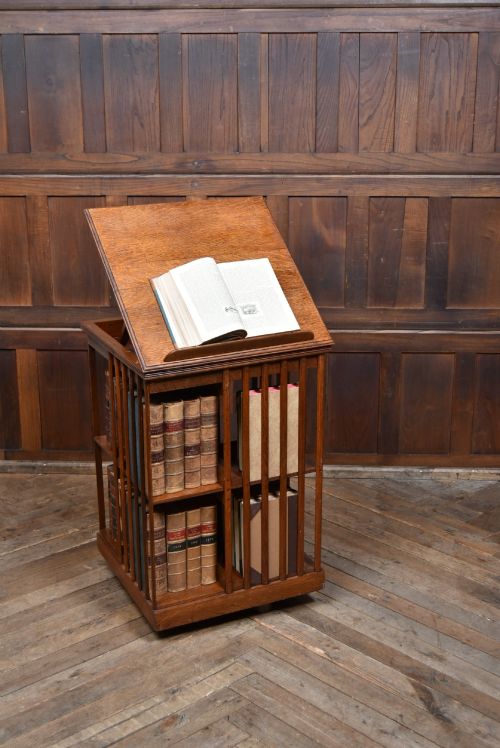
A vintage library bookstand turns heavy reference volumes smoothly at your elbow, bringing practicality and classic period charm into a study.
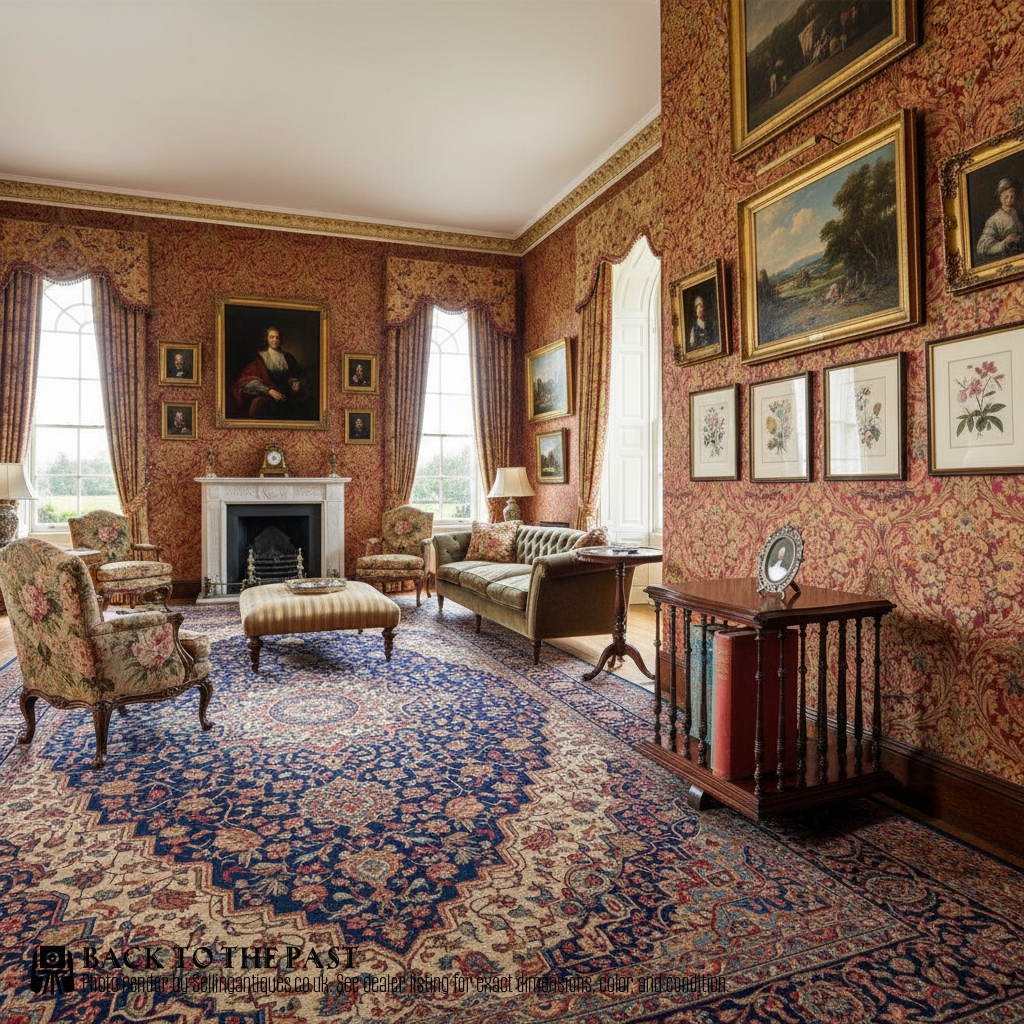
Vintage Library Bookstand
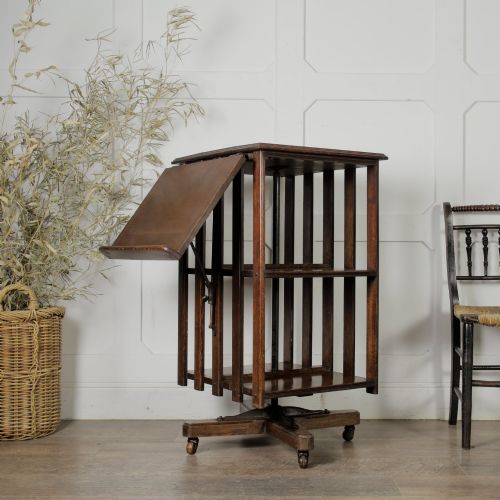
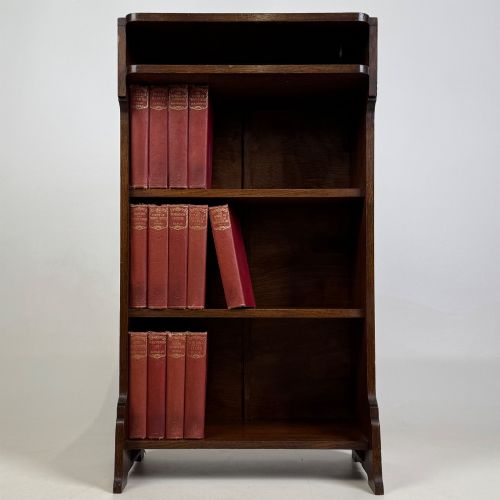
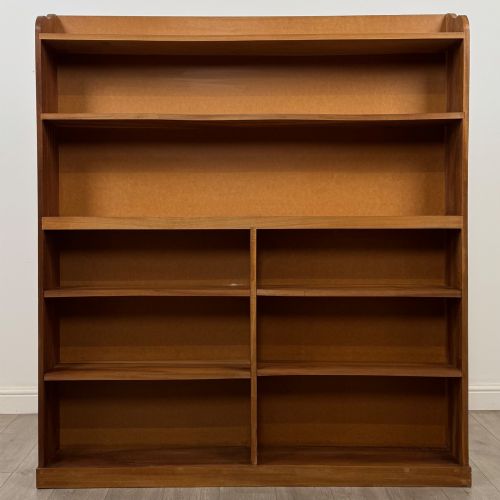
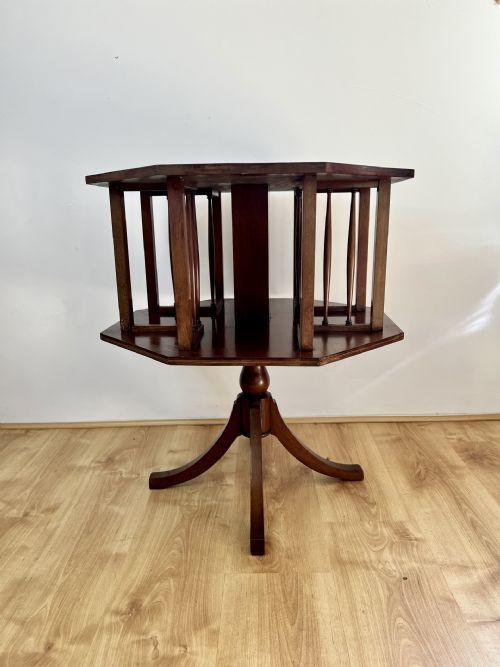
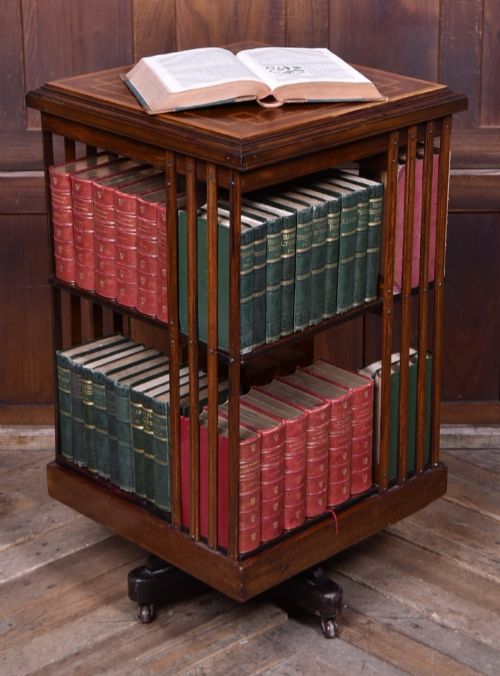
When you search for a vintage library bookstand, you encounter practical reading accessories designed to hold volumes conveniently within reach. The selection centres primarily on revolving bookcases, desk-top book rests, and open shelf units spanning the Victorian and Edwardian eras. These pieces accommodated the growing volume of personal libraries and reading materials in homes and offices.
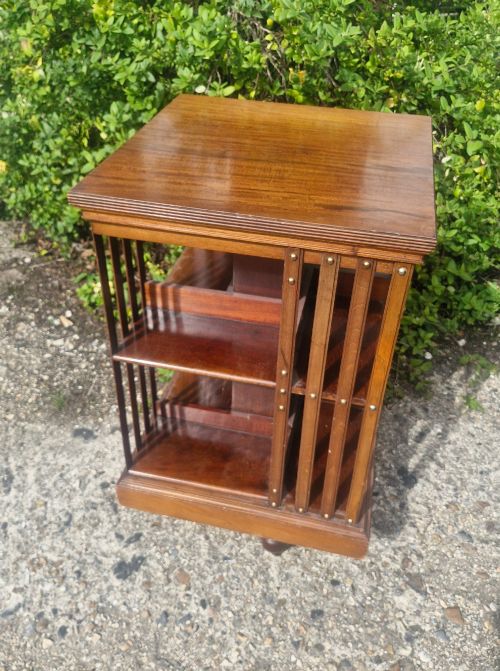
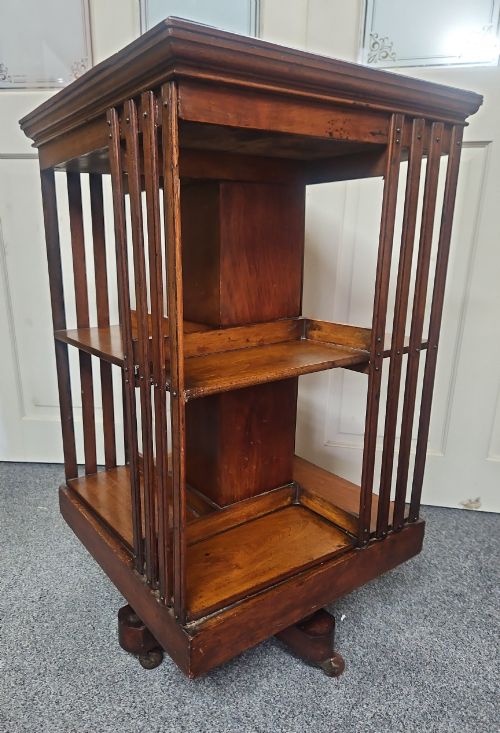
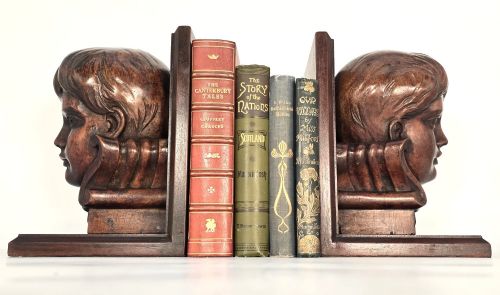
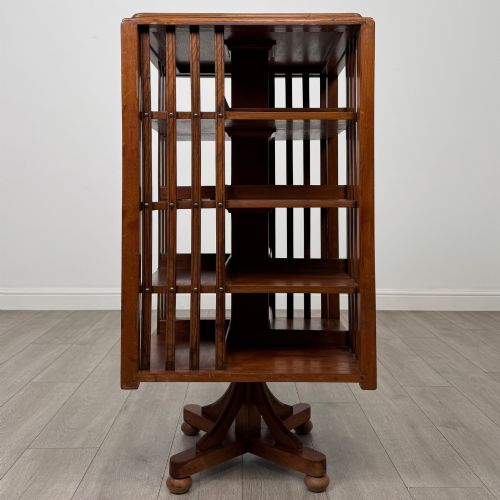
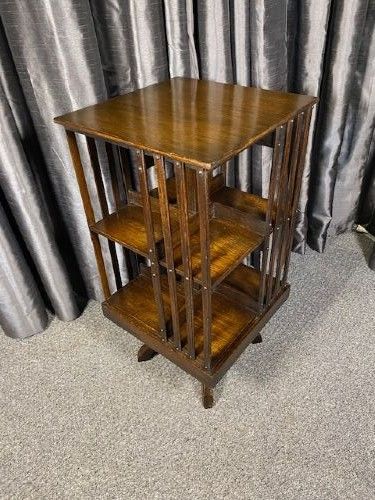
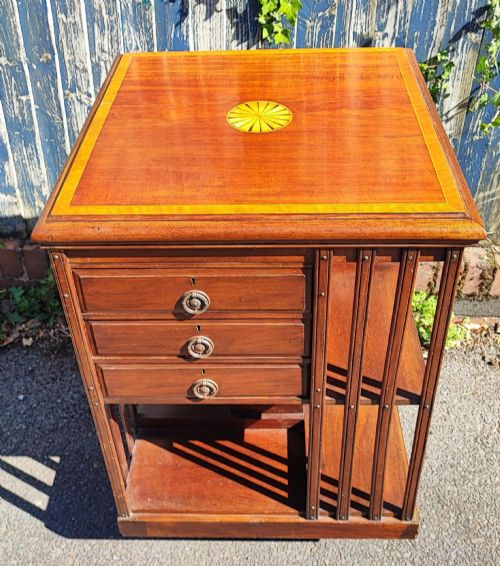
The most common version you meet on this page is the Edwardian mahogany revolving bookcase, often featuring inlaid wood or satinwood details. Alongside these stand robust oak revolving models, walnut book holders, and occasional pairs of carved library bookends. Their forms range from compact desk accessories to tall floor-standing revolving units designed to spin on a central spindle.
Materials and construction methods
Cabinetmakers built these pieces using solid and veneered hardwoods, predominantly selecting mahogany, oak, and walnut for their strength and rich grain. Satinwood and delicate inlay work frequently appeared on finer Edwardian examples to provide decorative contrast. Brass mounts and cast iron components added durability and functional support to moving parts and desk stands.
Revolving designs relied on internal rotary mechanisms that allowed heavy tiers of books to turn smoothly with minimal effort. Joinery techniques such as dovetailed drawers and sturdy framing ensured the carcases could bear the heavy weight of dense volumes without warping. Carved detailing, including ecclesiastical motifs and fine inlay, demonstrated the hand skills of the period workshops.
Listings feature oak, mahogany, walnut, and satinwood across Victorian and Edwardian periods.
Distinctions in quality and finish
The sophistication of the timber selection largely dictates the standing of a piece, with figured flame mahogany and richly patinated walnut sitting at the upper end. Finely executed marquetry inlay and crisp wood carving separate standard utility items from more ambitious commission work. The smoothness and stability of the revolving action also indicate the care taken during initial manufacture.
Proportion and scale influence desirability, as taller or exceptionally compact revolving bookcases required greater structural ingenuity from the cabinetmaker. Original brass mounts, well-preserved painted plaques, and matched timber grains enhance the overall integrity of a piece. Lesser examples often feature plain secondary woods and simpler, heavier joinery without decorative enrichment.
Maple and Co
The Vintage Library Bookstand Glossary
- Revolving bookcase
- A freestanding bookcase built upon a concealed rotating base that allows access to books from any angle.
- Satinwood
- A light-coloured, hard timber from tropical trees used extensively for cabinetwork and decorative stringing during the Edwardian period.
- Book trough
- A small open-topped container designed to hold a modest selection of books upright on a desk or table surface.
- Inlay
- The technique of embedding pieces of contrasting wood or other materials into a recess to form a decorative surface pattern.
- Burr walnut
- Timber taken from a tree growth that produces intricate, swirling grain patterns highly prized for luxury furniture veneers.
Vintage Library Bookstand: Frequently Asked Questions
How do revolving bookcases work?
A concealed internal cross-base and central spindle allow the upper tiers to turn freely in either direction. This mechanism lets a reader access multiple volumes from a single seated position.
Built to bear substantial weight, the rotating assembly relies on balanced carpentry to prevent tipping when books are removed from one side only.
What is the difference between a bookstand and a bookcase?
Bookstands generally refer to smaller, portable desk accessories, table-top rests, or rotating units designed for immediate working reference. Bookcases are larger stationary or revolving items meant for general room storage.
Both forms served the heavy reading habits of Victorian and Edwardian libraries but occupied different functional spaces in the home.
Where were these pieces used originally?
They found places in private libraries, studies, offices, and drawing rooms where dictionaries, law reports, and novels needed to be kept close at hand. Revolving models stood beside armchairs or executive desks for easy daily consultation.
Smaller desk rests sat directly upon writing tables to prop up heavy ledgers and reference texts at a comfortable reading angle.
How do I care for antique mahogany and walnut?
Keep wooden pieces away from direct sunlight and strong heat sources to prevent the timber and veneers from drying out or splitting. Dust regularly with a dry, soft cloth and apply a quality furniture wax sparingly when the surface loses its lustre.
Avoid using modern liquid polishes containing silicones, which can penetrate older finishes and attract dust over time.