



Tabletop Book Lectern
These tabletop book lecterns are practical reading stands designed for desks and surfaces, offering both sturdy support for heavy volumes and decorative appeal.
Tabletop Book Lectern
When you search for a tabletop book lectern, you encounter portable reading supports designed to hold books, bibles, and music scores at a comfortable angle on desks and tables.
The versions most commonly met on this page span several distinct periods, including the Victorian era, the Edwardian period, and the eighteenth century.
These pieces appear in forms such as folding bible rests, desk-top reading stands, duet stands, and missal stands, constructed by makers across different regions.
How they were made
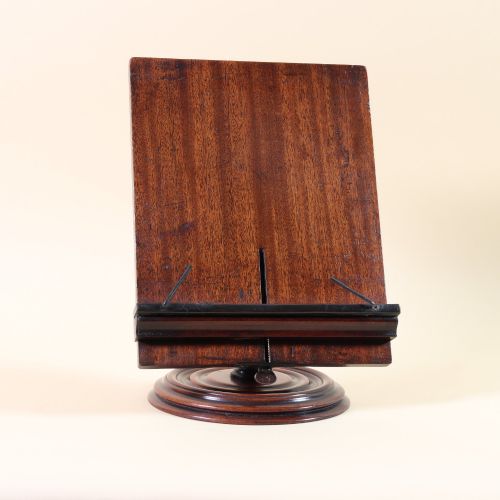
Cabinet makers utilised dense hardwoods like mahogany and oak, often shaping them into folding or adjustable desk accessories suited for daily study.
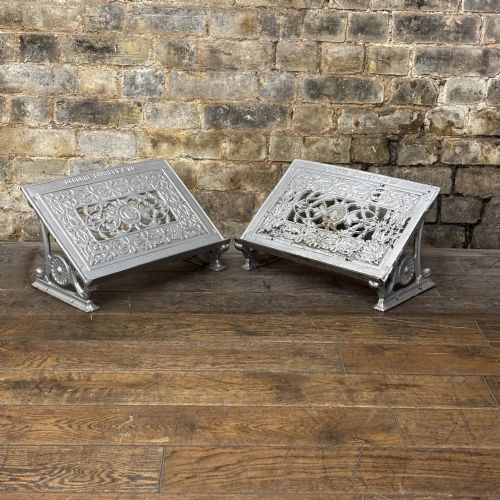
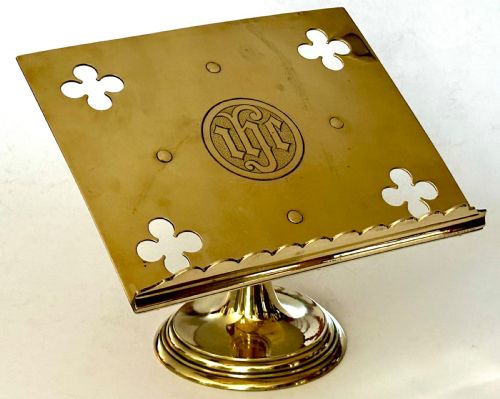
Foundries cast sturdy metals such as brass and cast iron into church book rests and architectural lecterns capable of supporting heavy ecclesiastical volumes.
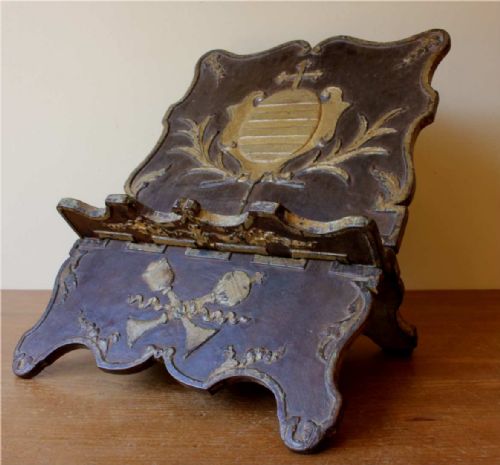
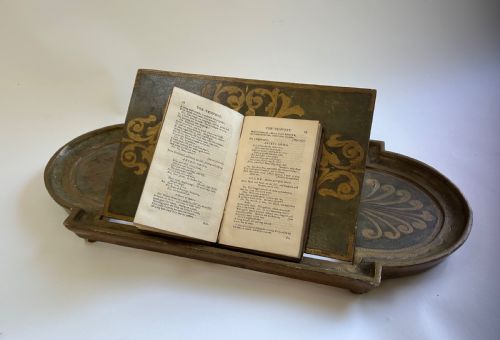
Surface decoration involved applied gesso, gold leaf transfers, and whitewood finishes like Mauchline ware to create decorative visual appeal.
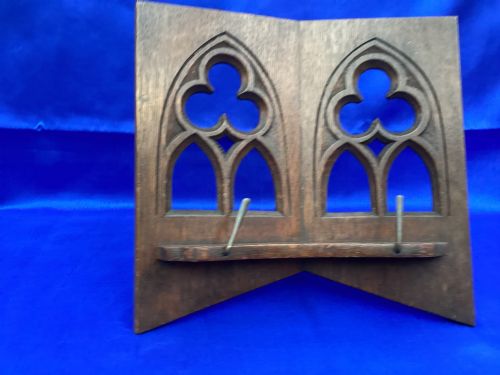
The styles represented across these reading stands include Gothic Revival, French Baroque, Florentine, and nineteenth-century campaign designs.
What varies in quality
The calibre of a tabletop book lectern depends on the crispness of its joinery or casting and the integrity of its folding mechanisms.
Finer examples display careful attention to period stylistic details, such as Gothic Revival tracery or French Baroque carving, rather than plain utility.
The choice of materials dictates durability, distinguishing solid hardwoods and heavy cast metals from lighter decorated whitewoods.
Osborne Garrett & Co
The Tabletop Book Lectern Glossary
- Lectern
- A slanted reading stand designed to hold a book or text at an ergonomic angle for a standing or seated reader. These support heavy volumes during study or religious services.
- Missal stand
- A specialised reading rest specifically proportioned to hold a missal or liturgical book on an altar or desk. They frequently feature folding designs for portability.
- Mauchline ware
- Nineteenth-century Scottish wooden souvenirs decorated with photographic transfers and painted scenes on whitewood. These items often include small portable book stands.
- Campaign stand
- Portable furniture designed for travel, featuring folding mechanisms and robust construction to withstand movement. Nineteenth-century versions utilised sturdy mahogany.
- Gothic Revival
- An architectural and decorative style drawing inspiration from medieval forms, prevalent during the Victorian period. Pieces display pointed arches and heavy tracery.
Tabletop Book Lectern: Frequently Asked Questions
What is a tabletop book lectern used for?
These portable stands prop open heavy books, bibles, and music scores at an angle, freeing the hands and improving posture while reading at a desk or table.
They serve both practical study purposes and decorative display functions within domestic or ecclesiastical settings.
How do I identify a Victorian lectern?
Victorian examples often display heavy cast iron or brass construction, alongside Gothic Revival stylistic elements like pointed arches and ecclesiastical motifs.
Makers from this period also utilised rich oak and mahogany, sometimes incorporating adjustable mechanisms for varying the reading angle.
Are these stands adjustable?
Many of the desk-top reading stands and folding rests include hinged supports or ratcheted bars that alter the slant of the book rest.
Folding variants also collapse flat for easy storage or transport when not in use on a surface.
What materials were used for these stands?
The listings show a variety of durable materials including solid oak, mahogany, cast iron, and heavy brass.
Some lighter decorative pieces feature whitewood with transfer printed scenes or surfaces finished with gesso and gold leaf.