



Reading Easel Desk
These reading easel desk pieces are sturdy surfaces and stands designed for books and papers, offering adjustable positions for the study or library.
Reading Easel Desk
A reading easel desk brings together portable book rests, table-top easels, and larger library or architect tables designed for holding texts and papers at an angle. The selection on this page draws from the Georgian, Victorian, William IV, Regency, and Edwardian eras.
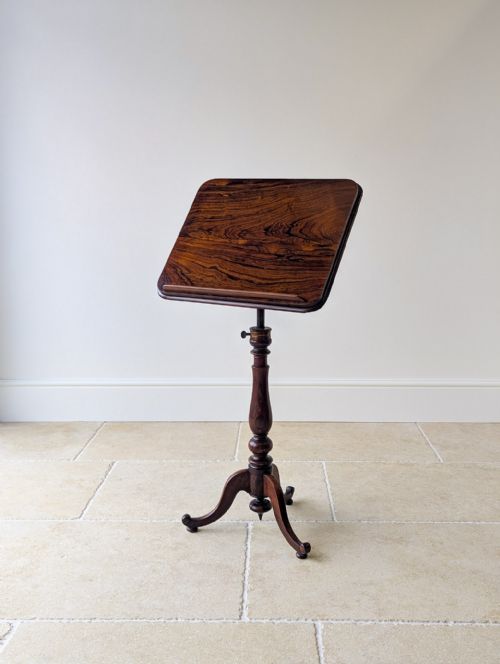
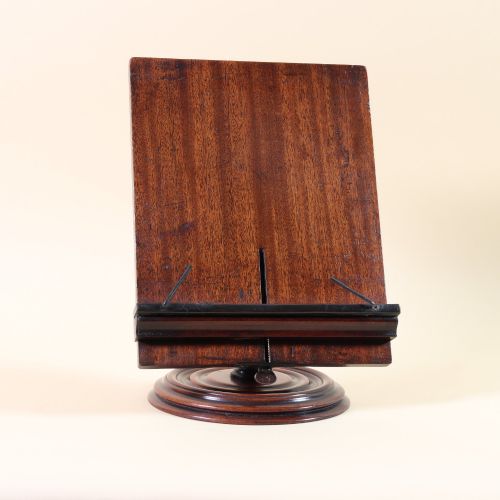
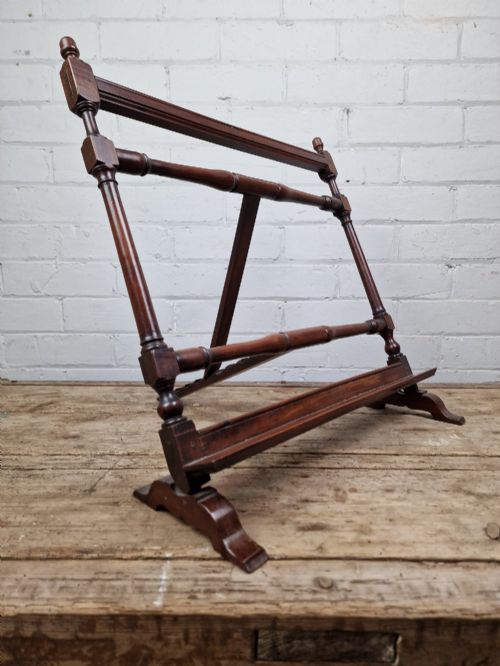
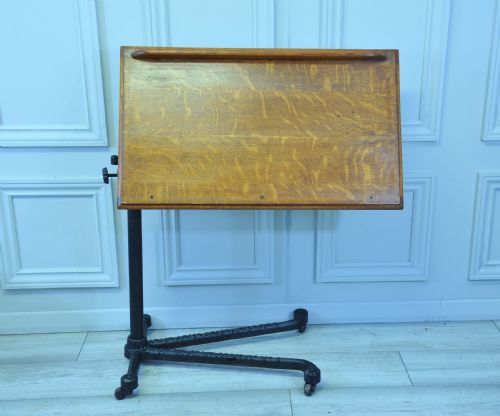
You will encounter mahogany and rosewood table-top reading stands alongside walnut music stands, oak adjustable tables with cast iron, and occasional tables with built-in reading mechanisms. These forms served readers, writers, and artists in the nineteenth century and remain practical today.
Materials and construction
Cabinet makers utilised dense hardwoods like mahogany, rosewood, and walnut for these pieces, often combining them with brass adjustments, metal mechanisms, and occasional cane work. Timber selection ensured the weight and rigidity needed to support heavy bound volumes.
Construction methods focused on adjustable supports, folding bookstands, and desk-top reading ledges that allowed the user to alter the viewing angle. Metal and brass fittings provided the mechanical movement necessary for adjustable heights andtilting surfaces.
Listings feature pieces from the Georgian, Victorian, William IV, Regency, and Edwardian periods, constructed in mahogany, rosewood, walnut, and oak.
Judging quality in a reading easel desk
Quality rests in the precision of the adjustable mechanism and the smoothness of the timber finish. Pieces that retain original brass ratchets, hinges, and screw controls demonstrate superior execution compared to those with later replacements.
The choice of cabinet timber and the joinery of the folding or tilting framework dictate the durability of the piece. Well-figured mahogany and rosewood, paired with robust mechanical hardware, distinguish finer library furniture from simpler utilitarian examples.
Carters Of London
The Reading Easel Desk Glossary
- Bergère
- An enclosed upholstered armchair with wooden framing, sometimes featuring cane panels to the sides and back. These chairs occasionally appear alongside library and reading furniture.
- Lectern
- A slanted stand designed to hold a book or lecture notes at a height convenient for a standing reader or speaker. They often feature adjustable stems or table-top bases.
- Rachet
- A mechanical device consisting of a notched bar and pawl that allows linear or rotational motion in only one direction. In these pieces, it holds the reading ledge at various angles.
- Occasional table
- A small, versatile table intended for light, specific uses around a room, such as holding books or writing materials. They frequently incorporate reading stands or tilting tops.
- Caned
- Woven rattan or split cane material utilised for seat panels or backrests in nineteenth-century seating. It provides a lightweight and flexible surface.
Reading Easel Desk: Frequently Asked Questions
What is a reading easel desk used for?
These pieces provide an angled, adjustable surface for reading large books, drawing, or writing manuscripts. They allow the user to position texts comfortably without straining the neck.
Historically, they sat on tables, desks, or stood independently in libraries and studies to support heavy volumes and reference materials.
How do I adjust the reading angle?
Most pieces utilise a hinged support ledge working in tandem with a brass ratchet or a notched wooden bracket underneath the reading surface. Lifting the board engages the support at the desired notch.
Care should be taken when altering the position on older brass and wood mechanisms to avoid forcing the hinges beyond their intended range.
Are these pieces suitable for modern use?
They suit modern studies, kitchens for cookbooks, or living rooms as display stands for art books and heavy volumes. Their adjustable nature makes them practical for reading tablets or laptops as well.
Placement on a sturdy desk or table is recommended for table-top versions, while freestanding music stands and lecterns operate independently on the floor.
What woods were commonly used?
Mahogany, rosewood, and walnut form the primary timbers seen across these nineteenth-century items. These dense hardwoods provided both structural strength and a polished decorative finish.
Secondary materials include oak for utilitarian frames, alongside brass and cast iron for the adjustable mechanical components.