



Adjustable Ratchet Desk
An adjustable ratchet desk brings ingenious mechanical ingenuity to your workspace, offering tailored angles for reading, writing, and drafting.
Adjustable Ratchet Desk
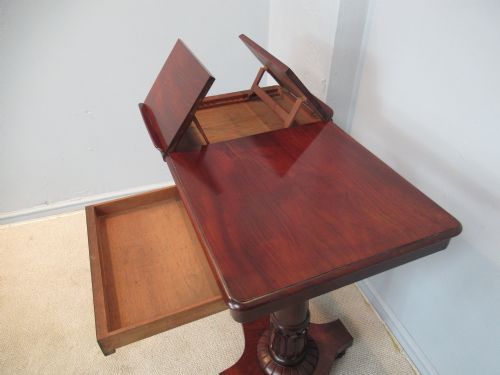
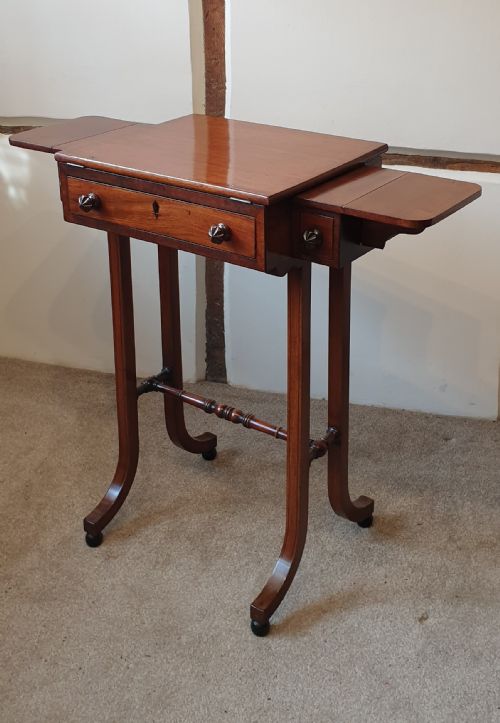
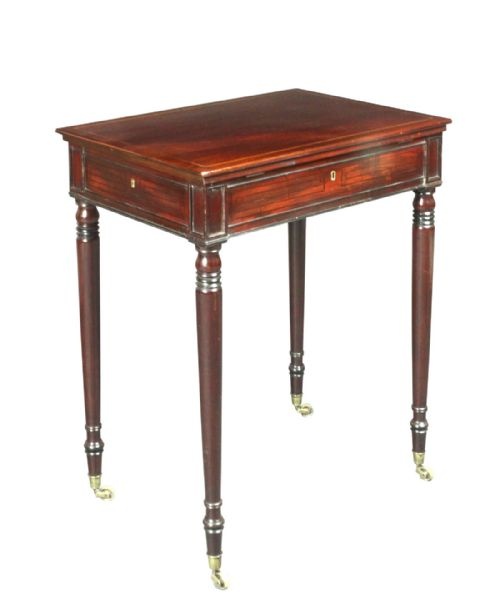
An adjustable ratchet desk provides a versatile surface for writing, reading, and drafting through a mechanical ratcheting mechanism. You are most likely to encounter mahogany and walnut examples from the Regency, Georgian, and Victorian periods.
These pieces encompass various specialised forms including architect's tables, reading tables, and music stands. Many feature leather inserts and double-sided configurations tailored for professional utility.
Origins trace back through the nineteenth century, including specific patented designs such as Carter's patent reading tables. The form bridges the gap between domestic furniture and dedicated workspace engineering.
Construction and materials
Cabinetmakers utilised dense timbers like mahogany, rosewood, and walnut to build these functional stands and desks. These hardwoods provided the structural integrity required for moving parts and daily use.
Brass fittings and metal ratchets were integrated into the wooden frames to enable the adjustable tilting mechanism. Boxwood stringing and leather writing surfaces frequently completed the decorative and practical finish.
The listings span the Georgian, Regency, and Victorian periods, utilising mahogany, rosewood, walnut, brass, and leather.
Judging the standard
Quality rests in the precision and smoothness of the metal ratchet mechanism and its integration into the wooden frame. Superior examples demonstrate seamless adjustment without loosening of the supporting joints over time.
The choice of timber grain and secondary woods dictates the visual standard of the piece. Finer desks display careful selection of figured mahogany or rosewood, complemented by well-executed leather inserts and brass components.
The Adjustable Ratchet Desk Glossary
- Ratchet
- A mechanism consisting of a cog wheel and pawl that allows movement in only one direction. It permits the desk top or reading slope to hold multiple fixed angles.
- Metamorphic
- Furniture designed to transform from one form or use into another. These desks often conceal their adjustable reading stands within standard table silhouettes.
- Cartographer
- A person who draws or produces maps. Desks associated with this profession typically feature adjustable surfaces suited for large, flat documents.
- Lectern
- A slanted support used to hold a book or music score at a height and angle for reading. These often share the mechanical adjusting properties found in writing tables.
Adjustable Ratchet Desk: Frequently Asked Questions
What is an adjustable ratchet desk?
An adjustable ratchet desk is a functional piece of antique furniture equipped with a mechanical ratchet to alter the angle of the writing or reading surface. These desks were designed for architects, draftsmen, and readers who required variable working angles.
They combine traditional cabinetmaking timbers with metal hardware to achieve versatile movement. Surviving examples primarily date from the Georgian, Regency, and Victorian eras.
How did Victorians use these desks?
Victorians utilised these versatile tables for reading, writing, drafting, and holding sheet music. The adjustable mechanism allowed users to position books or papers upright or at a slant for comfortable viewing.
Many of these pieces served specialised roles in libraries, studies, and drawing rooms. Some variations were even designed to function over beds or as double-sided reading stations.
Are these desks suitable for daily work?
These antique desks integrate well into modern spaces as dedicated reading stands, laptop tables, or writing surfaces. Their mechanical adjustability offers ergonomic benefits similar to contemporary adjustable furniture.
Care should be taken to operate the ratchet mechanisms gently to preserve the historical brass and timber components. Using them for contemporary tasks bridges historical craftsmanship with daily utility.