
Vintage Leaf Carved Table
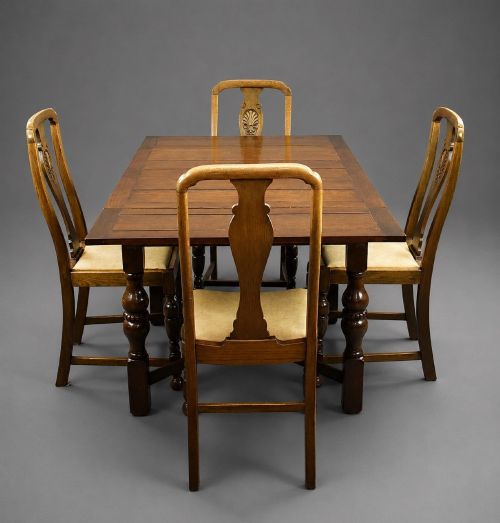
A vintage leaf carved table brings working practicality and period timber into a room, offering adaptable surfaces through clever folding or pull-out leaves.
Vintage Leaf Carved Table
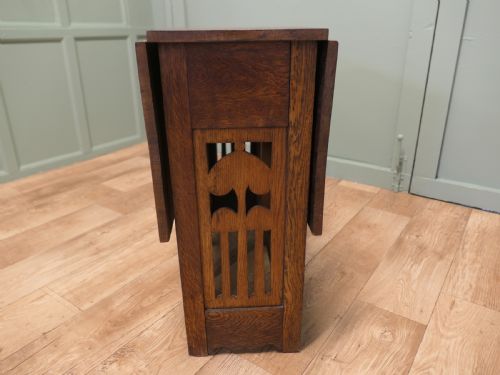
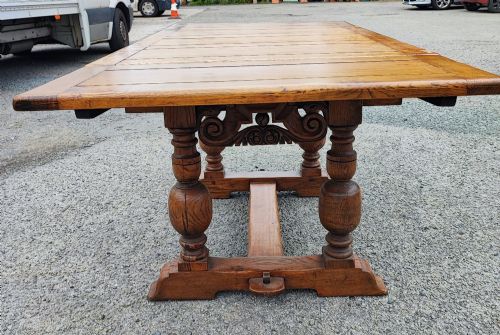
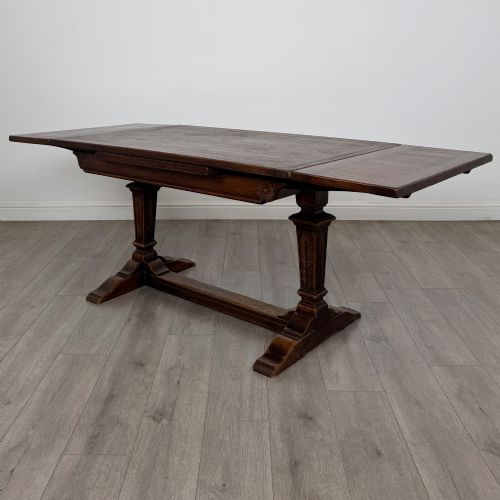
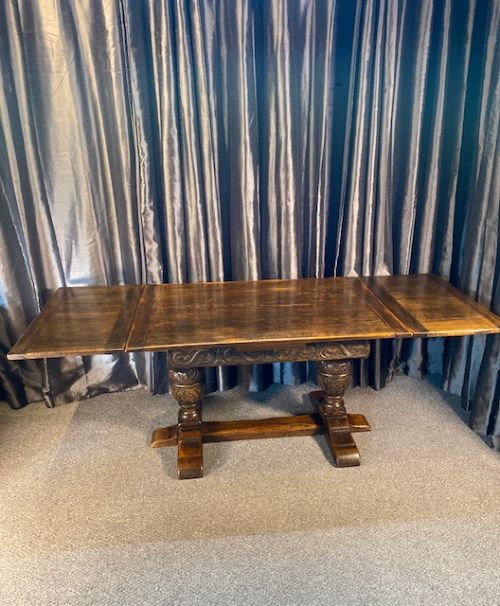
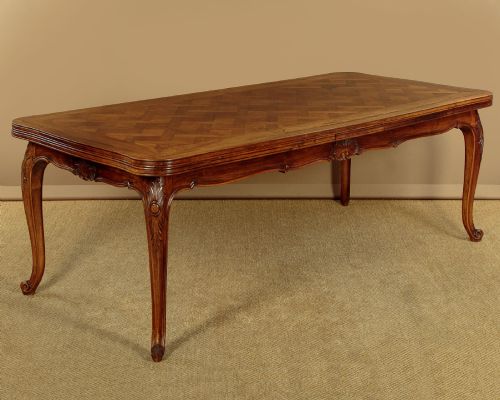
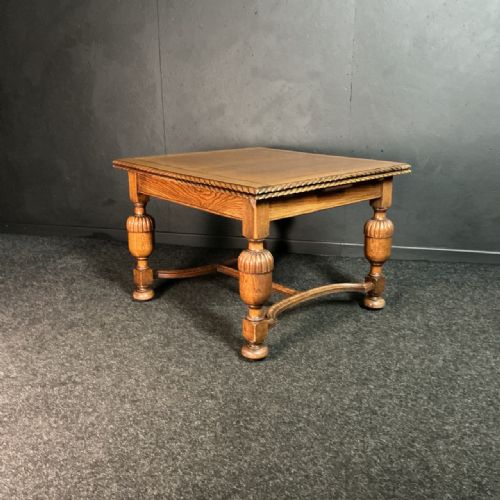
When searching for a vintage leaf carved table, buyers encounter a robust mix of extending dining furniture, compact gateleg forms, and occasional tables spanning from the seventeenth century through to the twentieth century. These pieces utilise clever mechanisms like draw-leaves, drop-flaps, and gatelegs to expand surface area when needed.
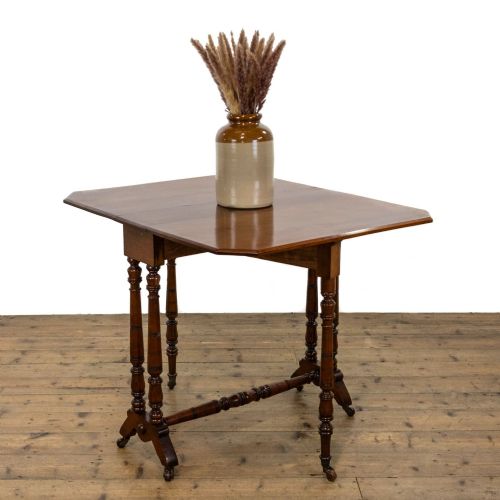
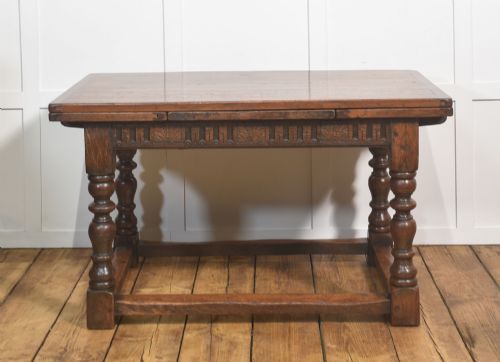
Oak dominates the selection, frequently seen in refectory, farmhouse, and revival styles displaying Jacobean, Elizabethan, or Edwardian influences. Walnut, mahogany, and padauk also appear, providing darker timber tones and figured grains across dining tables, sofa tables, and Pembroke tables.
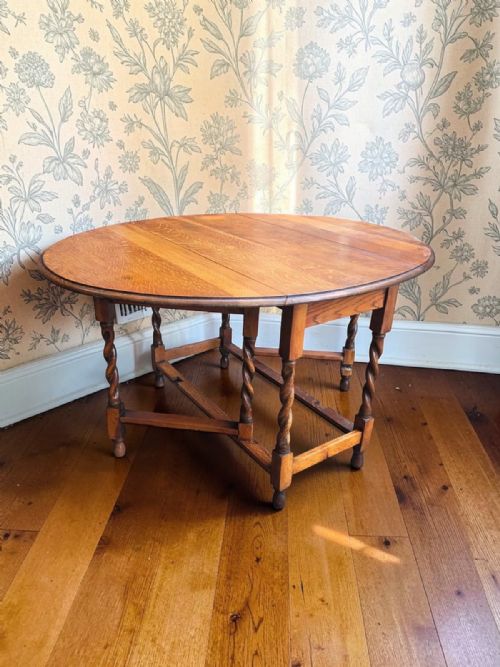
The practical function remains central to these designs, allowing large dining tables to contract for daily use or small occasional tables to unfold when guests arrive. Carved ornamentation ranges from subtle leaf motifs to heavier geometric turnings and barley twists.
Materials and construction methods
Makers relied heavily on solid oak, walnut, and mahogany, selecting timber for its strength and grain pattern before shaping structural elements by hand. Draw-leaf mechanisms and drop-leaves required precise carpentry to ensure sliding extensions and folding flaps operated smoothly over decades of use.
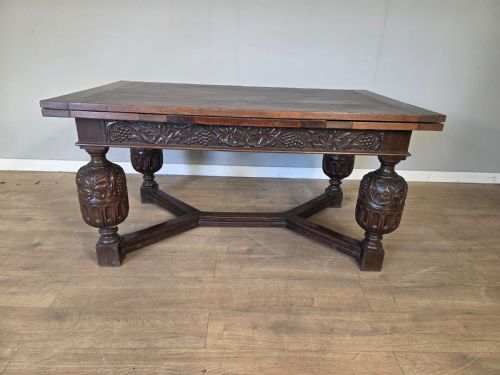
Decorative detailing on these tables involved hand carving directly into the timber, producing relief patterns, leaf motifs, and borders. Turning techniques such as bobbin turning, barley twisting, and spindle work added structural support and visual texture to legs and stretchers.
Listings feature oak, walnut, mahogany, and padauk timbers across centuries of furniture making.
Distinguishing quality across the range
Quality in these tables rests upon the selection of timber and the integrity of the extending mechanism. Superior examples feature well-figured walnut, solid oak with deep original patination, and smooth, binding-free operation in draw-leaf or gateleg joints.
The refinement of the hand carving distinguishes finer workshops from standard production. Crisp detailing in leaf motifs, balanced proportions in turned legs, and tight joinery separate exceptional period pieces from simpler utilitarian items.
The Vintage Leaf Carved Table Glossary
- Draw leaf table
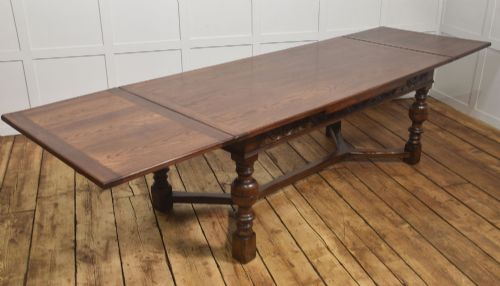
- A dining table equipped with pull-out leaves stored beneath the main surface. These extensions slide out to lengthen the table instantly.
- Gateleg table
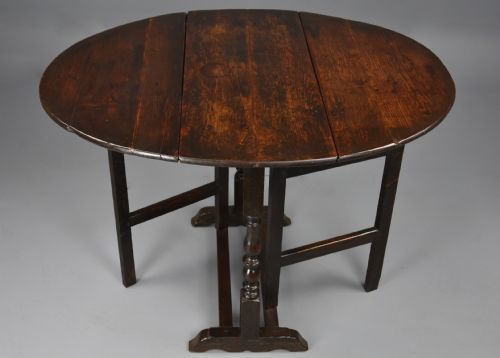
- A drop-leaf table featuring hinged legs that swing outward to support the raised flaps. This design allows the table to fold flat against a wall.
- Refectory table
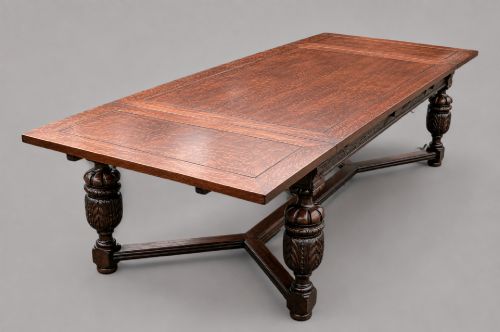
- A long, narrow dining table traditionally used in communal halls. Examples here often feature sturdy timber legs linked by floor stretchers.
- Parquetry
- A geometric mosaic of wood pieces used for decorative surfaces. It appears on tabletops to create patterned wooden designs.
- Patina
- The surface sheen and colour developed by timber through age and handling. Good patina indicates years of gentle use and polishing.
Vintage Leaf Carved Table: Frequently Asked Questions
How do draw leaf tables work?
A draw leaf table operates using two hidden leaves stored directly beneath the main top panel. To extend the surface, you pull the main top slightly upward and slide the end leaves out from underneath until they drop securely into place.
This mechanism allows the table to expand quickly without requiring separate stored leaves or awkward drop-down flaps.
What is a gateleg table used for?
A gateleg table provides a versatile surface that adapts to rooms of changing size. With the drop leaves folded down against the sides, the table occupies minimal floor space as a console or side table.
Swinging the hinged supporting legs outward allows the leaves to lift into a flat, sturdy position, creating a full dining or work surface.
How can I identify an oak refectory table?
An oak refectory table is characterised by its long, narrow proportions and heavy timber construction. These tables typically feature substantial plank tops supported by thick legs connected near the floor by sturdy wooden stretchers.
They often incorporate pull-out extension leaves or simple fixed tops designed for communal dining.
Where do I place a sofa table?
A sofa table is traditionally positioned directly against the back of a sofa or freestanding in a hallway. Its narrow profile provides a convenient surface for lamps, books, or decorative items without obstructing room flow.
Many examples feature drop flaps or drawers, offering additional workspace when pulled out into the room.