
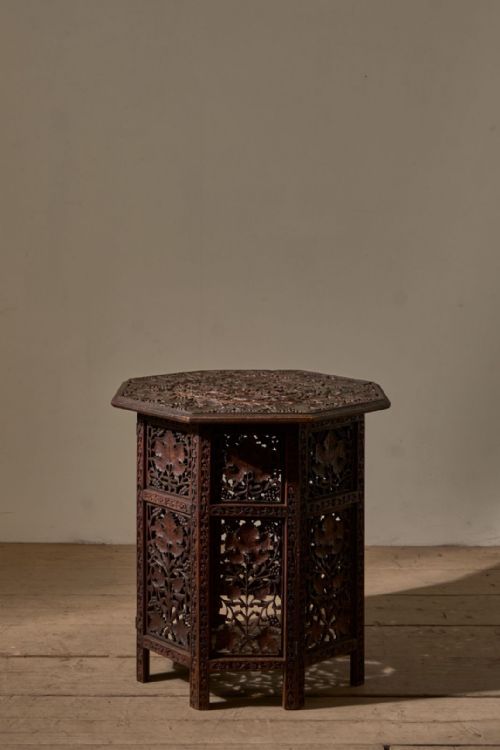


Indian Folding Tea Table
An indian folding tea table combines intricate woodwork with a collapsible base, offering versatility and craftsmanship from the late nineteenth and early twentieth centuries.
Indian Folding Tea Table
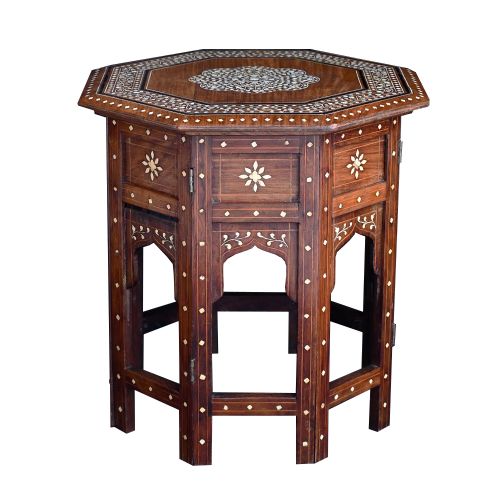
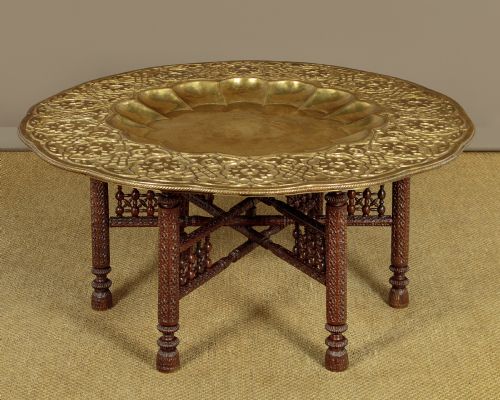
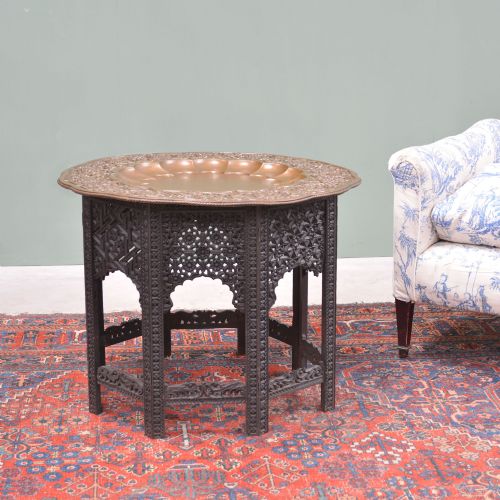
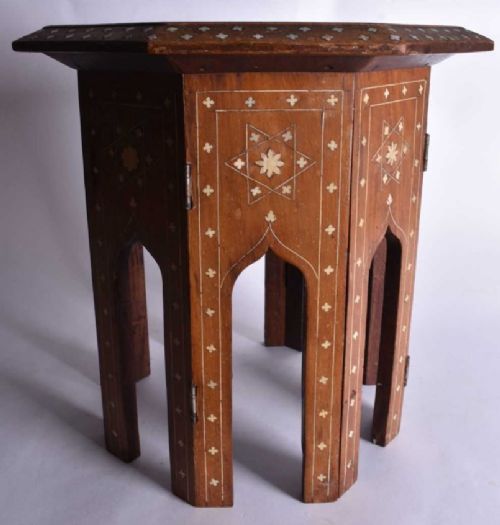
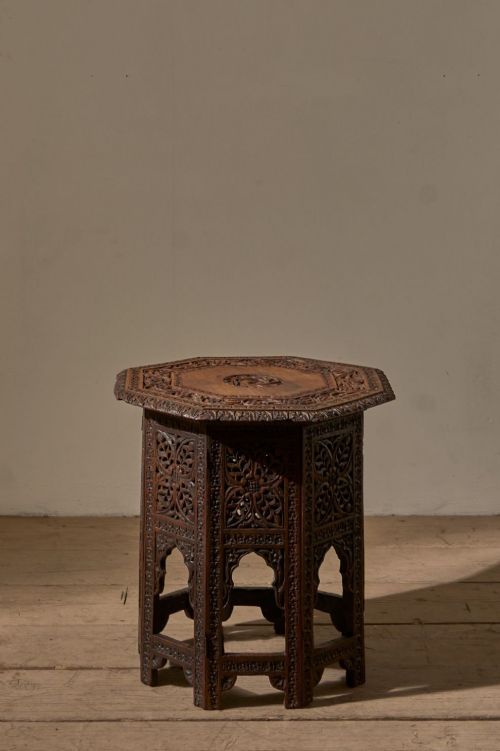
An indian folding tea table typically appears as an octagonal, circular, or tray-topped occasional piece designed for easy storage and movement. These items emerge from various periods including the Victorian era, the late nineteenth century, and the early twentieth century up to 1930.
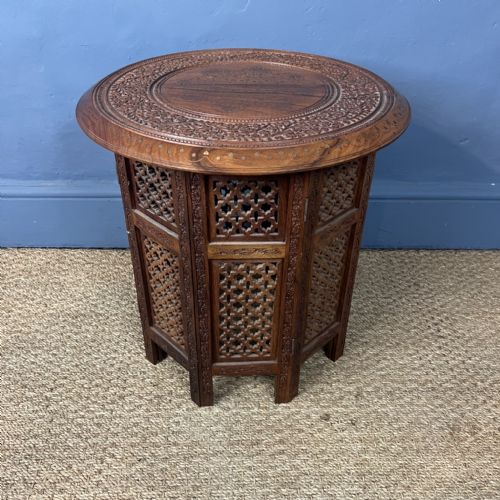
The construction commonly pairs a removable or folding top with a hinged, pierced wooden base. Forms span side tables, coffee tables, and campaign styles originating from regions such as Hoshiarpur and Kashmir under Anglo-Indian and colonial influences.
Buyers encounter diverse stylistic revivals, including Persian, Syrian, and Moorish motifs alongside traditional Burmese and Indian carving traditions. The core purpose remains practical surface space that folds flat when not in use.
How They Were Made
Artisans built these tables primarily using dense hardwoods such as teak, padauk, rosewood, and sheesham. These sturdy timbers provided the structural integrity needed for intricate surface carving and hinged folding mechanisms.
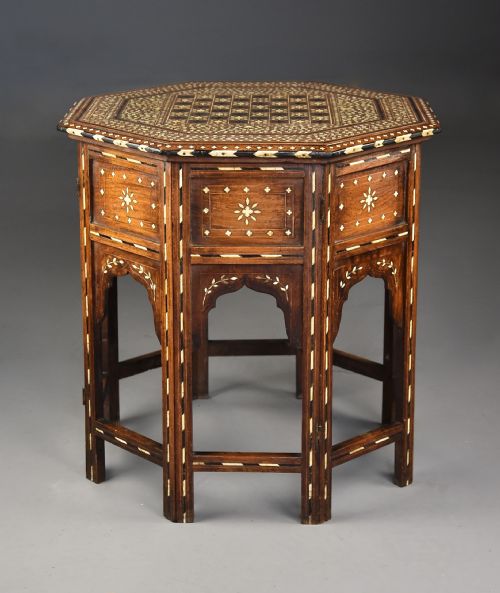
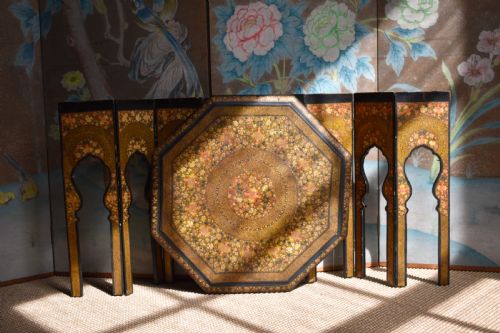
Surface decoration relied heavily on contrasting materials set into the timber base. Craftsmen utilised brass, copper, bone, and mother-of-pearl inlay, alongside detailed chip-carving and painted lacquer finishes to create geometric and floral patterns.
Some folding tea tables arrive with their original brass tea service still nestled on top.
What Varies in Quality
The distinction between standard examples and finer pieces lies in the density and depth of the hand-carving and the precision of the inlay work. Hoshiarpur pieces with comprehensive bone, brass, or copper inlay across the entire octagonal surface represent a higher tier of workmanship.
Structural stability in the folding mechanism and the selection of superior timbers like dense teak or padauk influence the overall integrity. Tables retaining intact, well-fitted hinges and complete, unblemished inlay demonstrate superior original production.
The Indian Folding Tea Table Glossary
- Hoshiarpur
- A region in Punjab known for producing wooden furniture distinguished by intricate wire and plate inlay of brass, copper, and bone. Pieces from this tradition often feature dense geometric and floral carving.
- Octagonal Top
- A geometric eight-sided table surface frequently found on folding occasional tables from the colonial period. This shape accommodates complex border patterns and central inlay motifs.
- Tray Top
- A removable table surface featuring raised edges designed to hold tea services securely. It rests upon a folding collapsible stand for simple storage.
- Campaign Table
- Portable furniture constructed for colonial travel and military use. These items utilise folding legs and hinges for rapid dismantling and transport.
- Padauk
- A heavy, durable tropical hardwood with a reddish hue utilised in colonial furniture manufacturing. Its stability made it suitable for carved side and tea tables.
Indian Folding Tea Table: Frequently Asked Questions
How do I fold the table safely?
Most examples rely on a hinged wooden spider base that twists or folds inward once the top is removed or lifted. Ensure you support the weight of the timber frame while gently releasing the locking joints.
Avoid forcing any stuck wooden hinges, as aged teak and hardwood can bind due to humidity changes. A small application of appropriate wax or simply checking the alignment of the pivot points usually resolves stiffness.
Were these tables actually used for tea?
Colonial households and domestic settings utilised these portable surfaces for serving afternoon tea, often pairing them with brass trays or complete tea services. The removable top design allowed servants to carry provisions easily.
Over time, their decorative inlay and compact folding nature transitioned them into general-use occasional and lamp tables within the home.
How do I clean brass and bone inlay?
Maintain the metal elements by dusting with a soft, dry cloth and avoiding harsh chemical polishes that can stain the surrounding wood. Gentle care preserves both the brass wire and the delicate bone or mother-of-pearl sections.
Condition the exposed hardwood areas periodically with a suitable furniture wax to keep the timber from drying out, taking care to buff around the inlaid portions.
What is the difference between Hoshiarpur and Kashmiri styles?
Hoshiarpur tables are defined by intricate wood carving filled with dense brass, copper, and bone inlay across geometric surfaces. The focus remains on the textural contrast between the dark timber and the metallic or bone details.
Kashmiri pieces, conversely, lean towards painted decoration and lacquered finishes rather than deep carving and inlaid wirework. This creates a smoother, colourful surface aesthetic often depicting floral motifs.