




Vintage Lacquer Coffee Table
A vintage lacquer coffee table brings painted scenes and polished surfaces into a room, offering a low surface rooted in diverse global traditions.
Vintage Lacquer Coffee Table
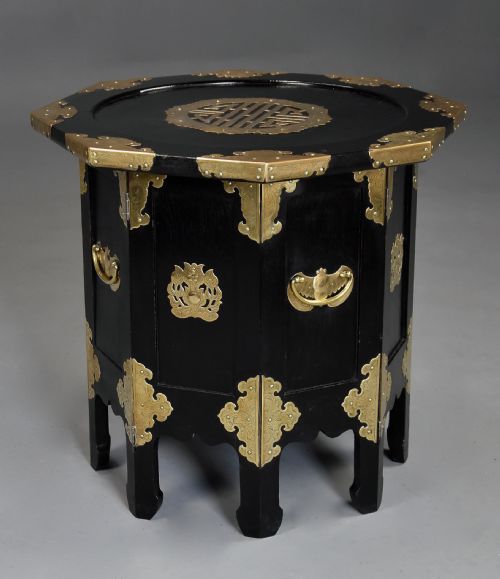
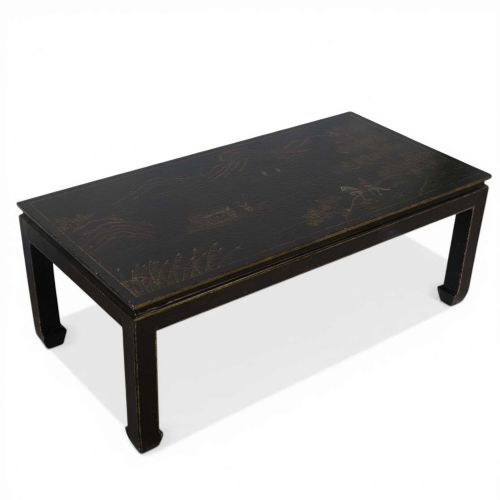
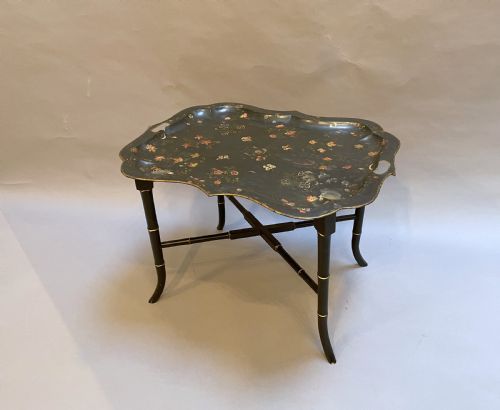
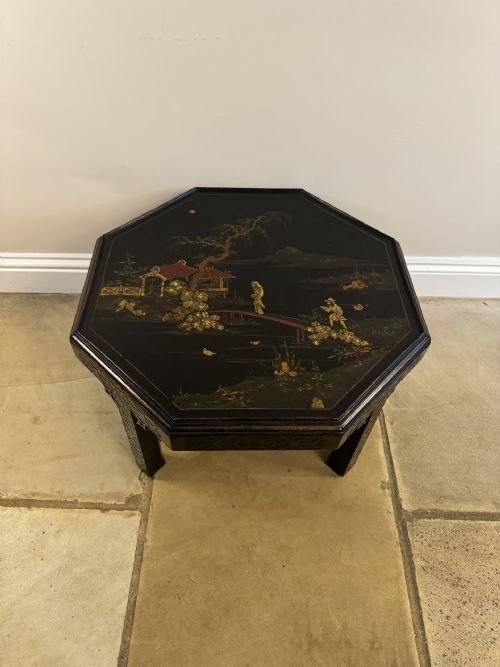
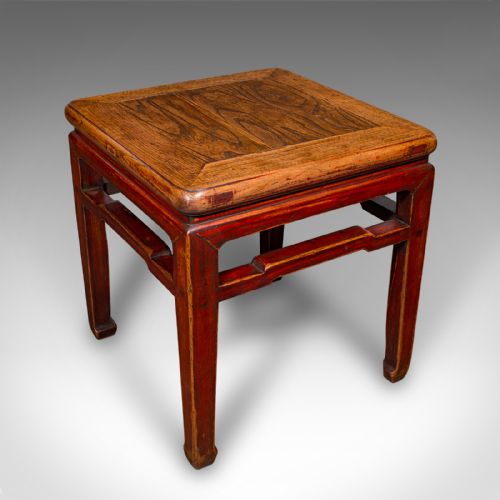
A vintage lacquer coffee table takes many forms across this selection, from low tea tables and nest configurations to trays placed on dedicated stands. Pieces span the nineteenth century through the mid-twentieth century, encompassing periods like the Victorian era, Regency, and nineteen-thirties.
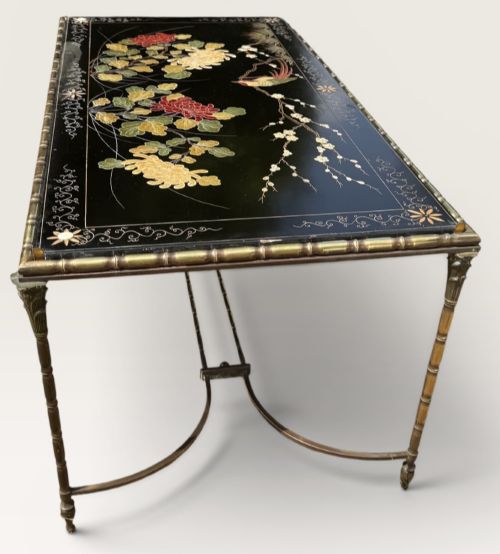
The aesthetic vocabulary leans heavily towards Chinoiserie, Edwardian interpretations, and traditional Chinese or Japanese forms, alongside Burmese and Kashmiri examples. Buyers encounter surfaces finished with painted scenes, raised relief details, and gilt work upon dark grounds.
How they were made
Construction relies on wood bases, including elm and walnut, as well as papier-mâché and metal for toleware trays and chests. Artisans applied layers of lacquer or paint, integrating gold leaf and gilt paint to delineate ornamental details.
Support structures range from fixed wooden frames and iron stands to folding bases designed for tray tops. Surface ornamentation involves hand-painted pictorial elements, sometimes built up in low relief to create texture.
Forms on offer include nests of tables, occasional tables, tray tables, and pig skin shipping trunks.
What varies in quality
The success of a piece depends on the execution of the painted decoration and the depth of the lacquer finish. Subtle brushwork and well-preserved gilding elevate an example above simpler, mass-produced decorative items.
Structural integrity of the joints and the condition of the underlying timber or metal frame dictate long-term durability. Quality reveals itself in the harmony between the support stand and the removable or fixed top.
Maison Bagues
The Vintage Lacquer Coffee Table Glossary
- Chinoiserie
- European decorative style reflecting Chinese artistic influences, characterised by painted figures, pavilions, and landscapes. It appears frequently on early twentieth-century and nineteenth-century tables.
- Toleware
- Painted or lacquered metalware, typically tin or iron, often utilised for tray tables resting on collapsible stands. Examples in the selection date from the nineteenth century and the Regency period.
- Japanned
- European imitation of East Asian lacquerwork, created through successive coats of varnish and heated drying. This finish defines several English pieces from the nineteen-thirties.
- Chabudai
- A short-legged traditional Japanese table used for domestic activities such as drinking tea. Surviving antique examples are typically constructed from elm.
- Nest of tables
- A set of graduated tables designed to fit neatly beneath one another when not in use. The selection includes multiple lacquered and Chinoiserie variations.
Vintage Lacquer Coffee Table: Frequently Asked Questions
How do I clean a lacquer surface?
Dust gently with a soft, dry cloth to prevent scratching the polished finish. Avoid harsh chemical cleaners or excessive moisture.
Keep the table away from direct sunlight and heat sources to protect the lacquer from cracking or fading over time.
Are tray tables removable from their stands?
Many tray tables feature a loose top resting on a folding or fixed wooden or iron base. This design allowed the tray to be lifted and used independently in nineteenth-century interiors.
Buyers should check whether the top is secured to the base or designed to lift off freely for versatility.
What is the difference between Chinoiserie and Japanese styles?
Chinoiserie is a European interpretation of Chinese motifs, featuring whimsical pavilions, figures, and landscapes rendered in gold and black paint. Japanese pieces, such as Meiji period chabudai tables, originate from authentic domestic forms.
Both styles utilise dark lacquer grounds, but their structural proportions and ornamental grammar reflect distinct geographic origins.
How do I fit a low table into a modern room?
A low surface creates a grounded focal point in a seating arrangement, contrasting effectively with contemporary upholstered sofas. Nesting versions offer flexible surface area that expands when entertaining.
Pair these tables with neutral seating to let the decorative painted scenes and gilt details stand out.