




Gold Chinoiserie Coffee Table
A gold chinoiserie coffee table brings a rich narrative of lacquer and giltleaf into a room, offering low surfaces designed for modern living.
Gold Chinoiserie Coffee Table
When you search for a gold chinoiserie coffee table, you encounter low occasional furniture, nests of tables, and serving trays mounted on stands. The pieces span the nineteenth century through the early twentieth century, drawing on Regency, Victorian, Edwardian, and French Chateau influences.
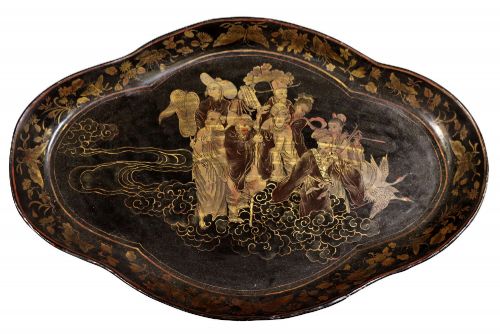
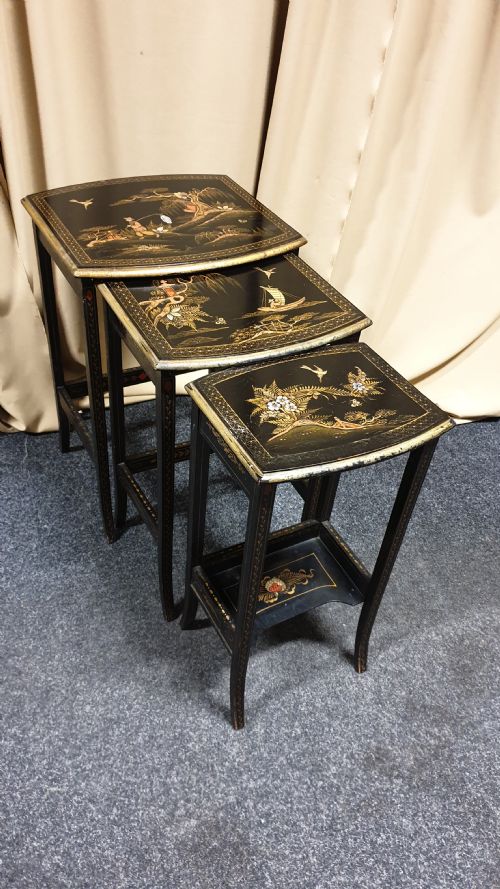
You are most likely to meet nests of lacquered tables and papier-mâché tray tables decorated in the chinoiserie style. These forms range from compact sets of four to singular low tables finished with detailed gold ornamentation on dark grounds.
How they were made
The makers relied on wood, papier-mâché, and lacquer as foundational materials, shaping them into trays, circular tables, and nested sets. Surfaces received layers of black or dark lacquer before artists applied gold leaf and gilding to build up the intricate Asian-inspired pictorial scenes.
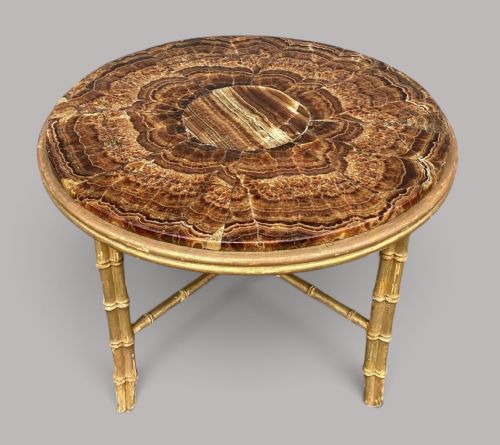
Structural elements occasionally incorporate brass details and marble tops, particularly on low occasional pieces from the nineteenth century. The combination of papier-mâché and wood provided sturdy yet manageable bases for folding or fixed tray stands.
Several sets feature four graduated tables, proving that nineteenth-century artisans understood the universal human need to stack things inside other things.
What varies in quality
The distinction between ordinary and exceptional examples rests in the crispness and depth of the gold leaf application. Finer pieces display meticulous hand-painted details within the chinoiserie decoration that retain their clarity and adherence across the lacquer ground.
The integrity of the underlying material, whether papier-mâché, lacquered wood, or giltwood, dictates the overall solidity of the table. Superior examples maintain stable joints and smooth surfaces without heavy past restoration obscuring the original decorative scheme.
The Gold Chinoiserie Coffee Table Glossary
- Papier-mâché
- A composite material made from paper pulp or reinforced paper sheets mixed with adhesive, pressed into moulds, and dried. It provided a lightweight yet durable surface for nineteenth-century trays.
- Giltwood
- Wood that has been treated with a thin layer of gold leaf or powder. This technique highlights carved details on frames and table bases.
- Lacquer
- A durable resin finish applied in multiple thin coats and polished to a hard sheen. Traditional pieces use natural tree sap cured to a deep, protective gloss.
- Nest of tables
- A set of graduated tables designed to fit neatly beneath one another. They offer flexible surface space that stores compactly when not in use.
Gold Chinoiserie Coffee Table: Frequently Asked Questions
What is a tray table?
A tray table combines a removable or fixed serving tray with a folding or stationary wooden stand. This form originated as a practical way to serve refreshments before being adapted as permanent low furniture.
In living spaces, these pieces function effectively as coffee tables while retaining their traditional portability and distinctive decorative surfaces.
How do I care for lacquer?
Lacquer surfaces require gentle treatment using a soft, dry cloth to remove dust. Avoid placing hot items directly onto the finish and keep the wood away from direct sunlight and moisture.
Maintaining stable room humidity prevents the lacquer and underlying wood from expanding or contracting excessively over time.
Are nests of tables sturdy?
Quality nests of tables use traditional joinery to ensure each smaller table remains stable during daily use. The nested design allows them to support moderate weight despite their slender proportions.
Checking the joints where the legs meet the tabletop helps confirm the structural soundness of each piece in the set.
How do I spot nineteenth-century papier-mâché?
Nineteenth-century papier-mâché feels surprisingly rigid and heavy, possessing a dense composition quite distinct from modern paper products. The material often carries a smooth, dark Japanned finish beneath the painted decoration.
Examining the underside of trays reveals the matte backing and construction methods typical of the period.