



Japanned Tray Coffee Table
These japanned tray coffee tables combine antique serving trays with custom stands to create striking centrepieces with rich Chinoiserie decoration.
Japanned Tray Coffee Table
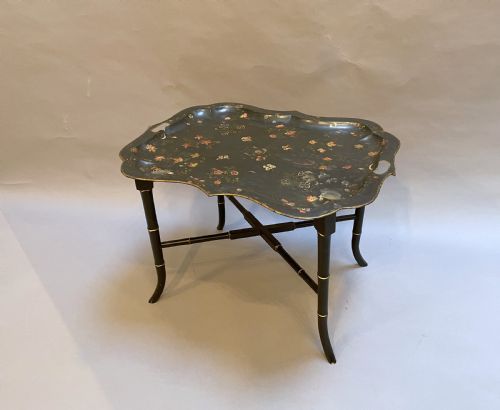
A japanned tray coffee table repurposes antique serving trays, often resting on custom or later stands to create functional low tables for modern interiors. These pieces bridge decorative art and practical furniture, bringing historic craftsmanship into everyday use.
The selections here span from the eighteenth century through the nineteenth century and into the early twentieth century, taking the form of occasional tables, side tables, and tray tables. Most examples feature Chinoiserie motifs painted on papier-mache, lacquer, or toleware.
Buyers encounter forms ranging from Regency period designs to Victorian interpretations and later Regency style reproductions. These diverse origins reflect changing tastes in domestic decoration across different eras.
Materials and construction
Many of these tables utilise papier-mache or lacquered timber as a base, built up to create a smooth, durable surface for intricate painted decoration. Artisans applied layers of varnish and lacquer to achieve a deep, lustrous finish.
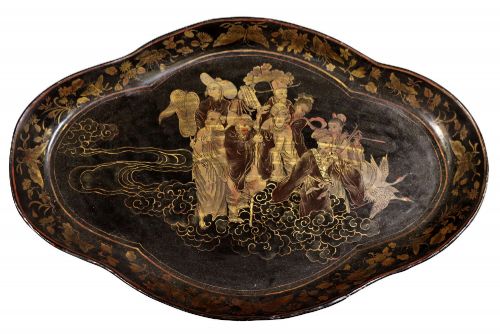
Decoration typically involves gold leaf and hand-painted Chinoiserie scenes depicting figures, landscapes, and architectural elements. Some examples employ painted toleware or metal as the primary tray material.
Trays frequently sit upon wooden stands, which are sometimes of a later date than the tray itself. These stands are designed at coffee table height to support the weight of the rigid papier-mache or metal trays.
Japanned Tray Coffee Table Retail Price Guide 2026
Typical asking prices for japanned tray coffee table among the pieces listed under this phrase on Sellingantiques today, from the lower quarter to the upper quarter. They describe what is for sale here now, not the wider market.
Several trays feature imaginative pavilions and tiny figures that invite close inspection.
Judging quality and craftsmanship
Quality rests primarily in the finesse of the hand-painted decoration and the depth of the japanning. Superior examples exhibit precise brushwork, delicate use of gold leaf, and well-preserved surface detail.
The integrity of the base material matters significantly, as papier-mache and lacquer require careful preservation to avoid cracking or lifting. The harmony between the antique tray and its supporting stand also determines the overall success of the piece.
Jennens & Bettridge·Henry Clay
The Japanned Tray Coffee Table Glossary
- Papier-mache
- A composite material made from paper pulp or reinforced paper sheets mixed with glue, pressed and dried to form a rigid board. It provided a smooth surface for painting and japanning.
- Chinoiserie
- A European artistic style reflecting Chinese and East Asian artistic influences, popular in decoration throughout the eighteenth and nineteenth centuries. It typically depicts imaginary landscapes, figures, and pagodas.
- Toleware
- Painted or lacquered metalware, usually tinplate, shaped into domestic objects like trays and canisters. It offers a sturdy alternative to papier-mache.
- Regency
- An architectural and decorative style spanning the early nineteenth century, known for classical restraint and elegant proportions. Pieces from this period often incorporate bold painted finishes.
Japanned Tray Coffee Table: Frequently Asked Questions
Are these trays attached to the stands?
Many trays rest securely within a custom wooden frame on the stand rather than being permanently fixed. This allows the tray to be lifted independently while remaining stable during daily use.
Such construction is typical for pieces where an antique serving tray has been paired with a later support to function as a coffee table.
How do I clean a japanned surface?
Dust the surface gently with a soft, dry cloth to prevent scratching the delicate varnish and painted details. Avoid liquid cleaners, abrasives, and excessive moisture, which can damage aged lacquer.
Keeping the table away from direct sunlight and heat sources preserves the rich tones of the original japanning.
What is the difference between tole and papier-mache?
Papier-mache is a pressed paper composite that provides a lightweight yet rigid board for detailed painting. Toleware uses metal, typically tinplate, as the structural base for similar decorative finishes.
Both materials were widely used for serving trays that are now adapted into low tables.
Can these tables be used daily?
These tables function well for everyday use provided basic care is observed, such as using coasters for drinks. The durable nature of historic lacquer and papier-mache makes them surprisingly resilient.
Placing them away from high-traffic areas protects the painted borders and gold leaf details from accidental knocks.