



Vintage Japanese Porcelain Urn
A vintage japanese porcelain urn brings hand-painted colour and historical depth into a room, offering striking decorative presence through traditional ceramic forms.
Vintage Japanese Porcelain Urn
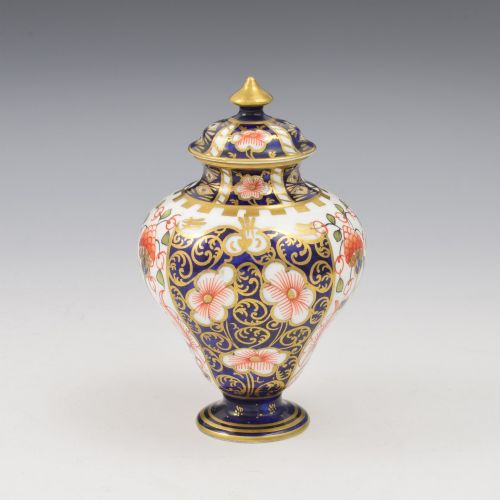
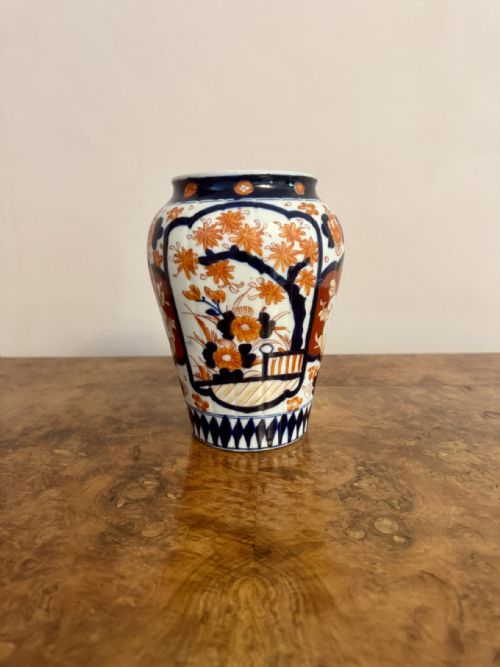
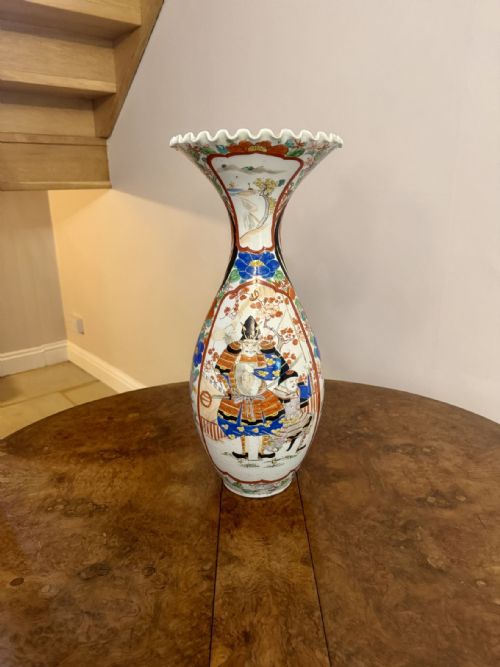
When you search for a vintage japanese porcelain urn, you encounter a range of ceramic vessels spanning the late nineteenth century through to the early twentieth century, alongside earlier eighteenth-century examples and Meiji period pieces. These objects primarily take the form of traditional vases, covered ginger jars, garnitures, and pieces subsequently converted into table lamps.
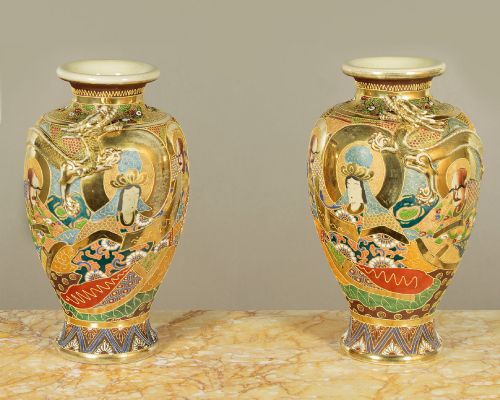
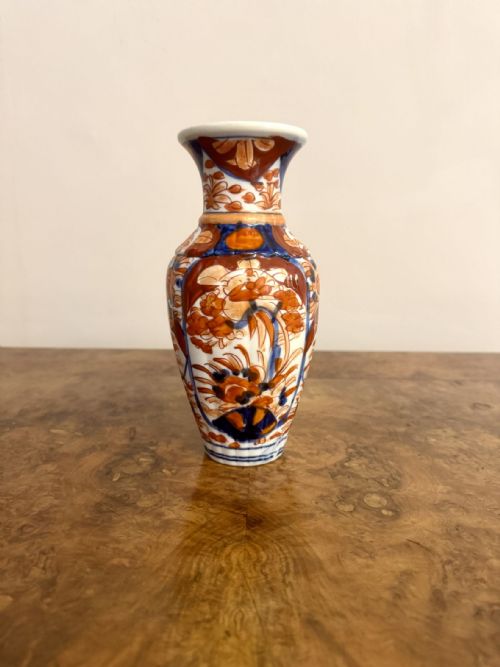
The selections on this page concentrate heavily on Japanese Imari and Satsuma styles, often featuring distinct regional characteristics from centres such as Arita and Kyoto. You also find Kutani and Fukagawa productions, alongside occasional European derivations executed in an Imari palette.
Forms vary from small miniature vessels to large floor-standing vases and hexagonal bodies, demonstrating the diverse output intended for both domestic display and export during the Meiji period and subsequent decades.
How they were made
Makers utilised porcelain and earthenware bodies, shaping them into bulbous, cylindrical, or faceted silhouettes before applying complex surface decoration. Cobalt blue underglaze work frequently combines with rich enamel pigments and gold leaf application to build up intricate pictorial scenes and geometric panels.
Techniques range from fine hand-painted figural processions and landscapes on crackle-glazed Satsuma earthenware to vibrant iron-red and blue motifs fired onto hard-paste porcelain in the Imari tradition.
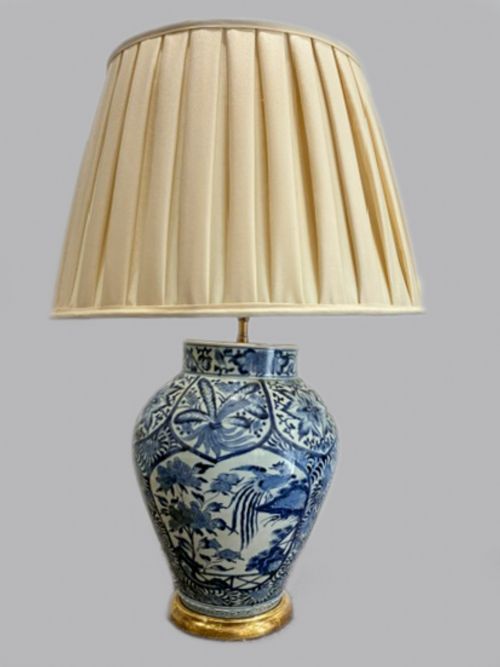
Several pieces escaped their original mantelpiece duties entirely to illuminate reading corners as converted electric lamps.
What varies in quality
The standard of execution in the hand-painted details separates ordinary production wares from exceptional studio and workshop pieces. Precision in the brushwork, the richness and purity of the gold leaf, and the complexity of the figural or floral compositions determine the aesthetic rank of each vessel.
The crispness of the porcelain or earthenware body and the depth of the enamel glazes also indicate the level of care taken by the makers during firing and decoration.
Chosei·Hattori·Fukagawa·Royal Crown Derby
The Vintage Japanese Porcelain Urn Glossary
- Imari
- A style of Japanese porcelain characterised by a palette of underglaze blue, iron-red, and gold. It originated in Arita and became immensely popular for export.
- Satsuma
- A type of Japanese earthenware featuring a pale, ivory-coloured crackle glaze. It is typically decorated with elaborate polychrome enamels and gilding.
- Kutani
- Japanese porcelain or pottery known for bold, painterly designs. It often employs strong green, yellow, purple, and red enamels.
- Garniture
- A set of matching vases or jars designed to be displayed together on a mantelpiece or cabinet. They usually consist of three or five graduated pieces.
- Arita
- The Japanese town central to the history of porcelain production. Pieces from here formed the basis of the export trade.
Vintage Japanese Porcelain Urn: Frequently Asked Questions
How do I identify Satsuma ware?
Satsuma ware is recognised by its distinctive fine crackle glaze over a buff earthenware body, serving as a ground for detailed enamel painting and heavy gilding.
These pieces frequently depict human figures, processions, or landscapes rather than purely abstract or botanical patterns.
Were these vessels used as lamps originally?
Most of these ceramic pieces began life as traditional vases, ginger jars, or lidded urns intended purely for display on tables or within cabinetry.
Many examples were converted into table lamps during the twentieth century by wiring them through the base or top.
What is the difference between Imari and Kutani?
Imari wares rely on a strict palette of underglaze cobalt blue, iron-red, and gold leaf, usually applied to hard-paste porcelain.
Kutani ceramics utilise a broader, more expressive range of bright enamel colours, particularly greens and purples, often on earthenware bodies.
How do I distinguish Meiji period pieces?
The Meiji period spans from eighteen sixty-eight to nineteen twelve, a time when Japanese ceramic production expanded significantly for the Western export market.
Pieces from this era often bear detailed painted signatures or workshop marks and display exceptional mastery of intricate gilding.