




Vintage Japanese Dish Pair
These vintage japanese dish pair selections bring traditional ceramic artistry and distinctive regional designs directly into your home.
Vintage Japanese Dish Pair
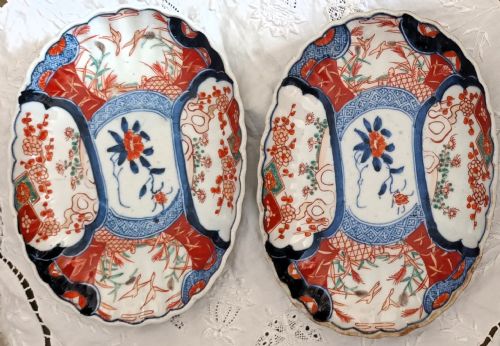
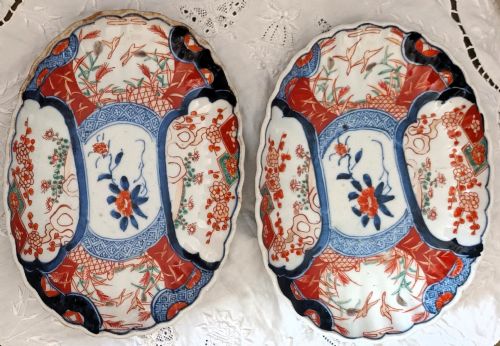
A vintage japanese dish pair brings together matching ceramic items originating from various traditional Japanese periods, including the Edo and Meiji eras.
Buyers will encounter multiple forms on this page, most commonly plates, chargers, and bowls decorated in classic Imari styles or featuring blue and white cobalt designs.
Many examples showcase specific regional production, such as Arita wares or Kutani house sparrow plates, alongside moulded shapes like clam shells and cranes.
Materials and Techniques
These pieces are principally formed from white porcelain and ceramic bodies, shaped either on a wheel or moulded in shallow relief.
Decoration relies heavily on cobalt blue underglaze applied before firing, complemented by overglaze enamel colours, iron red, black, and gold leaf highlights.
Vintage Japanese Dish Pair Retail Price Guide 2026
Typical asking prices for vintage japanese dish pair among the pieces listed under this phrase on Sellingantiques today, from the lower quarter to the upper quarter. They describe what is for sale here now, not the wider market.
Materials recorded on this page include enamel glaze, gold leaf, and cobalt blue underglaze.
Assessing Quality
The standard of execution in hand-painted details and the crispness of moulded relief work separate finer examples from standard production.
The preservation of delicate overglaze enamels and gold leaf decorations across centuries significantly influences the desirability of each pair.
The Vintage Japanese Dish Pair Glossary
- Imari
- A traditional Japanese style of porcelain decorated in underglaze blue, iron red, and gold. This palette creates a vibrant contrast across plates and chargers.
- Meiji Period
- The era in Japanese history spanning from 1868 to 1912. Pieces from this time often exhibit intricate decorative detail.
- Edo Period
- The period lasting from 1603 to 1867, noted for the foundation of classic ceramic traditions like Arita ware.
- Arita
- The Japanese town renowned as the birthplace of Japanese porcelain production. Kilns here produced substantial quantities of export ware.
- Overglaze Enamel
- Colourful decoration applied over the initial fired glaze and fixed with a secondary, lower-temperature firing. This technique allows for rich reds, blacks, and gold highlights.
Vintage Japanese Dish Pair: Frequently Asked Questions
What is an Imari dish?
An Imari dish is a piece of Japanese porcelain decorated in a distinctive palette of cobalt blue underglaze and iron red, frequently accented with gold leaf.
These ceramics were produced for both domestic use and export, becoming highly popular in European interiors from the seventeenth century onwards.
How do I date a Japanese plate?
Dating involves examining the ceramic body, the style of the cobalt blue underglaze, and the application of any overglaze enamel colours.
Pottery marks, regional traits like Arita production, and characteristic motifs such as the Seven Lucky Gods also help narrow down the period of manufacture.
Where were Arita dishes made?
Arita dishes originated in Hizen province on the island of Kyushu, where local clay deposits suited high-firing porcelain production.
Master potters in this region established the foundations of Japanese export porcelain.
Can I use antique plates for dining?
While these pieces were originally functional ceramics, antique porcelain and enamel dishes are generally reserved for display today.
Hand-washing is strongly advised to protect fragile overglaze enamels and gold leaf details from modern detergents.