
Vintage Iron Chest
These heavy vintage iron chest pieces combine robust utility with historical craftsmanship, built for travel, security, and storage across centuries.
Vintage Iron Chest
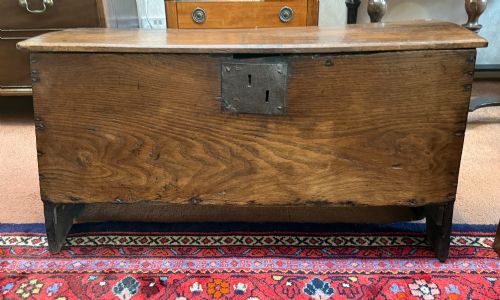
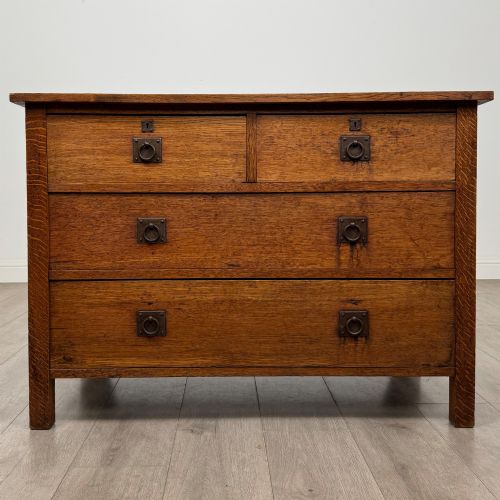
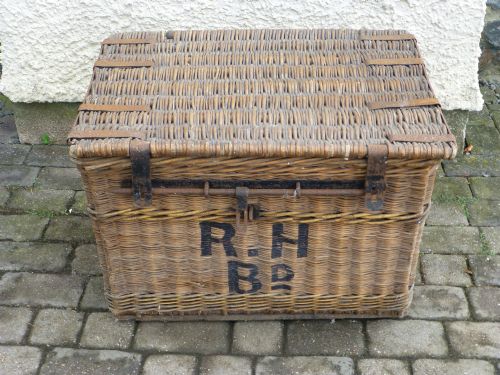
A vintage iron chest serves as a sturdy receptacle for travel, security, or domestic storage, appearing in forms ranging from dome-top trunks and campaign boxes to heavy safes and dowry chests. When searching for a vintage iron chest, buyers encounter utilitarian containers and decorative furniture pieces that span the seventeenth through the early twentieth centuries.
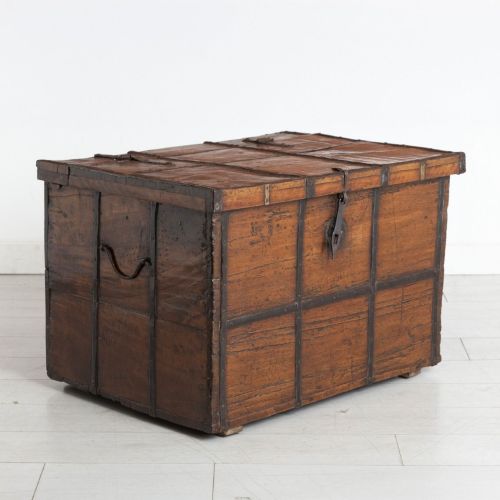
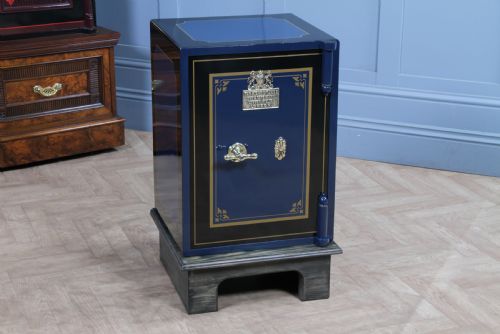
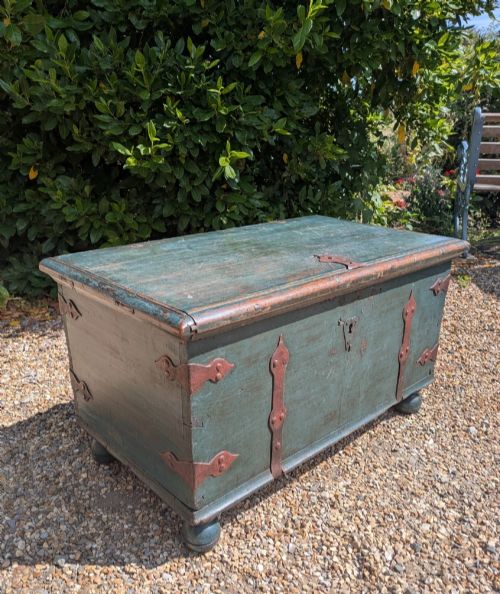
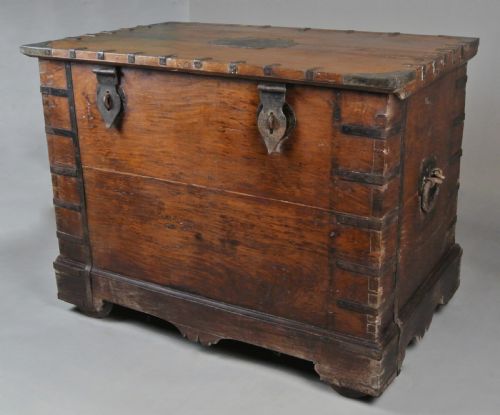
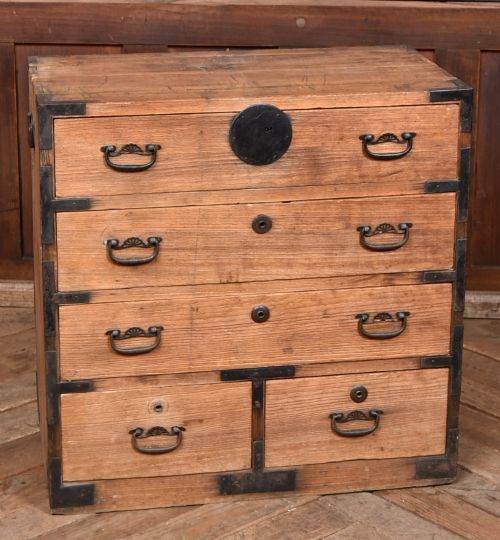
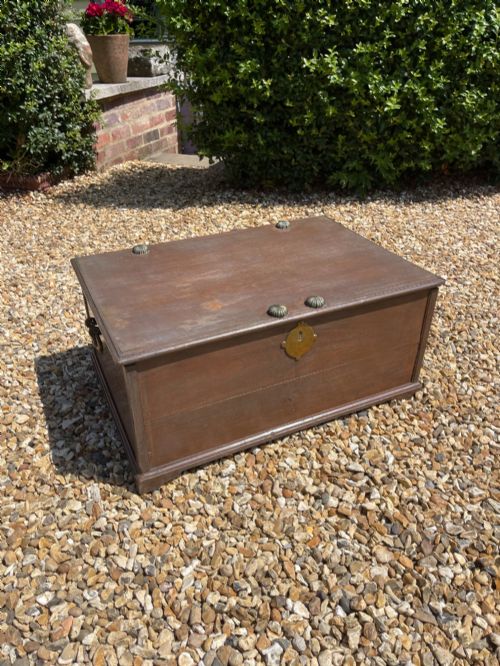
The selection on this page demonstrates remarkable geographical and stylistic breadth, originating from British, Scandinavian, Indian, and Japanese workshops. These items manifest as pine travelling trunks with hand-forged strapwork, teak dowry chests with iron binding, and robust industrial strongboxes.
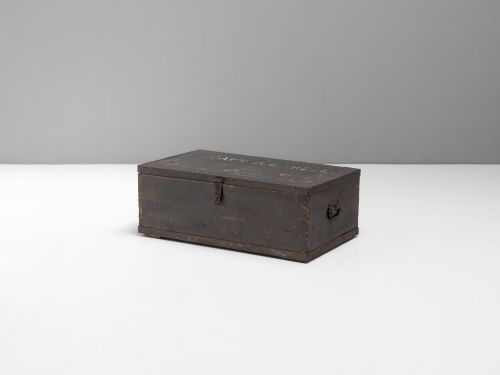
Domestic pine blanket boxes and campaign military chests dominate the everyday offerings, providing practical utility alongside historical character. Buyers frequently select these pieces to function as coffee tables, blanket storage, or striking focal points in contemporary interiors.
Materials and Construction
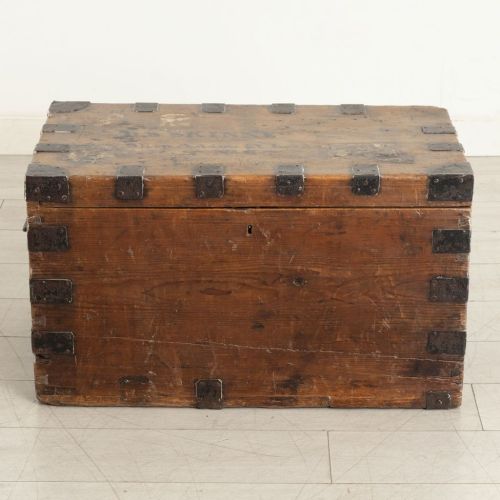
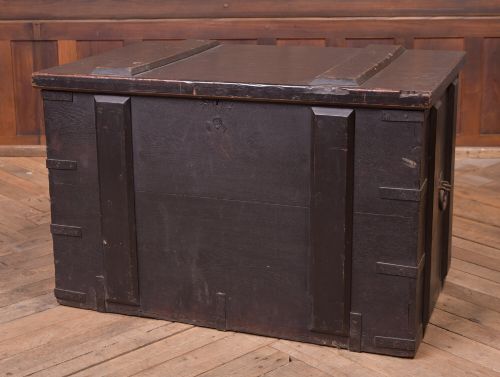
Makers constructed these vessels from dense domestic and exotic woods such as pine, oak, teak, elm, and mahogany, providing a rigid structural foundation. These timber bodies were then reinforced with iron plates, heavy strapwork, brass corners, and structural banding to withstand rigorous transport.
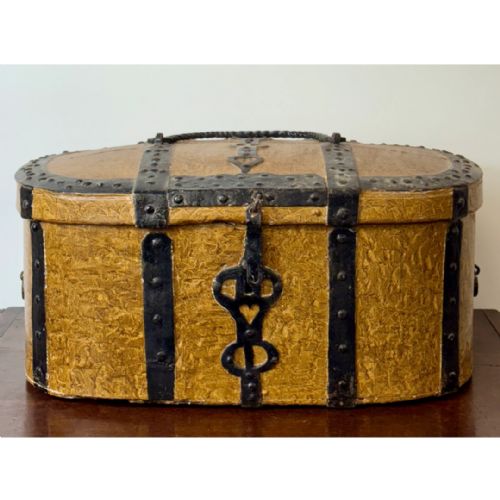
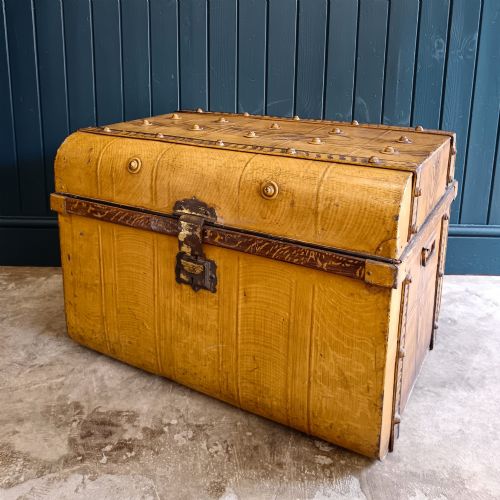
Blacksmiths and metalworkers shaped wrought iron and cast iron for hinges, corner brackets, handles, and complex locking mechanisms. Surface finishes varied widely, encompassing original paint, faux-wood metal painting, and oiled or polished natural wood grains.
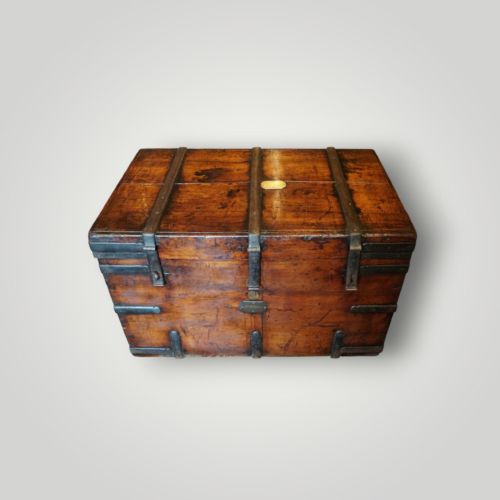
One extraordinary nineteenth-century teak chest arrived bearing the formidable weight of a Waterloo Commissary General.
Assessing Quality and Authenticity
Quality rests in the integrity of the original hardware, the survival of authentic surface paint or patinated timber, and the retention of working locks and keys. Pieces that preserve their initial structural fastenings without excessive modern timber replacement command greater appreciation.
Finer examples display meticulous hand-forging on the iron straps and hinges, demonstrating the blacksmith's skill rather than mass-produced factory uniformity. The harmony between the timber body and its metal reinforcement dictates the overall success and visual balance of the object.
The Vintage Iron Chest Glossary
- Campaign chest
- A portable storage box made in sections with recessed brass handles, designed for easy dismantling and transport by military officers on active service.
- Dowry chest
- A large ceremonial container used to store household goods and valuables accumulated for a marriage, often heavily decorated with iron bands or carving.
- Strongbox
- A heavily reinforced security box built primarily of iron and thick timber, designed to protect precious currency, documents, and valuables from theft or fire.
- Strapwork
- Decorative or reinforcing bands of flat metal, typically iron or brass, fixed across the exterior surface of a wooden chest to add structural strength.
- Tansu
- Traditional Japanese mobile storage cabinetry and chests constructed from native timbers like keyaki and cryptomeria, frequently fitted with elaborate iron hardware.
Vintage Iron Chest: Frequently Asked Questions
What were iron bound chests used for?
These robust containers served multiple purposes depending on their scale and origin, ranging from military transport on campaign to domestic storage of blankets and precious textiles.
Larger dowry chests held valuable household goods for marriages, whilst heavy iron safes and strongboxes protected currency, legal documents, and bullion against theft.
How do I clean a painted pine chest?
Preserving original surface treatments requires gentle dusting with a soft, dry cloth rather than applying harsh modern chemical cleaning solutions.
Moisture can damage fragile historic paintwork and rust exposed iron strapwork, so storage in stable humidity conditions remains essential for long-term care.
Can I use an iron chest as a coffee table?
Many buyers repurpose low trunks and dome-top boxes as coffee tables because their flat tops and robust construction suit living room use.
Their substantial internal cavity simultaneously provides concealed storage for blankets, books, or everyday household items.
How do I tell an 18th century chest apart from a Victorian one?
Earlier eighteenth-century pieces often display hand-sawn timbers, folk art painting, and forged ironwork unique to regional Scandinavian or Indian workshops.
Victorian and later nineteenth-century examples frequently incorporate mass-produced industrial components, standardised brass fittings, and machine-cut dovetail joints.