


19th Century Chest Safe
These 19th century chest safe examples are robust iron, steel and wood containers built to secure valuables.
19th Century Chest Safe
When you search for a 19th century chest safe, you encounter heavy security boxes, strongboxes, and reinforced storage trunks designed to protect valuables. These pieces span the 19th century, Victorian era, and periods around 1880 and 1900, originating from British, French, and Scandinavian workshops.
You are most likely to meet sturdy iron-banded wood chests, cast iron lock boxes, and heavy banker's drawers alongside painted cupboards and bread safes. They range from travelling silver chests in golden oak to substantial iron and wood strongboxes.
The forms function primarily as secure storage for silver, documents, and domestic provisions, reflecting both utilitarian security needs and decorative regional styles like Scandinavian folk art.
How they were made
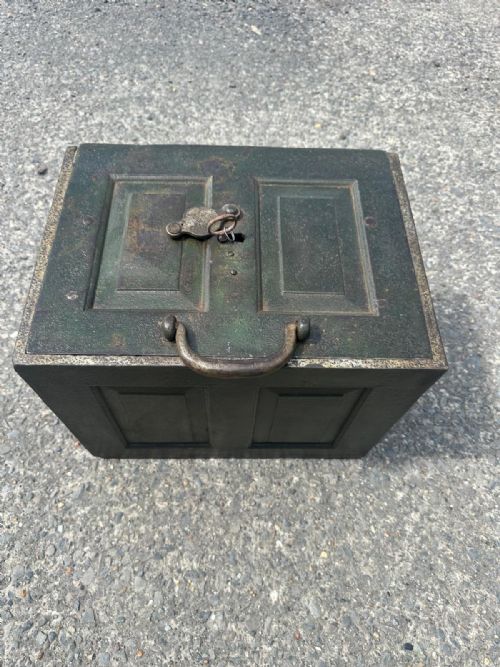
Construction relies on heavy combinations of cast iron, wrought iron, brass, and steel applied to structural timbers such as oak, pine, and general wood. Makers reinforced chests with thick metal straps, corner brackets, and complex locking mechanisms.
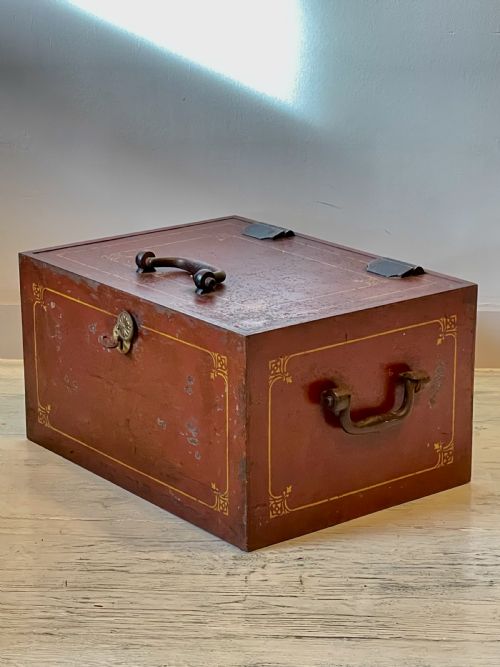
Surface treatment varies from natural golden oak finishes and original painted colours to hand-painted Scandinavian folk art decoration. Internal fittings often incorporate specialised drawers, compartments, and patent locks.
Some strongboxes are so heavy they required entire teams of Victorian movers just to shift them across the floor.
What varies in quality
Quality rests in the integrity of the original locking mechanisms, the preservation of original keys, and the survival of surface finishes like original paint or polished oak. Substantial metalwork and robust internal cabinetry distinguish superior examples from simpler storage boxes.
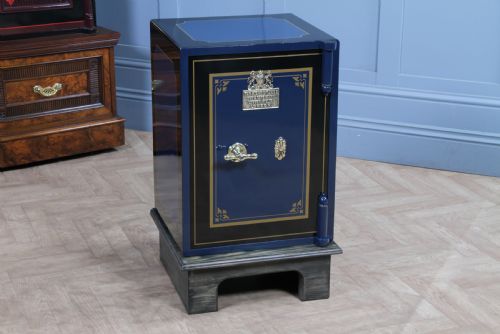
The sophistication of the maker's hardware, such as branded patent locks by recognised makers, elevates a piece. Original stands and intact internal fittings also contribute significantly to the overall integrity of the piece.
Tanns Defiance London·Elkington·Milners of Liverpool
The 19th Century Chest Safe Glossary
- Strongbox
- A heavily reinforced metal or wood chest designed for securing money and valuables. These pieces often feature iron straps and complex locks.
- Patent safe
- A secure storage box manufactured under a formal patent, typically featuring advanced proprietary locking mechanisms by specialised firms.
- Silver chest
- A specialised lined trunk or box intended for the storage and transport of family silver. They frequently include fitted interior trays and compartments.
- Bread safe
- A ventilated domestic cabinet or cupboard used for storing food safely away from pests. Examples often incorporate pierced panels or mesh doors.
- Panetiere
- A traditional French provincial bread cabinet featuring turned spindles or carved ventilation panels. They were central pieces of furniture in rural kitchens.
19th Century Chest Safe: Frequently Asked Questions
What were 19th century chest safe pieces used for?
These chests and strongboxes served to protect valuable currency, important documents, and family silver from theft and fire. Domestic variants like bread safes stored provisions securely in the kitchen.
Their heavy construction provided reliable security in homes, banks, and merchant offices before modern banking systems became universal.
How do I place a chest safe in a modern home?
Their substantial weight and striking industrial or rustic appearance make them ideal as focal points in a study, hallway, or living room. Many double as functional coffee tables or sideboards.
Purchasing pieces on original stands allows them to sit at a convenient height for everyday use and display.
How can I tell Victorian safes apart from earlier strongboxes?
Victorian examples often incorporate standardised patent locks, cast iron components, and manufacturer branding from firms operating in London and Liverpool. Earlier strongboxes from around 1800 rely more heavily on hand-wrought iron straps and bespoke blacksmith-made mechanisms.
Wood choice also helps, with golden oak and pine appearing alongside heavy unpainted iron and steel.
Are original keys common with these pieces?
Original keys do accompany certain pieces, though many survived centuries of use separated from their locks. Finding a safe with its original operating key adds significantly to its historical completeness.
Specialised locks by makers such as Milners or Tanns require precise keys to function correctly.