


Vintage Inlay Furniture
Vintage inlay furniture brings together centuries of timber work and precise surface decoration, offering functional storage and display pieces that anchor a room.
Vintage Inlay Furniture
Vintage inlay furniture encompasses items designed for storage, writing, and display, drawing from periods spanning the eighteenth century through to the Art Deco era.
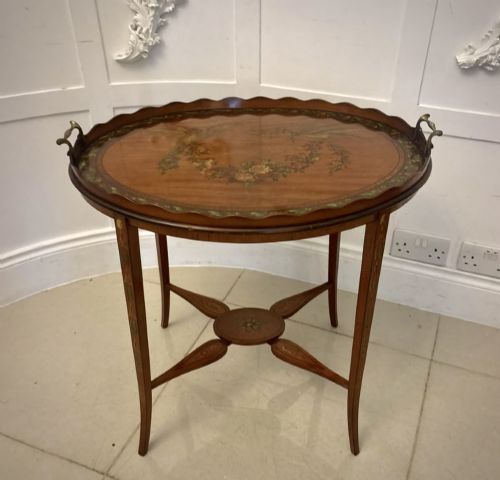
Buyers seeking vintage inlay furniture most frequently encounter Edwardian mahogany pieces alongside late nineteenth century examples, ranging from occasional tables to large cabinets.
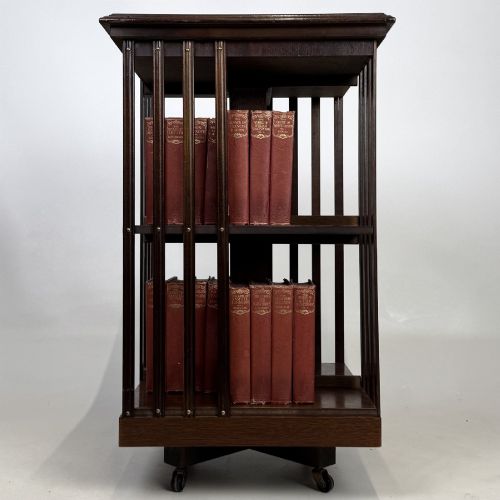
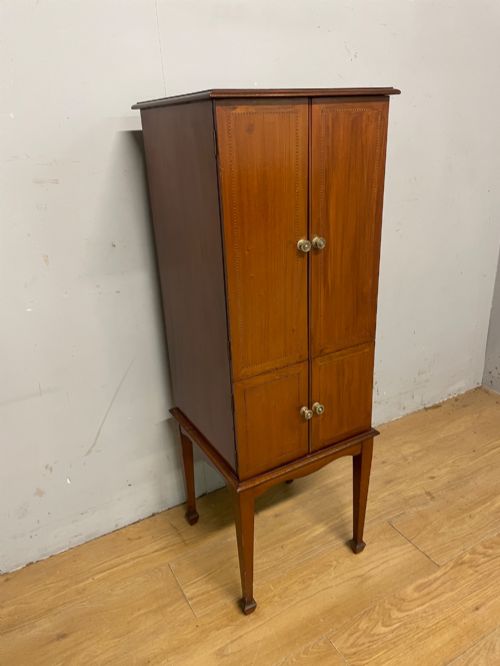
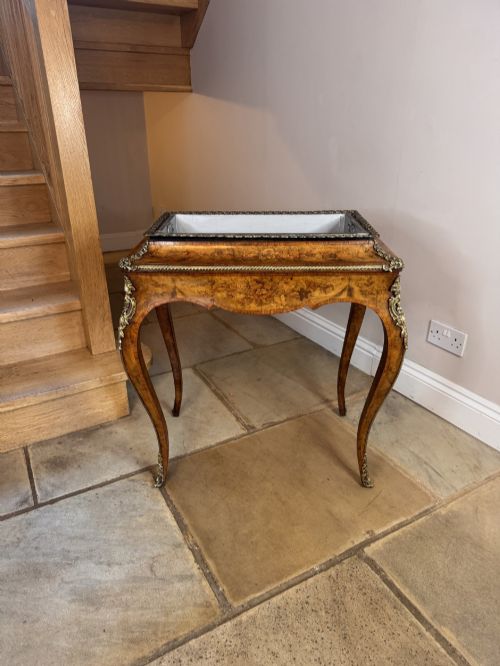
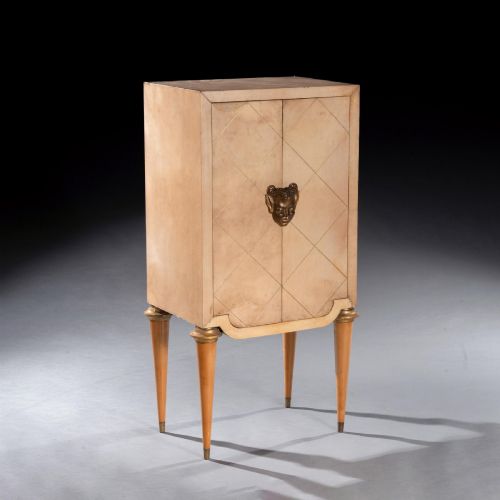
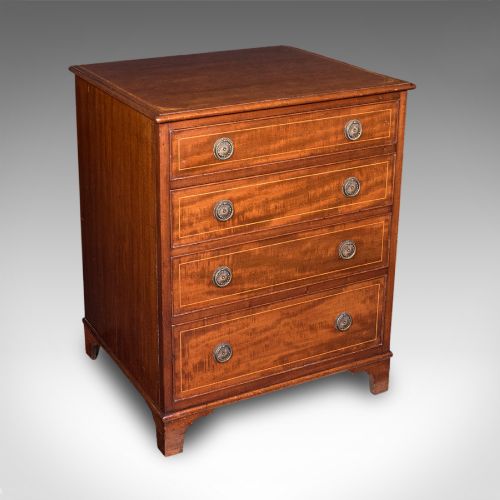
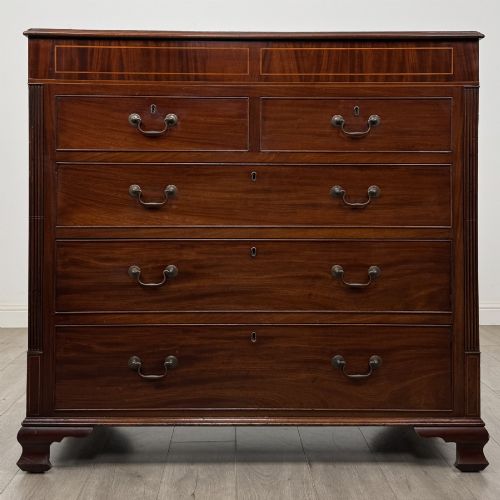
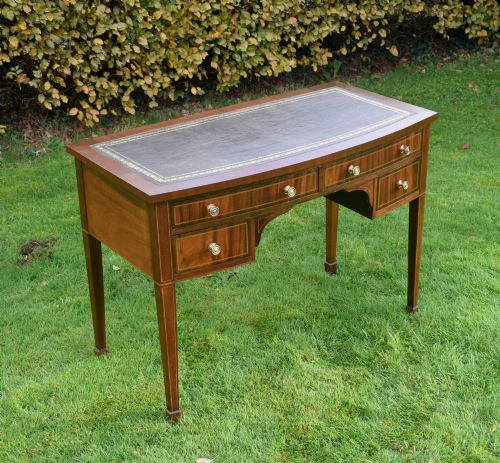
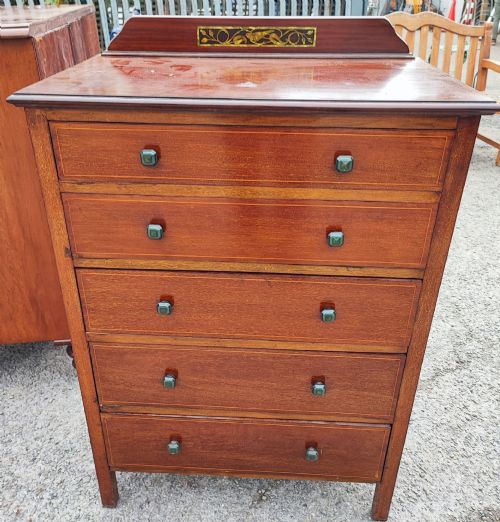
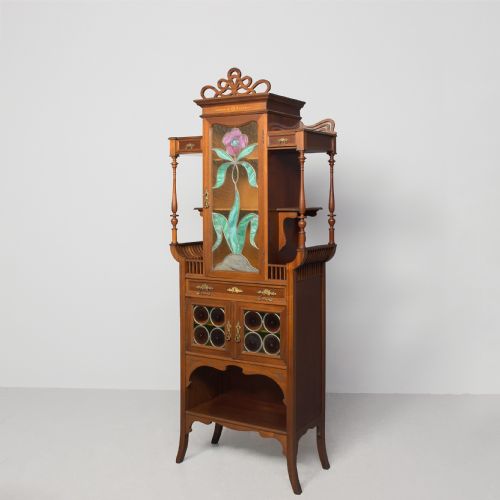
Forms vary from compact lamp tables and music cabinets to expansive sideboards, chests of drawers, and vitrines featuring contrasting woods or detailed brass work.
Materials and Construction
Cabinet makers utilised foundational timbers such as mahogany, walnut, and satinwood, applying contrasting decorative elements to surfaces using meticulous hand methods.
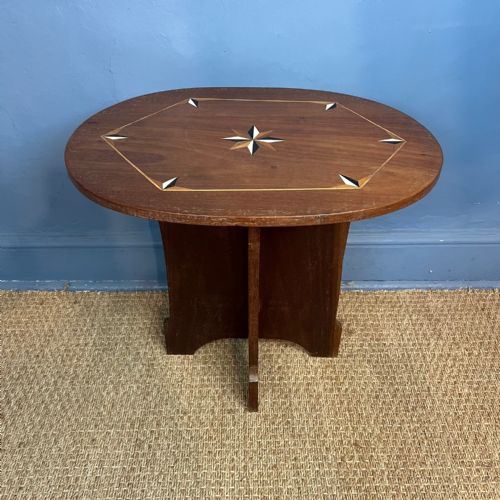
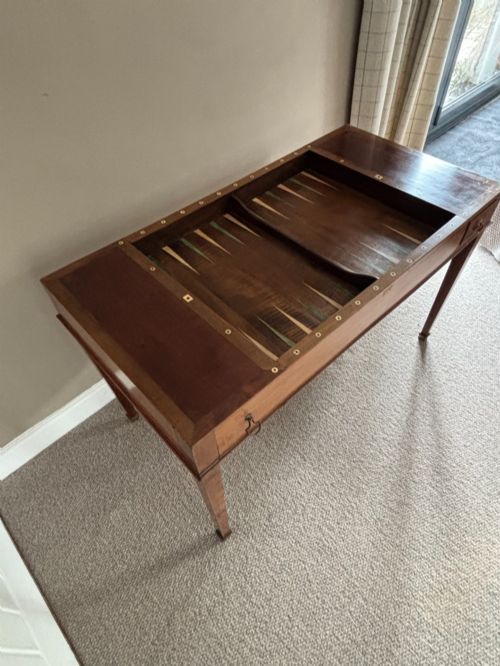
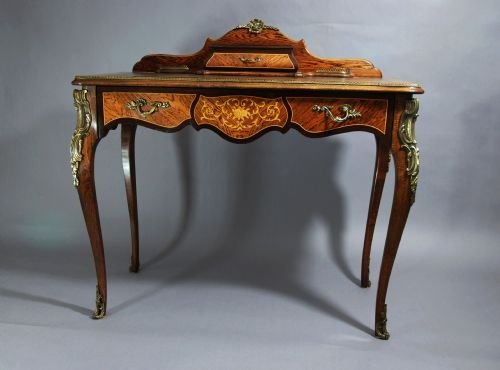
Surface ornamentation relied on bone, brass, and marquetry details, fitting individual pieces into prepared recesses within the primary timber body.
Vintage Inlay Furniture Retail Price Guide 2026
Typical asking prices for vintage inlay furniture among the pieces listed under this phrase on Sellingantiques today, from the lower quarter to the upper quarter. They describe what is for sale here now, not the wider market.
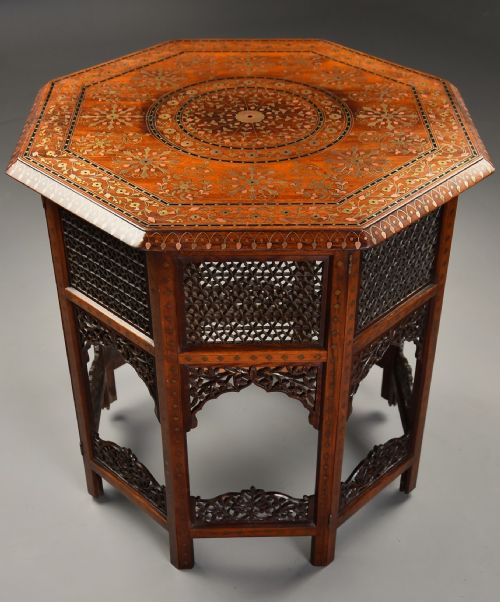
Hoshiarpur tables brought intricate Indian bone and shesham wood craft directly into Victorian British parlours, satisfying a fierce appetite for travel-inspired interiors.
Distinctions in Standard
Quality rests upon the precision of the fit between the inlaid elements and the surrounding timber, where superior examples maintain tight, flush joints without filler.
The choice of primary wood and the complexity of the foliate marquetry or geometric patterning determine the visual depth and overall standard of the piece.
Maple & Co.·Bath Cabinet Makers·Flashman & Co·Jacob and Joseph Kohn·JS Henry
The Vintage Inlay Furniture Glossary
- Marquetry
- The practice of forming decorative patterns from small pieces of wood veneer applied to a structure. This technique creates pictorial or geometric surfaces on cabinets and tabletops.
- Satinwood
- A durable, yellowish timber prized for its lustrous grain and smooth finish. Makers utilised this material extensively for banding and contrasting panels during the Edwardian period.
- Vitrine
- A glass-fronted cabinet designed for the display of porcelain and small decorative objects. These items typically feature inlaid frames and glazed sides.
- Demi-lune
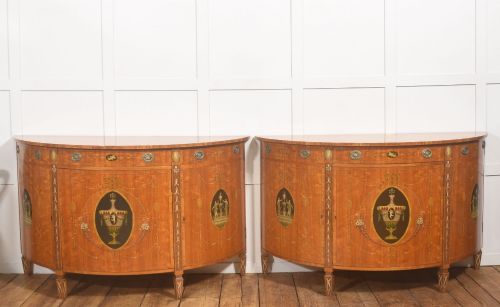
- A half-moon shape characteristic of console tables and small cabinets designed to stand flat against a wall. This form often incorporates elaborate border inlay.
- Campaign style
- Furniture constructed for portability, incorporating brass corners, flush handles, and sectional builds. These pieces combine utilitarian strength with refined metal detailing.
Vintage Inlay Furniture: Frequently Asked Questions
How do I date vintage inlay furniture?
Dating relies on identifying the primary timber, construction methods, and stylistic cues such as Edwardian satinwood banding or Art Deco geometric forms. Secondary woods inside drawers also provide clear indicators of period.
Examining handles, backboards, and hinge types helps confirm whether a piece belongs to the eighteenth century, the Victorian era, or later twentieth-century revivals.
Where should I place a display cabinet?
Glass-fronted cabinets and vitrines suit rooms with stable light levels away from direct sunlight, protecting delicate wood veneers and interior contents from fading. Placement in drawing rooms or dining spaces highlights their decorative surfaces.
Ensure the floor is level so that doors and glazed panels maintain proper alignment during daily use.
How do I care for inlaid wood surfaces?
Maintenance involves dusting with a soft, dry cloth and applying traditional beeswax sparingly to nourish the timber without building up excess residue. Avoid placing items near direct heat sources or damp environments.
Sudden temperature changes cause wood to expand or contract, which places stress on delicate veneer and inlaid motifs.
What is the difference between marquetry and inlay?
Inlay involves inserting pieces of contrasting material into recessed cavities carved directly into the solid wood foundation. Marquetry assembles an entire picture or pattern from veneers before gluing it onto the surface.
Both techniques appear across various periods represented on this page, often combined on the same cabinet or table.