
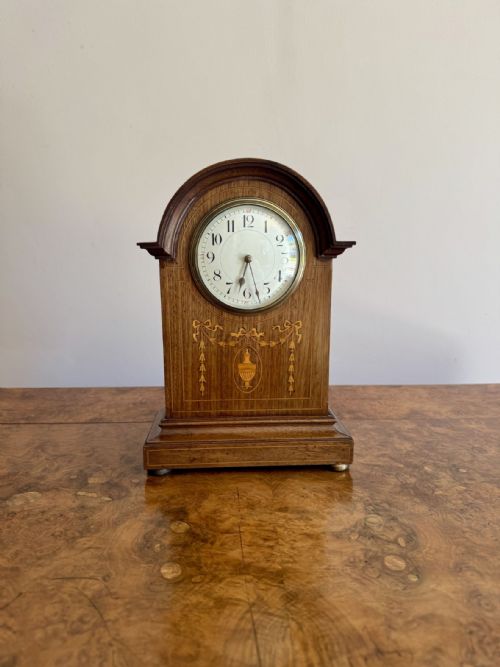
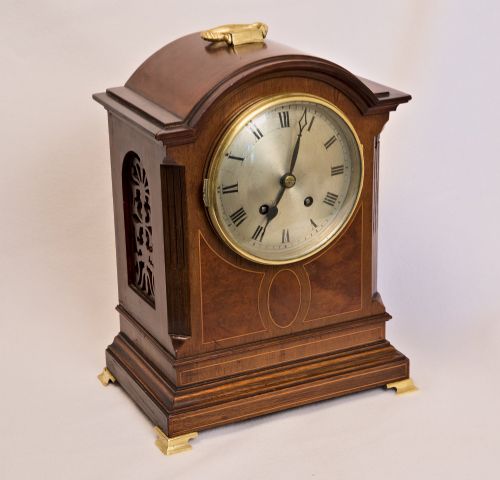


Vintage Inlaid Shelf Clock
These vintage inlaid shelf clock pieces combine timekeeping with decorative wood craftsmanship, offering practical charm for a mantel or side table.
Vintage Inlaid Shelf Clock
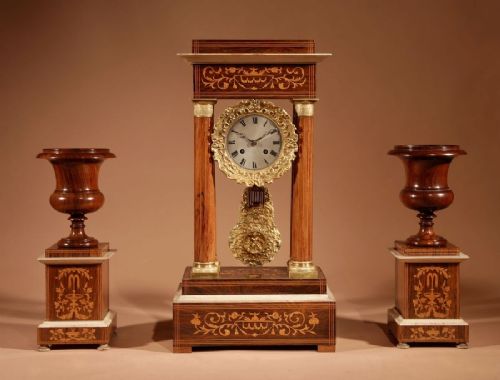
When searching for a vintage inlaid shelf clock, collectors examine a range of mantel, bracket and table clocks spanning the nineteenth and early twentieth centuries. These pieces appear in varied regional styles, from Edwardian mahogany designs to Regency rosewood examples.
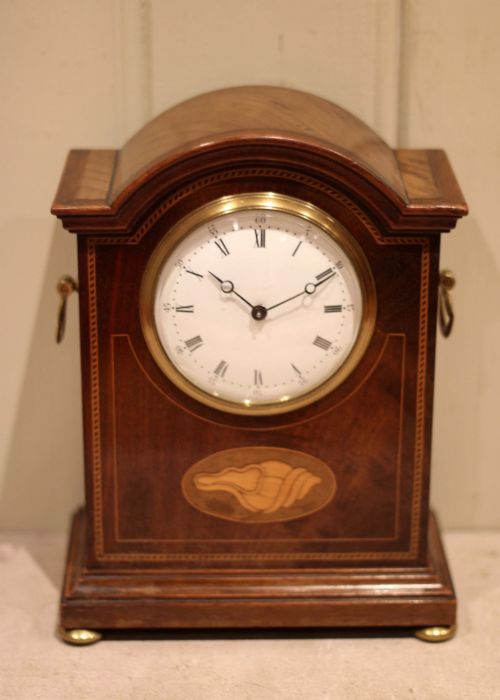
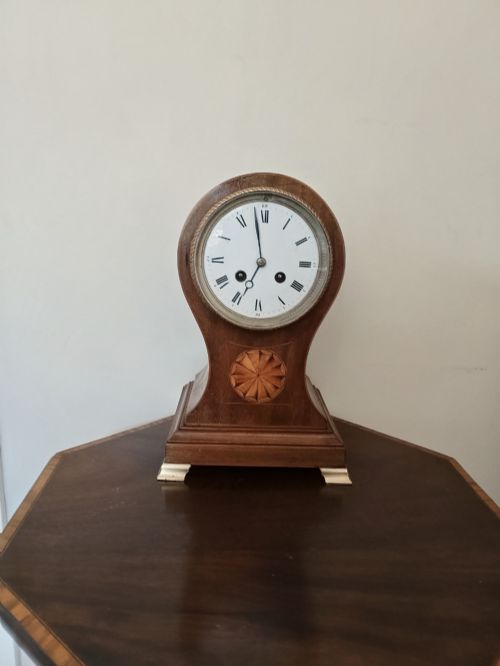
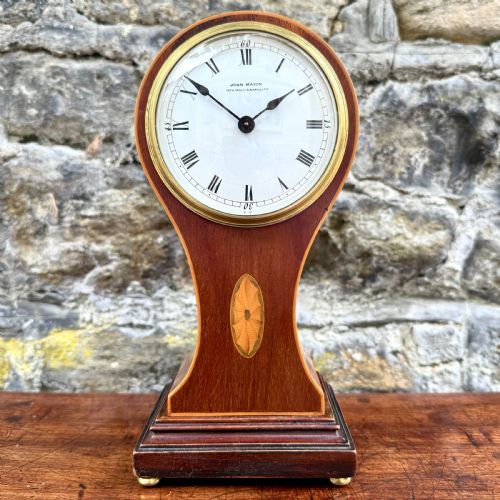
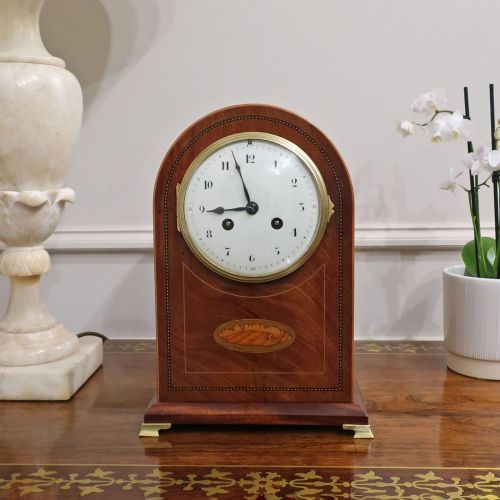
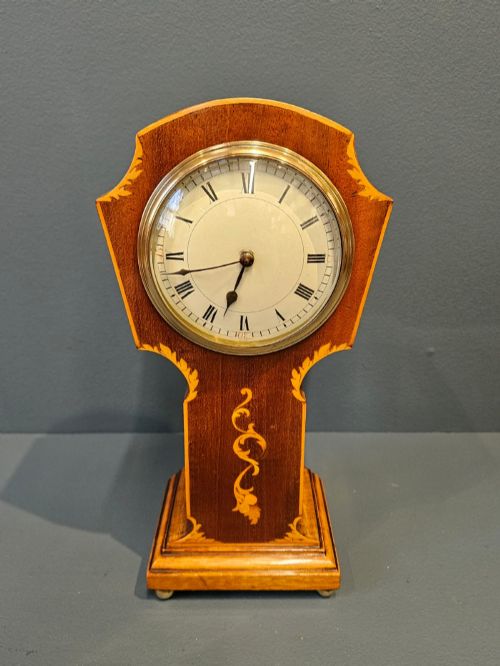
The most common form on this page is the Edwardian mahogany inlaid mantel clock, often featuring delicate contrasting wood stringing or floral motifs. Alongside these stand French portico and balloon shapes, constructed from walnut, oak and rosewood.
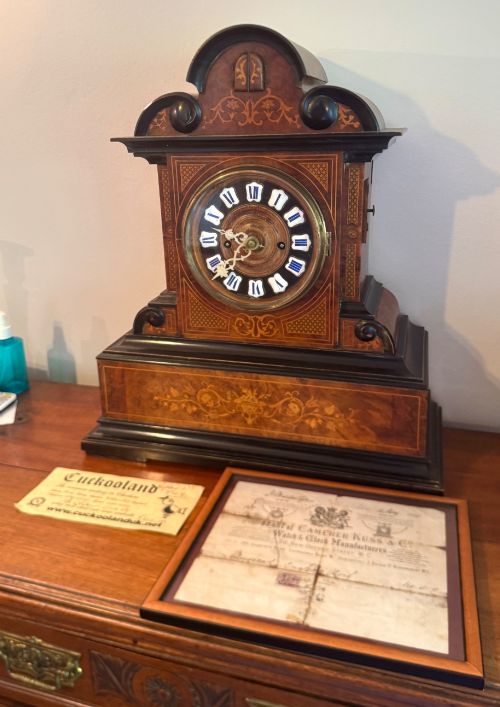
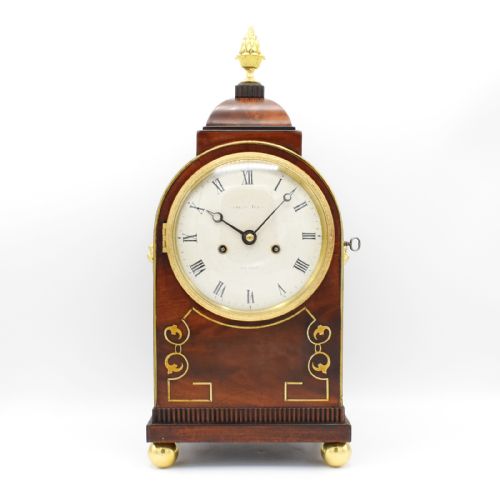
Makers and origins stretch across England, France, Germany and Scotland, incorporating movements housed within break arch, chamfer top or architectural wooden cases. Each regional school brings distinct aesthetic traits to the shelf clock form.
Materials and construction methods
Cabinetmakers built these clock cases primarily using solid timber and veneers of mahogany, rosewood, walnut and satinwood. Artisans then embellished the wooden surfaces with intricate marquetry and contrasting boxwood stringing.
Metal components such as brass dials, bezels and mounts added functional contrast to the dark timber grains. Enamel dials and glass panels protected the face, while internal brass gear trains powered the mechanical movements.
Keep an eye out for the occasional floral flourish where poppies and charming Dutch girls are immortalised in wood inlay.
Distinctions in craftsmanship
Quality in these clocks rests upon the precision of the cabinetwork and the intricacy of the wood inlay. Sharply cut marquetry and balanced proportions distinguish finer examples from standard production pieces.
The refinement of the internal movement and the legibility of the enamel or brass dial further separate standard shelf clocks from exceptional bracket and table clocks.
Charles Pratt London·Seller of Reading·Henry Marc·Junghans German·Walker and Hall
The Vintage Inlaid Shelf Clock Glossary
- Bracket clock
- A portable clock originally designed to sit on a wall bracket or a shelf. These pieces often feature fine wood veneers and brass carrying handles.
- Marquetry
- Decorative patterns formed by fitting together thin slices of various woods and other materials onto a structural core. This technique creates detailed pictorial or geometric surface designs.
- Satinwood
- A durable, lustrous yellow timber used widely for contrasting stringing and inlay work. It provides a bright visual accent against darker woods like mahogany and rosewood.
- Fusee
- A conical pulley used in mechanical clocks to maintain an even force on the gear train as the mainspring unwinds. This mechanism improves timekeeping accuracy.
- Balloon clock
- A mantel clock housed in a case shaped with a curved, swelling top resembling a hot air balloon. This silhouette gained popularity during the Edwardian period.
Vintage Inlaid Shelf Clock: Frequently Asked Questions
Where should I place a shelf clock?
These clocks suit flat surfaces such as mantelpieces, side tables and bookshelves where their decorative wood cases remain visible. Ensure the placement offers stability for mechanical movements.
Keep the clock away from direct heat sources and damp areas to protect the timber veneer and internal brass components.
How do I wind a mechanical mantel clock?
Use the appropriate key to turn the winding arbour gently until you feel resistance. Avoid overwinding, which can damage the mainspring.
Consult the specific movement type, such as an eight day train, to determine the correct winding interval.
What is the difference between a mantel clock and a bracket clock?
Bracket clocks historically rested on wall brackets to project sound and aid visibility in rooms. Mantel clocks developed later to sit directly on furniture surfaces.
Both categories frequently share similar wood cases and inlaid decorative schemes.
How do I identify an Edwardian inlaid clock?
Edwardian clocks typically feature mahogany cases decorated with light boxwood stringing or floral marquetry. The styling often reflects the early twentieth century preference for lighter wood tones.
Look for architectural elements like break arch tops combined with brass dials and enamel chapters.