


Vintage Ink Illustration
These vintage ink illustration works span periods from the Victorian era through the mid-twentieth century, offering collectors original works on paper captured in ink, wash, and watercolour.
Vintage Ink Illustration
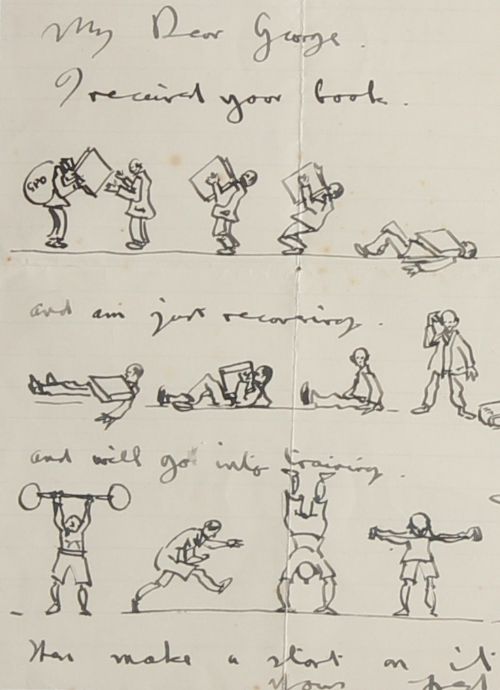
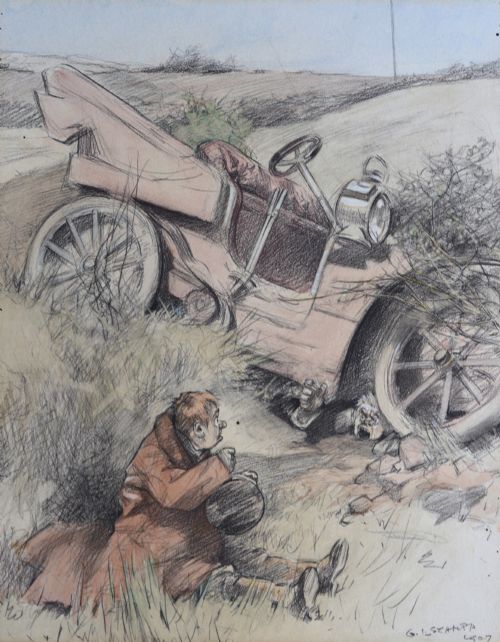
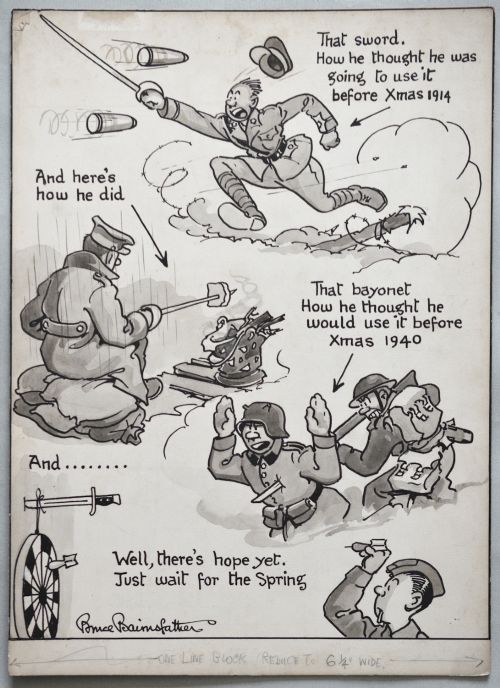
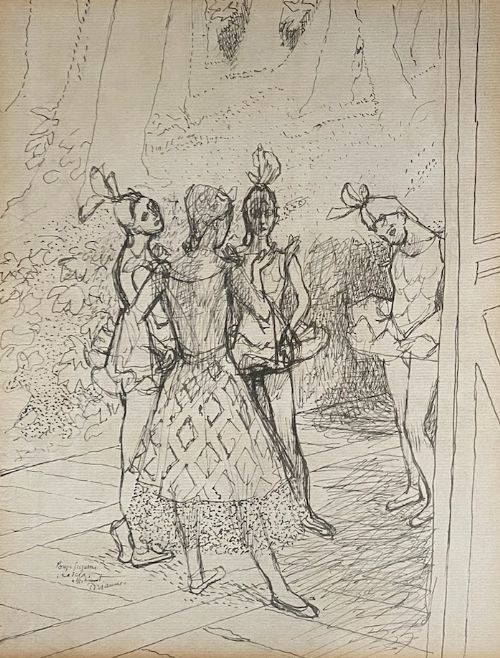
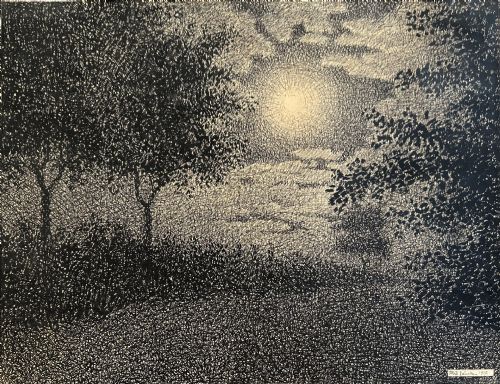
When you search for a vintage ink illustration, you encounter original drawings, works on paper, and framed artwork created across the nineteenth and twentieth centuries. These pieces encompass architectural drafts, landscape townscapes, satirical works, and character studies executed by named artists and period schools.
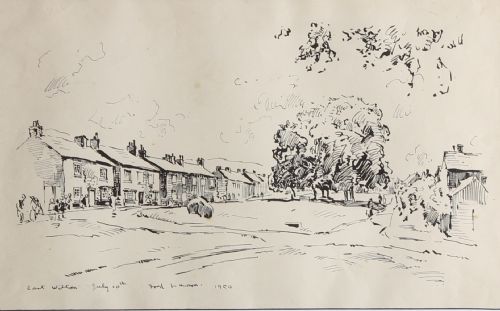
The version you are most likely to meet on this page is a mid-twentieth-century or Edwardian ink drawing, frequently combined with watercolour wash or pencil on paper. Many examples originate from British hands, capturing scenes ranging from Yorkshire village landscapes to architectural interiors.
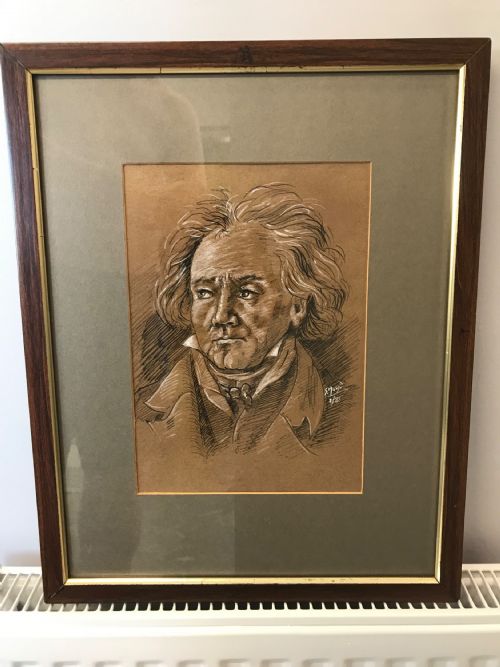
The selection ranges from early nineteenth-century topographical sketches to modernist studies and satirical magazine illustrations. Subjects vary widely from natural landscapes and historical buildings to anatomical studies and portraits.
Materials and execution methods
Works are predominantly executed on paper support, utilising black or brown ink applied with pen alongside pencil underdrawings. Artists frequently integrated watercolour washes, gouache, and bodycolour to build tone and depth within the composition.
Framing materials primarily consist of wood and glass to protect fragile works on paper from environmental degradation. Drawings range from loose notebook leaves and bound book plates to formal framed watercolours and architectural drafts.
Cat enthusiasts can trace feline draughtsmanship through the pen and ink drawings of Louis Wain.
Factors separating categories of quality
The distinction between tiers rests upon the sureness of the draughtsmanship and the expressive capability of the line. Works by established named artists display confident mark-making and sophisticated composition compared to anonymous school pieces.
Condition and preservation play a role, specifically the stability of the paper support and the vibrancy of the ink against toning or foxing. Framed works retaining original mounts and contemporaneous frames often exhibit superior provenance.
Fred Lawson·George Lorain Stampa·Bruce Bairnsfather·Maurice Brianchon·Herbert Dicksee·Edward Dayes·H H Wyatt·Louis Wain·Lucien Freud·John Duncan Fergusson·Kees van Dongen·Dame Laura Knight·Joseph Hansom·Arthur E Gonne
The Vintage Ink Illustration Glossary
- Wash
- A technique where diluted ink or watercolour is brushed across the paper to create translucent tones and shadows. This method adds atmospheric depth behind the primary pen lines.
- Gouache
- An opaque watercolour paint containing a white pigment filler that provides solid areas of highlight and colour. It sits on the surface of the paper rather than sinking in.
- Etching
- A printmaking process where lines are bitten into a metal plate with acid before being inked and pressed onto paper. Several signed examples appear alongside direct ink drawings.
- Topographical
- Depicting specific real-world locations, buildings, or landscapes with observational accuracy. These drawings often serve as historical records of towns and architecture.
Vintage Ink Illustration: Frequently Asked Questions
What periods do these illustrations cover?
The listings span from the late eighteenth century through the Victorian and Edwardian eras into the mid-twentieth century. Pieces reflect prevailing aesthetic movements of their respective decades, including Gothic Revival, Art Nouveau, and Modernism.
Twentieth-century British works feature prominently alongside Victorian architectural studies and nineteenth-century topographical landscape drawings.
How should paper artworks be displayed at home?
Works on paper require protection from direct sunlight to prevent the fading of ink and watercolour pigments. Framing behind glass with acid-free mounts ensures the paper remains isolated from atmospheric moisture.
Position pieces in rooms with stable ambient temperatures away from direct heat sources to preserve the structural integrity of the paper support.
How are architectural drawings different from standard illustrations?
Architectural drawings focus on precise technical rendering of buildings, interiors, or institutional plans, often executed by students or master architects. They utilise ruling pens and measured scales to document structural elements with exactness.
Standard illustrations prioritise narrative, portraiture, or atmospheric landscape composition over geometric precision.
Can I find signed works by listed artists?
Several pieces preserve the signatures or studio attributions of period artists and illustrators. These inscriptions provide direct links to the creator and their working practices.
Unsigned school pieces and anonymous studies also appear, representing period educational exercises or commercial magazine commissions.