
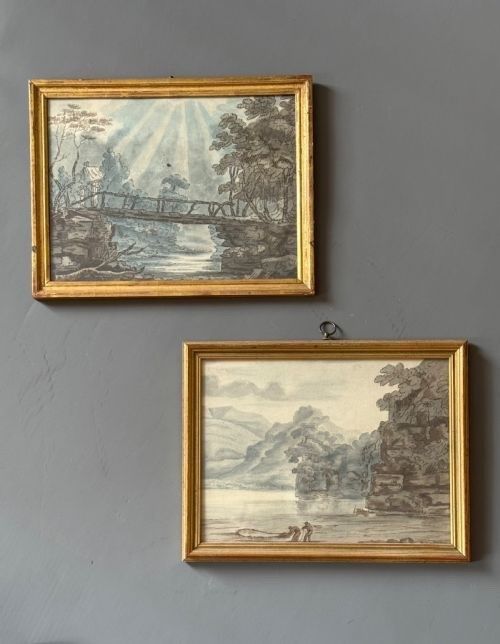


Monochrome Ink Drawing
Monochrome ink drawing brings together works on paper that span the eighteenth century to the modern era, prized for their direct draughtsmanship.
Monochrome Ink Drawing
A monochrome ink drawing is an original work on paper executed primarily in black or brown ink, often appearing alongside wash, watercolour, gouache, or graphite. These pieces range from eighteenth-century topographical landscapes and architectural subjects to twentieth-century satirical illustrations, portraits, and modernist figure studies.
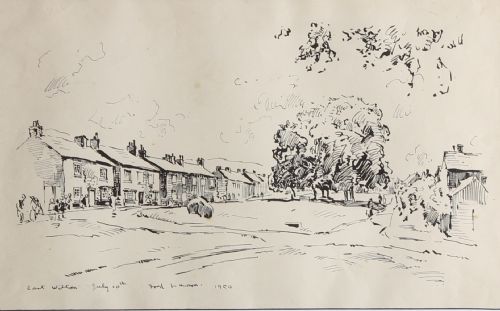
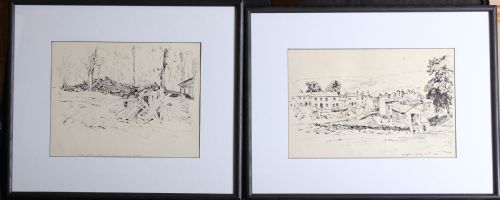
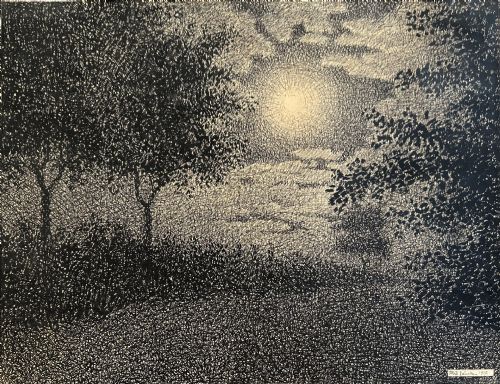
You are most likely to meet nineteenth-century and mid-twentieth-century examples on this page, including landscapes by artists such as Fred Lawson, historical book illustrations, and character studies. The selection covers diverse styles from Georgian precision to Modern British and Arts and Crafts movements, all presented framed or as loose works on paper.
Materials and technique
Artists utilise iron gall or carbon inks applied with steel nibs, reed pens, or fine brushes directly onto various grades of paper. Many works incorporate a liquid wash of diluted ink, sepia, or watercolour to build atmospheric depth and shadow behind the primary line work.
Additional mediums such as gouache highlights or graphite underdrawings frequently appear in portraiture and landscape studies to define form and light. The support is almost exclusively paper, occasionally mounted within period wooden frames under glass.
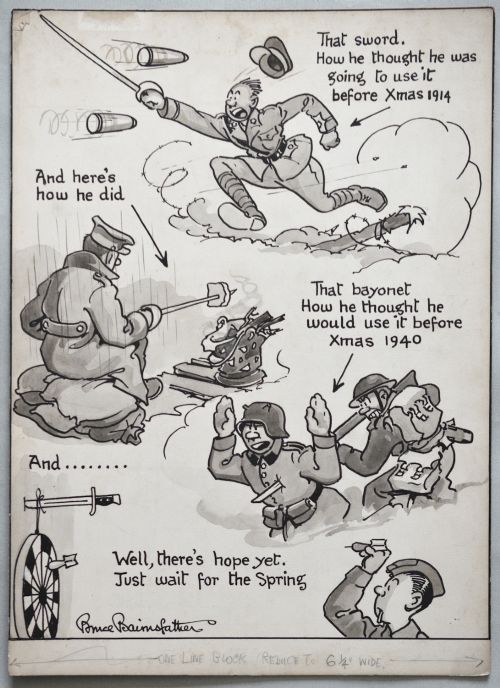
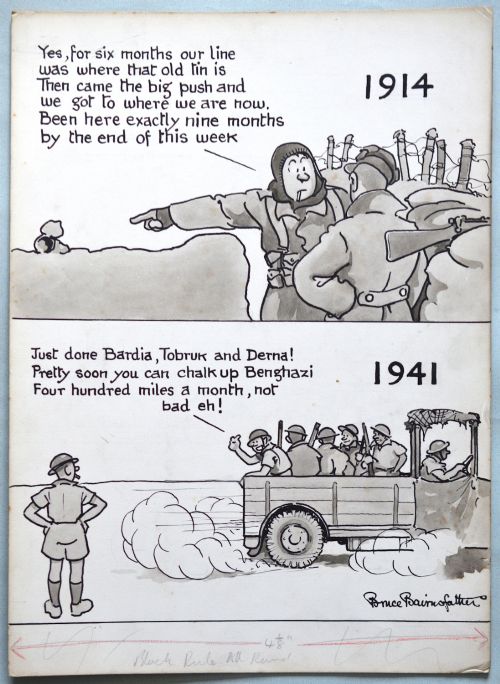
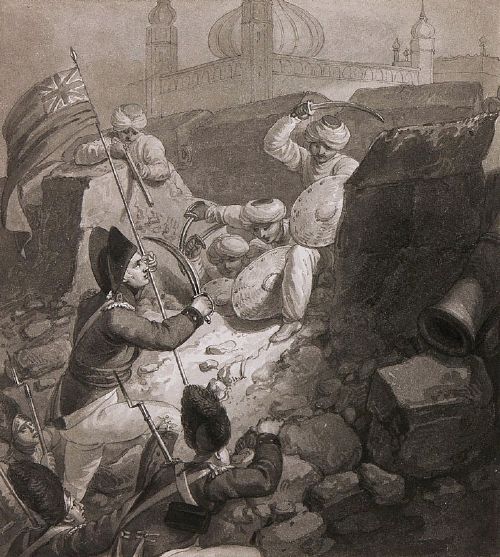
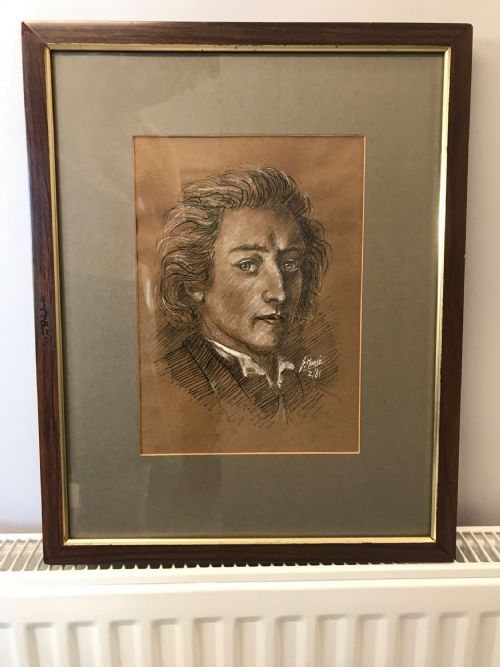
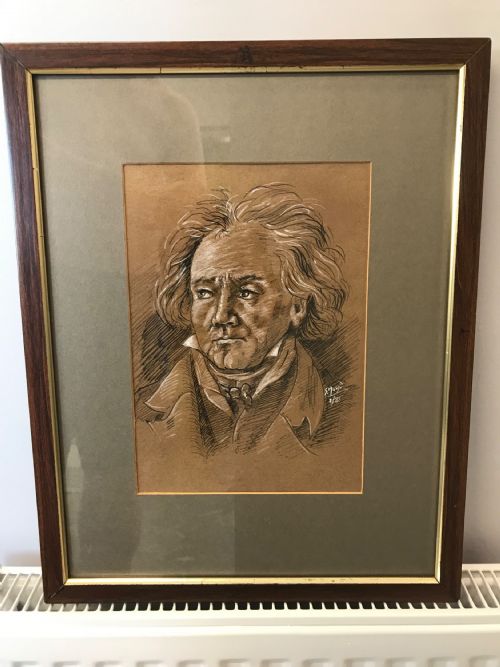
Several artists captured quirky historical moments, from architectural follies and battle scenes to satirical illustrations and portraits of music composers.
Quality variations
The distinction between ordinary and exceptional works rests on the confidence and economy of the draughtsman's line. A skilled hand conveys perspective, texture, and movement with minimal strokes, whereas lesser examples rely on laboured hatching or heavy reworking.
Condition and paper preservation dictate the standing of a piece within its period. Tonal integrity, minimal foxing, and the absence of heavy fading preserve the original contrast intended by the artist.
Bruce Bairnsfather·William Marshall Craig·Fred Lawson·Stanley Orchart·Edward Dayes·John Duncan Fergusson·Owen Bowen·Arthur E Gonne·Peter Tillemans·Thomas Monro·Thomas Lound
The Monochrome Ink Drawing Glossary
- Wash
- A thin, transparent layer of diluted ink or watercolour applied with a brush to create tonal variations and shadows. It provides background depth behind crisp pen lines.
- Gouache
- An opaque watercolour medium containing a white pigment binder that creates solid highlights. It is frequently applied over ink to catch the light on figures or architecture.
- Graphite
- A form of crystalline carbon used for initial sketching beneath the ink. Visible pencil marks often reveal the artist's preparatory working method.
- Foxing
- Brown spots and discolouration that develop on older paper due to chemical reactions over time. Its presence and extent affect the visual clarity of the drawing.
- Support
- The physical material, in this case paper, upon which the ink drawing is executed. The weight and texture of the sheet vary according to the period.
Monochrome Ink Drawing: Frequently Asked Questions
What is a monochrome ink drawing?
A monochrome ink drawing is an original artwork created using a single colour of ink, typically black, brown, or sepia, on a paper support. These pieces often incorporate related mediums like wash or graphite to enhance tonal depth.
They encompass architectural studies, topographical landscapes, portraits, and illustrative works produced across multiple centuries.
How should I frame and display these drawings?
Works on paper require careful framing with acid-free mounts to prevent direct contact between the sheet and the glass. Conservation-grade materials protect the ink and paper from environmental degradation over time.
Display them away from direct sunlight to prevent the fading of dark inks and any accompanying watercolour washes.
How can I tell the period of a drawing?
Dating relies on stylistic clues, paper watermarks, subject matter, and the specific composition of the ink and wash. Eighteenth-century examples often feature architectural or topographical themes with fine sepia washes.
Twentieth-century pieces display modernist tendencies, distinct paper types, or specific artistic movements such as Arts and Crafts or Modern British.
Are these works original or printed?
The listings here consist of original drawings created by hand rather than mass-produced mechanical prints. Close inspection reveals pen strokes, brush marks, and occasional graphite underdrawing beneath the ink.
Each piece represents a unique act of draughtsmanship rather than a reproduction.