


Gothic Revival Artwork
Gothic revival artwork brings medieval architectural grandeur and sacred devotion into domestic interiors through devotional paintings, intricate stained glass, and detailed architectural drawings.
Gothic Revival Artwork
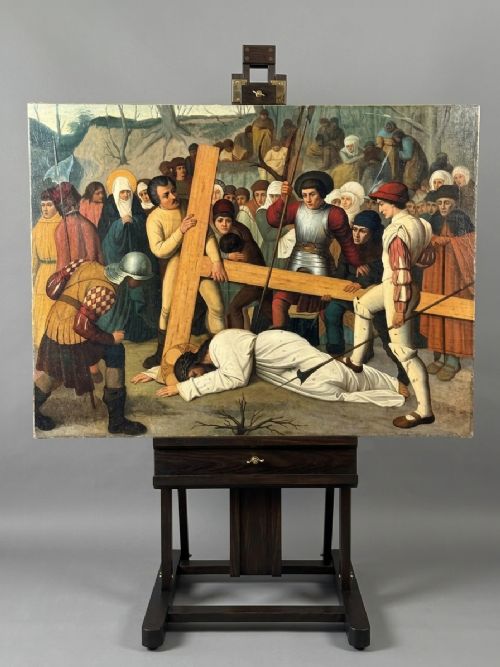
Gothic revival artwork encompasses framed oil paintings, stained glass panels, and architectural drawings created during the nineteenth century. These pieces draw heavily on medieval ecclesiastical aesthetics, featuring pointed arches, religious iconography, and historic church architecture.
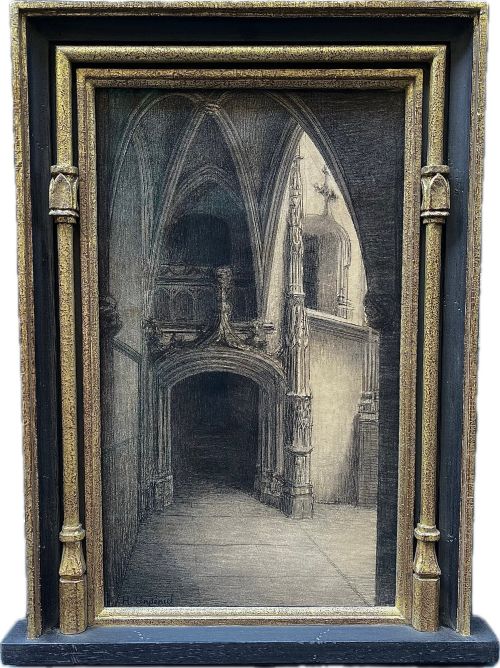
Buyers frequently encounter framed works on paper, such as original monochrome ink drawings with watercolour alongside larger oil on canvas religious subjects. Architectural renderings of abbey churches and historic buildings form another prominent grouping within these listings.
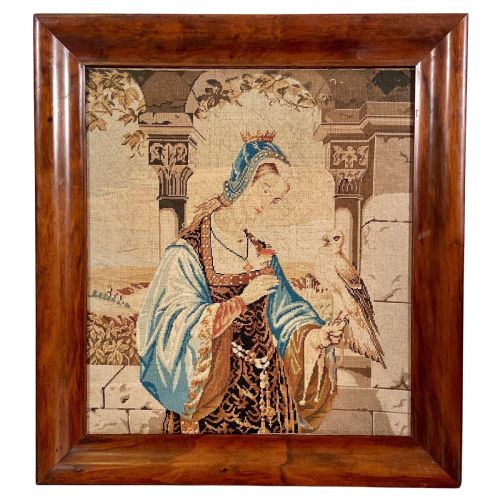
The objects span from the Regency period through to the early twentieth century, reflecting a sustained Victorian fascination with gothic forms. Domestic wall art sits alongside illuminated religious texts and embroidered tapestry panels depicting classical and medieval themes.
How they were made
Makers utilised traditional painterly mediums including oil on canvas, monochrome ink, and watercolour applied to paper or card. Graphite and etching techniques capture fine architectural details in drawings of historic structures like abbeys and churches.
Stained glass panels combine coloured glass held within lead cames, capturing natural light to illuminate religious scenes such as angels and ecclesiastical motifs. Gold leaf occasionally highlights sacred texts and devotional compositions, adding luminance to wall mounting panels.
A tin tabernacle once housed a glowing religious text, bringing corrugated iron church interiority straight onto the wall.
What varies in quality
The depth of architectural precision and the nuance of religious expression separate standard decorative pieces from finer original works. Skilled draughtsmanship in architectural drawings shows in the meticulous rendering of stone tracery and building elevations.
Material preservation dictates the integrity of fragile mediums like paper drawings, stained glass, and textile embroideries. Untouched condition in early oil paintings and well-preserved glass panels maintain the visual power intended by nineteenth-century makers.
Jozef Jansessens·Henri Charles Angéniol·Frank Greenwood·Joseph Hansom
The Gothic Revival Artwork Glossary
- Gothic Revival
- An architectural and artistic movement reviving medieval gothic forms, prominent throughout the nineteenth century. It heavily influences church architecture and interior decoration.
- Stained Glass
- Coloured glass pieces assembled with lead strips to form windows or decorative panels. These panels often depict religious figures and ecclesiastical scenes.
- Architectural Drawing
- Detailed technical or artistic renderings of buildings, structures, and interior elements. In this context, they record historic churches and abbeys.
- Devotional
- Artwork created to inspire religious piety and private prayer. These pieces frequently feature biblical figures and sacred texts.
- Monochrome
- Artwork executed in a single colour or shades of one colour, such as black ink wash. This technique was frequently utilised for topographical and architectural studies.
Gothic Revival Artwork: Frequently Asked Questions
What periods do these artworks come from?
The listings span the nineteenth century, including the Regency era, extending up to the early twentieth century around nineteen ten. Most pieces originate from the Victorian period when interest in medieval architecture peaked.
Dates are established through stylistic evidence, signatures, and accompanying documentation related to specific buildings or artists of the time.
What subjects appear in these drawings?
Architectural drawings and prints depict notable ecclesiastical buildings, including abbeys, town churches, and historic architectural projects. Artists recorded specific structures such as Selby Abbey and Whitworth Hall with precise detail.
Other works explore the history of gothic art through series of drawings and preparatory studies documenting medieval design principles.
How do I care for framed paper and paintings?
Paper drawings, ink works, and oil paintings require protection from direct sunlight and excessive humidity to prevent fading and material degradation. Displaying them away from heat sources preserves the stability of canvas, paper, and framing.
Dusting should be done gently with a dry, soft cloth, avoiding any liquid cleaners on fragile surfaces like antique ink or exposed canvas.