




Victorian Gothic Wall Decor
These pieces of victorian gothic wall decor bring intense architectural character and solemn historic weight into a room.
Victorian Gothic Wall Decor
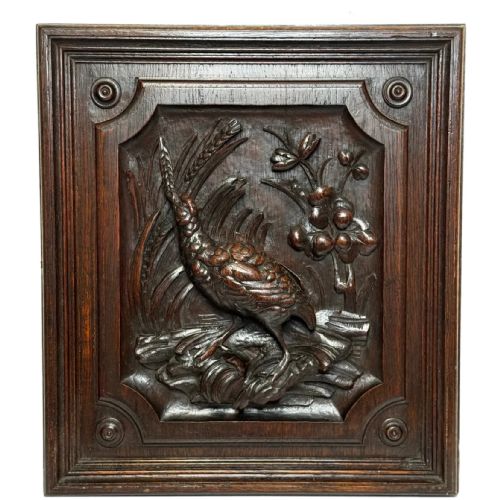
Victorian gothic wall decor comprises architectural salvage, carved panels, and framed artworks originating mostly from the nineteenth century. These objects draw heavily on medieval aesthetics, utilising motifs like heraldry, religious text, and fierce creatures.
The pieces listed on this page span several specific forms, including cast iron armorial plaques, carved oak griffin terminals, and framed architectural drawings. Buyers frequently encounter dark wood carvings and heavy metalwork designed to anchor a room's decorative scheme.
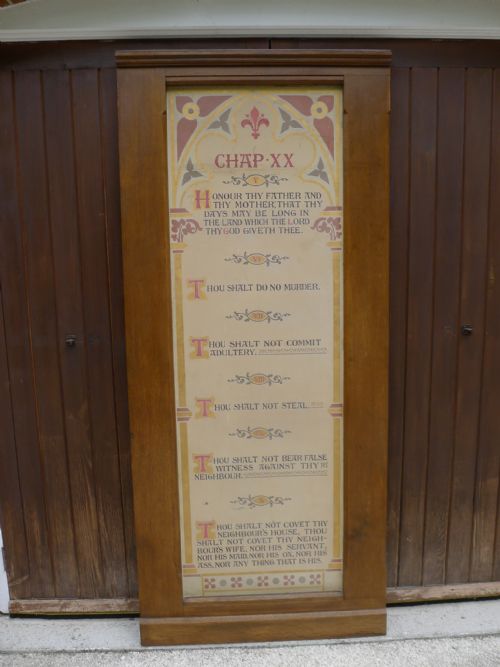
Makers and artisans of this era also utilised unusual mediums, as seen in leathermaché architectural decorations and illuminated religious texts from tin tabernacles. Each item brings a distinct ecclesiastical or domestic gothic presence to wall spaces.
How they were made
Makers relied heavily on solid oak and tiger oak, shaping the timber through deep relief carving to produce fierce animal sculptures and heraldic crests. These wooden elements often formed parts of larger architectural schemes before being adapted for wall mounting.
Metal components involved cast iron and brass, utilised for armorial plaques and heavy frames that housed delicate paper drawings or painted surfaces. Paint and gilt relief work frequently added colourful highlights and metallic sheen to tableaux and panels.
Periods represented on this page span the eighteenth century, nineteenth century, Victorian era, eighteen sixty, and eighteen ninety.
What varies in quality
Depth and crispness of the carving distinguish standard items from superior works, particularly in wooden terminals and panels where sharp undercut details demonstrate exceptional skill. The choice of timber, such as heavily figured tiger oak, also elevates a piece.
Materials dictate much of the character, with heavier cast iron and well-preserved leathermaché holding more architectural presence than simpler painted surfaces. The integrity of original framing and inset elements like brass surrounds preserves the historical weight of each object.
The Victorian Gothic Wall Decor Glossary
- Gothic Revival
- An architectural and artistic movement reviving medieval forms during the nineteenth century. It heavily influences the pointed arches, tracery, and solemn mood found in these wall pieces.
- Leathermaché
- A moulded fibrous material resembling papier-mâché but utilising leather waste. Makers employed it to create lightweight yet durable architectural decorations and reliefs.
- Armorial
- Relating to heraldry and coats of arms. These plaques display familial or institutional crests meant to project lineage and authority.
- Terminal
- A decorative carving where the upper portion of a figure emerges from a tapering pillar or block. Pairs of these often terminate architectural woodwork.
- Admiral Fitzroy Barometer
- A specific nineteenth-century weather glass design featuring comprehensive paper scales and instructions. They are housed in architectural wooden cases suited for wall hanging.
Victorian Gothic Wall Decor: Frequently Asked Questions
What is victorian gothic wall decor?
These items are nineteenth-century architectural elements, carvings, and artworks created during the gothic revival movement. They include cast iron plaques, carved oak panels, and framed religious texts meant for display on interior walls.
Most pieces reflect medieval ecclesiastical and domestic architecture through dark woods, heraldic motifs, and solemn artistic subjects.
How do I hang heavy pieces safely?
Many of these objects, particularly cast iron plaques and solid oak panels, carry substantial weight that requires secure wall fixings. Fixing directly into masonry or locating wooden wall studs is essential for safe suspension.
Using appropriate brackets or heavy-duty picture wire matched to the weight of the iron or oak ensures the piece remains secure.
Are these pieces from the nineteenth century?
The listings on this page originate primarily from the nineteenth century, encompassing the Victorian era and specific dates like eighteen ninety and eighteen sixty. Some earlier eighteenth-century leathermaché pieces also appear.
Materials such as unvarnished oak, cast iron, and period paper drawings support these chronological attributions.
How do I clean carved oak panels?
Dusting with a dry, soft bristle brush removes particles from the deep recesses of relief carvings without damaging the aged wood surface. Moisture should be avoided unless dealing with resilient materials like cast iron.
Harsh chemical polishes strip the historic dry finish, so simple dusting preserves the authentic appearance of the timber.