


Monochrome Architectural Artwork
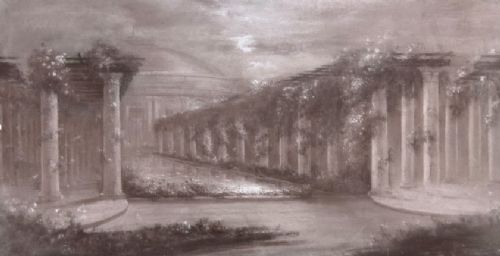
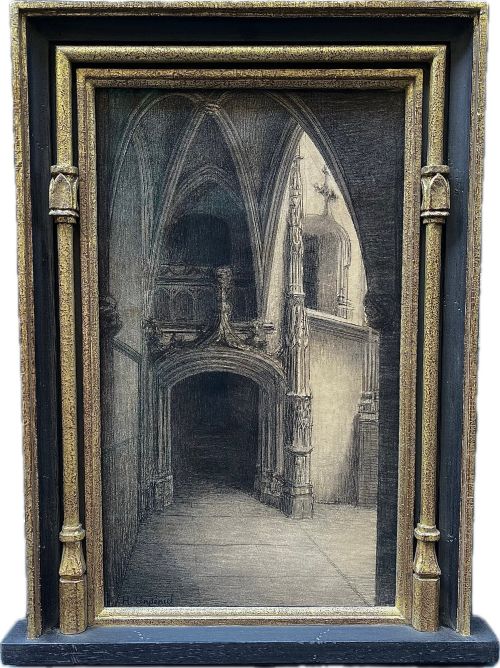
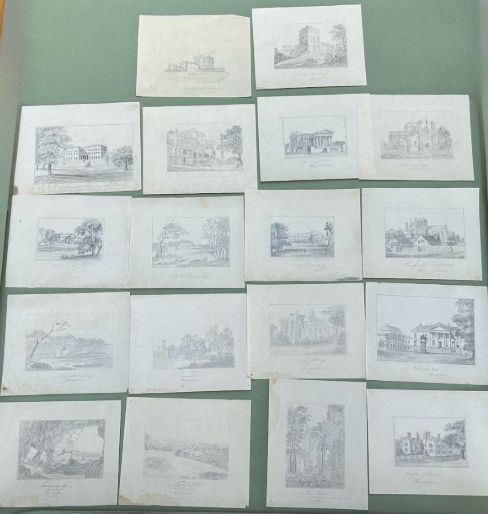
Monochrome architectural artwork brings classical ruins, Gothic churches and historic courtyards into rooms through ink, pencil and paper.
Monochrome Architectural Artwork
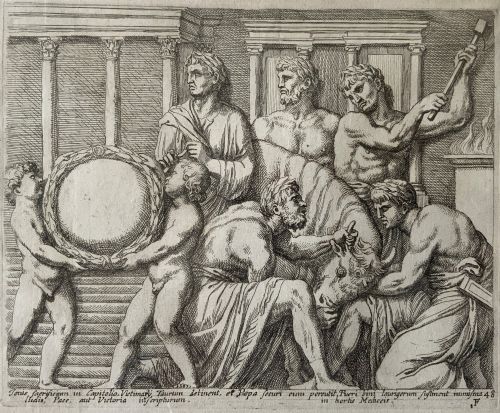
Monochrome architectural artwork encompasses prints, engravings and original drawings that record historic buildings, ancient antiquities and urban streetscapes without the distraction of full colour. These works range from grand eighteenth-century plates documenting Athenian temples to nineteenth-century ink sketches of abbeys and bridge studies.
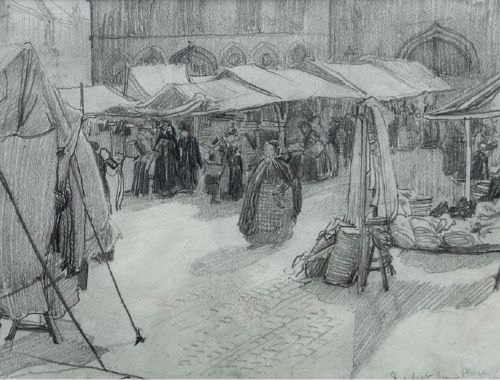
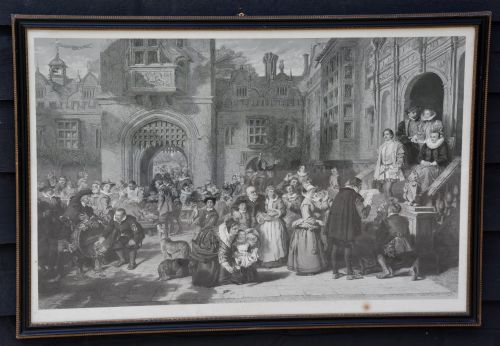
The selections available here lean heavily toward eighteenth-century copperplate engravings of classical ruins alongside nineteenth and early twentieth-century pencil drawings and etchings of British and European structures. Buyers frequently encounter detailed depictions of gothic churches, academic colleges and market crosses executed in ink, charcoal or graphite.
How they were made
Artists and printmakers utilised paper as the primary support, applying ink, graphite, charcoal and pencil to build tonal depth and linear precision. Copperplate engravings required meticulous hand-cutting into metal plates before pulling impressions on press, while original drawings relied on direct hand application with wash or pencil.
Many of these works incorporate gold leaf accents or subtle monochrome washes alongside standard ink lines to highlight architectural mouldings and stone facades. Framing materials typically involve period wood mouldings and protective glass to preserve the delicate paper surfaces.
The inventory records architectural subjects ranging from Gothic churches and bridges to classical antiquities.
What varies in quality
Quality rests upon the crispness of line in the impression and the precision of the draughtsmanship rather than the sheer size of the sheet. Early strikes from engraved copperplates yield sharp architectural details, whereas worn plates produce blurred edges and muddy shadows in complex facades.
Original hand-drawn studies demonstrate quality through the sureness of the artist's pencil or charcoal strokes when mapping perspective and proportion. The condition of the paper and the presence of strong tonal contrasts between dark shadows and pale stone surfaces further separate superior examples from weaker sheets.
François Perrier·Francesco Piranesi·Sir William Nicholson·Sir Francis Leggatt Chantrey·Fred Lawson·Francis Dodd·Edgar J Maybery·Alessandro Mocchetti·Edward Rooker·James Basire
The Monochrome Architectural Artwork Glossary
- Etching
- A printmaking process where lines are bitten into a metal plate with acid before ink is applied to the recessed grooves. This technique allows for fluid, expressive lines resembling freehand drawing.
- Engraving
- A method of cutting design lines directly into a metal plate using a sharp steel tool called a burin. It produces clean, precise lines suitable for detailed architectural elevations.
- Drypoint
- A printmaking technique where an artist scratches directly into a metal plate with a sharp needle, raising a rough ridge of metal called burr. This burr holds extra ink during printing to create soft, velvety dark lines.
- Wash
- A technique of diluting ink or watercolour to create translucent, semi-transparent layers of tone. It provides depth and shadow behind architectural line work.
- Grand Tour
- A traditional trip through Europe undertaken by upper-class young men in the eighteenth and nineteenth centuries to study classical art and architecture. Resulting prints and drawings often document these specific archaeological sites.
Monochrome Architectural Artwork: Frequently Asked Questions
What subjects appear in these works?
These pieces focus primarily on historic buildings, classical ruins, bridges, gothic churches and academic institutions. Artists documented both British townscapes and classical antiquities observed during European travels.
Subjects extend from detailed studies of Greek temples and Roman gods to quiet courtyards and market crosses across England and the continent.
How should I frame and display them?
Works on paper require conservation mounting using acid-free materials to prevent discolouration over time. Framing behind glass protects fragile graphite, charcoal and ink surfaces from atmospheric dust and moisture.
Keep pieces away from direct sunlight to prevent fading on eighteenth-century paper and nineteenth-century watercolour washes.
How do I distinguish an engraving from a drawing?
Engravings display uniform, precise lines pressed into the paper under heavy pressure, often showing a distinct plate mark impression around the image boundary. Close inspection with a magnifier reveals the repeating dotted or linear ink patterns typical of printed plates.
Original drawings lack plate marks and reveal the unique hand of the artist through varying pencil pressure, brush strokes and individual charcoal dust textures.
What periods do these artworks represent?
The selection spans from the seventeenth century through the mid-twentieth century, with a strong representation of eighteenth-century architectural plates. Nineteenth-century and Edwardian drawings capture a later domestic and scholastic interest in historic preservation.
Earlier works often record classical antiquity and archaeological excavations, while twentieth-century pieces reflect changing approaches to urban townscapes and architectural recording.