






Vintage Industrial Landscape
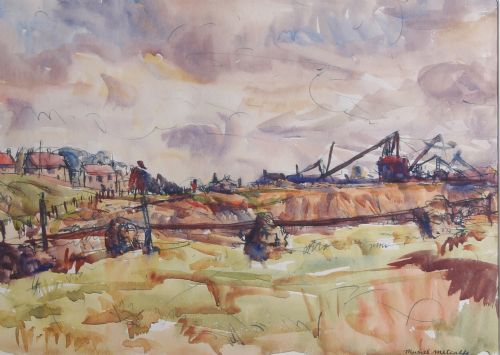
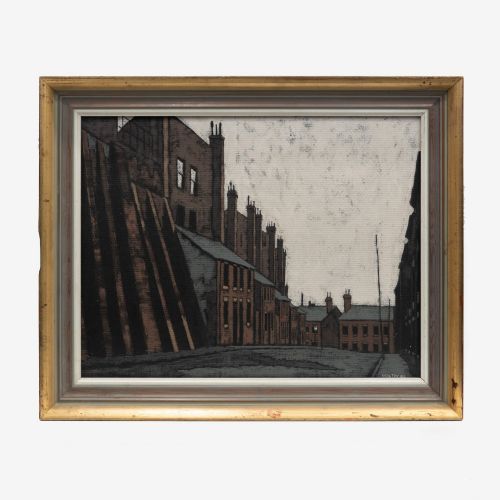
These vintage industrial landscape works capture factories, docks, and townscapes across oils and watercolours from the nineteenth century to the mid-twentieth century.
Vintage Industrial Landscape
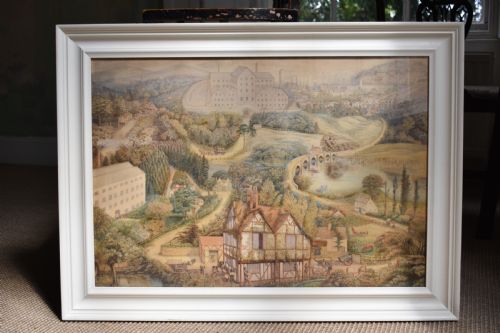
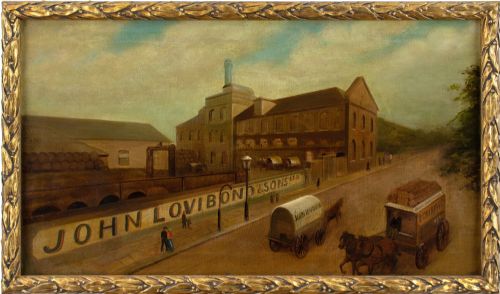
A vintage industrial landscape records the working structures, ports, mills, and urban fringes of past centuries through various artistic mediums. Buyers seeking this subject will encounter everything from large topographical watercolours of breweries and docks to expressive oils depicting northern shipyards and factories.
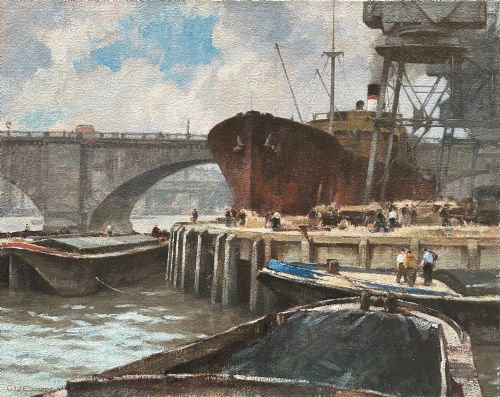
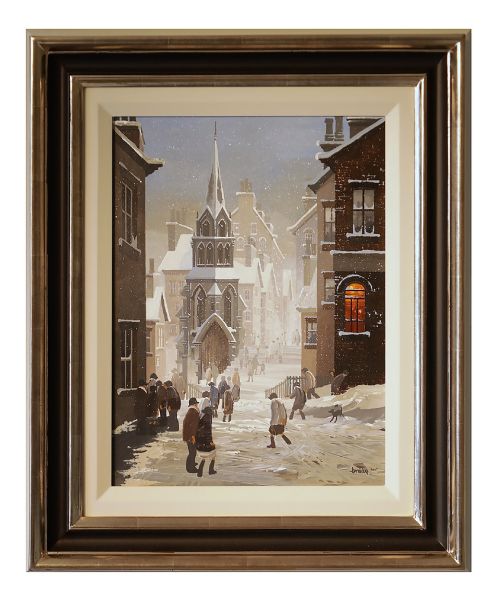
The selections available here lean heavily towards mid-twentieth-century oils on board and canvas alongside earlier watercolours. Many pieces focus on British scenes, particularly northern townscapes and southern ports, though continental European views also appear.
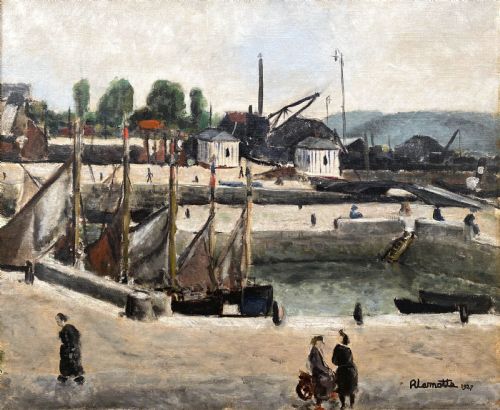
These works document changing trades and environments, shifting from nineteenth-century realism to modernist constructivist interpretations and impressionistic harbour scenes. Each piece presents a specific record of labour, architecture, and topography from its era.
Materials and construction methods
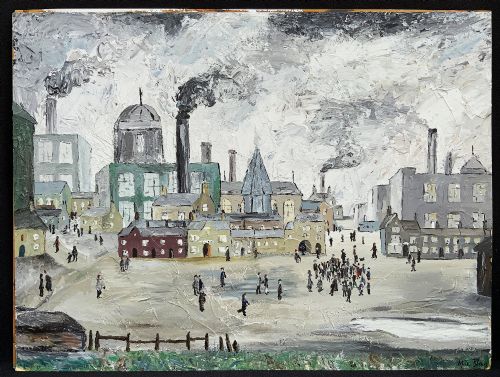
Painters utilised oil on canvas and oil on board to build dense surface textures, sometimes incorporating impasto to describe heavy industrial materials. Watercolours on paper offer a lighter, more translucent execution for topographical views.
Support materials range from traditional canvas and primed boards to heavy paper stock and charcoal sketches. Pigments were applied with brushes or sketching media to capture both the grit of urban scenes and the atmosphere of ports and rivers.
Several artists captured smoky London atmospheres and bustling French canals alongside northern quarries.
Distinguishing quality across the range
Quality rests upon the artist's command of composition and the specific handling of light within heavy industrial settings. Stronger works convey the atmosphere of a working site rather than merely recording architecture.
The handling of medium also dictates success, whether through the confident brushwork of an oil painting or the precise control seen in topographical watercolours. Pieces demonstrating a distinct artistic vision stand apart from more routine topographical illustrations.
Brian Shields Braaq·Stuart Walton·Fred Lawson·Frank Shenton·Herbert John Finn
The Vintage Industrial Landscape Glossary
- Constructivism
- An artistic approach focusing on abstract or structural forms, visible in mid-century industrial factory scenes. This style emphasises geometric arrangement over strict naturalism.
- Impasto
- Paint applied thickly to a canvas or board, creating a textured surface that stands proud of the plane. This technique is often utilised to render industrial smoke, water, or heavy machinery.
- Lithograph
- A print produced from a flat stone or metal plate treated to retain ink. These works reproduce detailed topographical views.
Vintage Industrial Landscape: Frequently Asked Questions
What periods do these industrial paintings cover?
The works span from the nineteenth century through the mid-twentieth century, capturing changing industrial and urban environments across multiple decades.
You will find pieces dated from the eighteen-forties up to the nineteen-sixties, reflecting various artistic movements of those eras.
What subjects appear in these landscapes?
Artists recorded a wide array of working subjects, including northern mills, shipyards, breweries, harbours, and urban townscapes near rivers.
Scenes range from busy southern ports like Southampton to quiet northern quarries and northern industrial towns.
How should I display a vintage painting?
These works suit traditional or modern walls alike, depending on the framing and the medium of the specific piece. Oils on canvas often benefit from simple wooden frames that complement their texture.
Watercolours and works on paper require glazing and mounting to protect the pigment from direct light over time.
How do I identify different painting styles?
Styles range from nineteenth-century realism to twentieth-century British impressionism, post-impressionism, and constructivist factory scenes. Examining the brushwork and composition helps place a work within its artistic context.
Some pieces follow established regional groups like the Staithes Group or adopt the manner of prominent northern artists.