
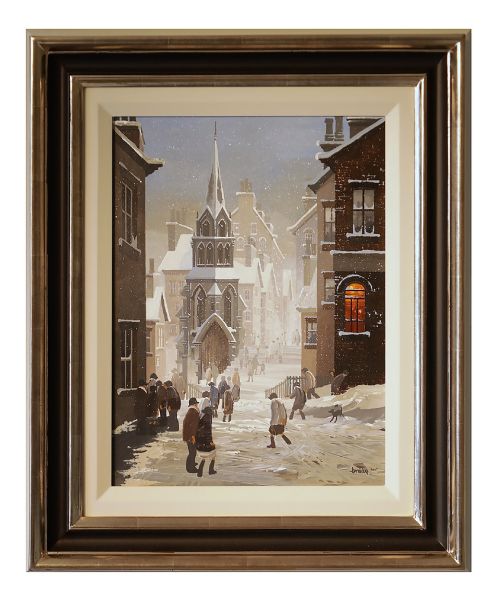
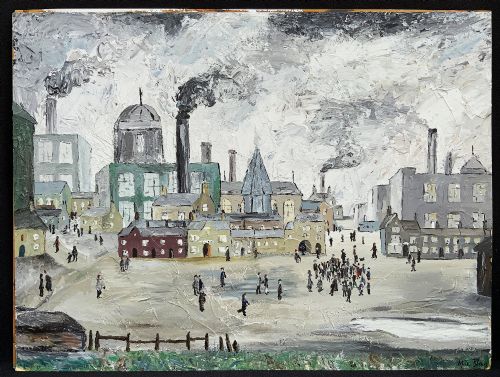


Northern English Landscape Artwork
These northern english landscape artwork pieces capture industrial towns, wild dales and coastal harbours across the twentieth century, offering an honest window into northern life.
Northern English Landscape Artwork
Northern english landscape artwork captures the industrial towns, valleys and coastal scenes of the region through the twentieth century. These paintings and watercolours record mill towns, dales and historic landmarks from the Edwardian era onwards.
You are most likely to meet mid-twentieth-century watercolours and oils on canvas or board on this page. Works by artists such as Fred Lawson and Rowland Henry Hill frequently appear alongside industrial townscapes and rural views.
The objects range from intimate watercolours on paper depicting Yorkshire landscapes to substantial oil paintings on canvas portraying Durham Cathedral and northern townscapes. Each piece reflects the distinct topography and industrial heritage of the north of England.
How they were made
Artists painted these scenes using oil paint or watercolour pigment applied to canvas, board or paper. Oil paintings on canvas or board provide rich texture and depth, particularly suited to industrial townscapes and river scenes.
Watercolour paintings on paper capture the softer light of northern dales and coastal towns with translucent washes. Works are typically housed within traditional wood frames that complement the period of the painting.
Fred Lawson walked the Yorkshire dales with his watercolours tucked firmly under his arm.
What varies in quality
Quality rests upon the artist's handling of light and atmosphere, distinguishing evocative topographical records from routine sketches. Stronger works convey the genuine grit of industrial chimneys or the specific chill of a Yorkshire dale.
The directness of the brushwork and the preservation of the paper or canvas define the standard of the piece. Superior examples retain vibrant pigments and strong composition without excessive fading or surface disruption.
Brian Shields Braaq·Fred Lawson·Rowland Henry Hill·Robert Lesley Howey·Frank Shenton·Donald Wood
The Northern English Landscape Artwork Glossary
- Watercolour pigment
- A water-soluble colour medium used on paper to create luminous landscapes. It allows for rapid application of washes and fine detail.
- Oil on canvas
- Pigment bound in oil applied to a stretched woven fabric surface. This technique permits deep colour saturation and textured brushstrokes.
- Northern School
- An informal grouping of twentieth-century artists who painted northern industrial towns and working-class life. Their work often employs dark palettes and stark urban realism.
- Townscape
- A painting or watercolour depicting an urban scene, typically featuring streets, mills and industrial architecture. These works document the changing face of northern cities.
Northern English Landscape Artwork: Frequently Asked Questions
What subjects appear in northern landscapes?
These works primarily depict industrial towns, northern cathedrals, rural dales and coastal harbours. Scenes range from bustling market places to quiet quarries and rolling countryside.
Artists focused heavily on the distinct character of northern England, capturing both heavy industry and expansive natural scenery.
How do I care for watercolour on paper?
Watercolour paintings require protection from direct sunlight to prevent the pigments from fading over time. Glazing with appropriate glass helps shield the delicate paper and pigment surface from atmospheric moisture.
Displaying works in stable indoor conditions ensures the paper remains free from humidity damage and warping.
What is the Northern School style?
The Northern School encompasses twentieth-century artists who depicted the industrial towns, mills and everyday lives of northern working communities. Their paintings often feature robust brushwork and a moody palette suited to northern weather.
Works in this tradition record urban landscapes with an unromanticised, direct approach.
How do oil paintings differ from watercolours here?
Oil paintings utilise heavy pigment on canvas or board to build rich textures and deep tones, as seen in townscapes and cathedral views. Watercolours employ translucent washes on paper to capture the lighter, atmospheric quality of dales and coastal scenes.
Both mediums offer distinct ways of recording the northern topography across the twentieth century.