
Vintage Indian Wooden Table
A vintage indian wooden table brings dense carved detail and rich regional timbers into a modern room with ease.
Vintage Indian Wooden Table
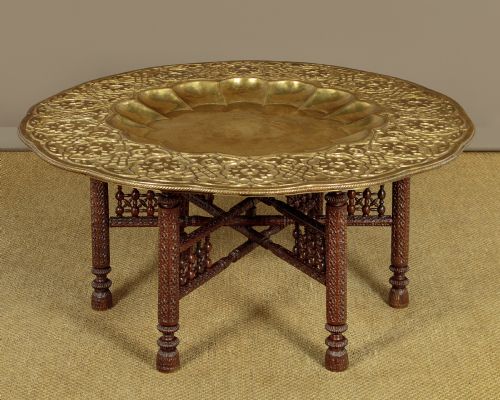
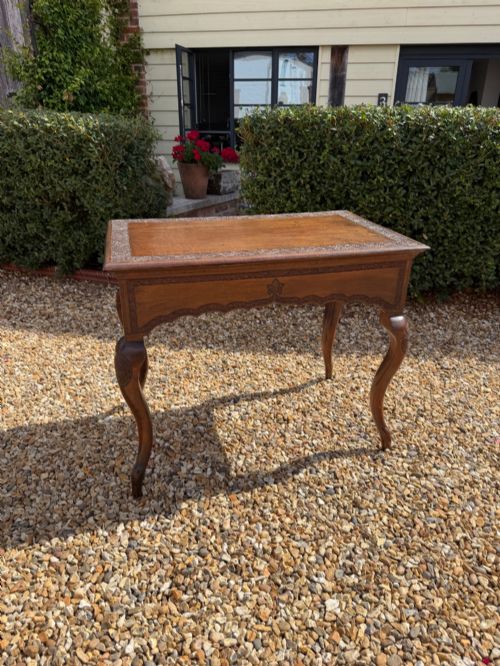
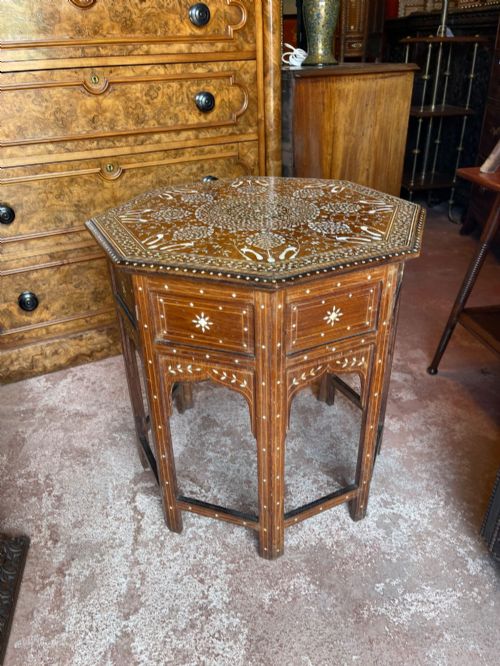
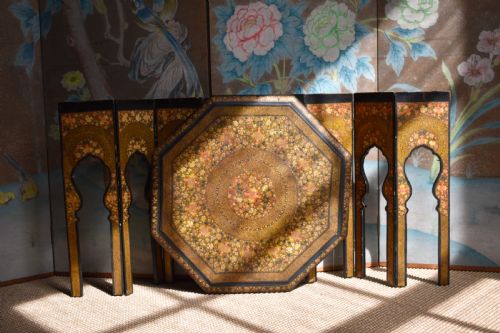
A vintage indian wooden table encompasses diverse forms created across the subcontinent and within colonial trade networks, spanning side tables, coffee tables, and octagonal folding tables. When searching for a vintage indian wooden table, buyers encounter examples ranging from nineteenth-century origins through the decades up to nineteen thirty, drawing on Anglo-Indian, Kashmiri, and regional stylistic traditions.
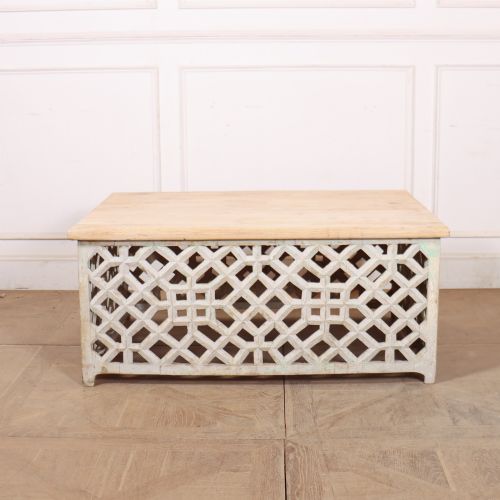
The selection includes specialised pieces such as Hoshiarpur tables with intricate geometric construction, low Takhat coffee tables, and occasional furniture executed in dense hardwoods. Makers combined utility with ornamental carving, producing surfaces adapted for both traditional domestic use and British colonial interiors.
How they were made
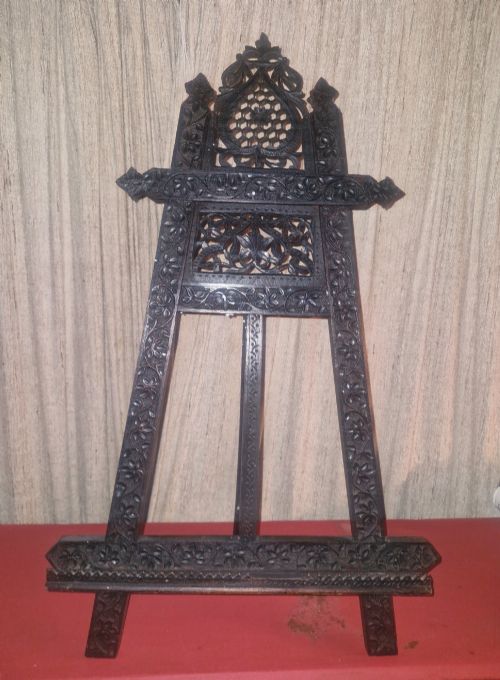
Craftsmen utilised heavy timbers including teak, rosewood, padauk, and walnut as structural foundations for these items. Surfaces frequently received deep chisel carving in floral or animal motifs, alongside geometric elements.
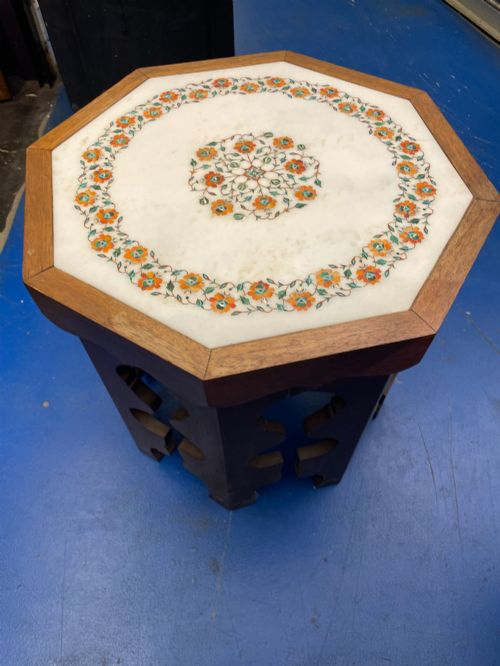
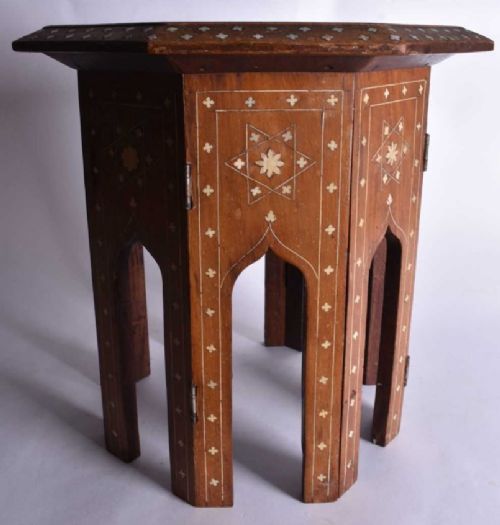
Decoration relied on contrasting materials embedded into the timber base, incorporating brass wire inlay, bone, mother of pearl, and hand-painted lacquer. Folding mechanisms and octagonal top constructions demonstrate sophisticated carpentry designed for portability and display.
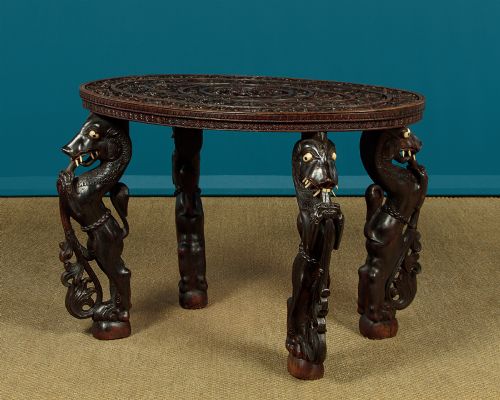
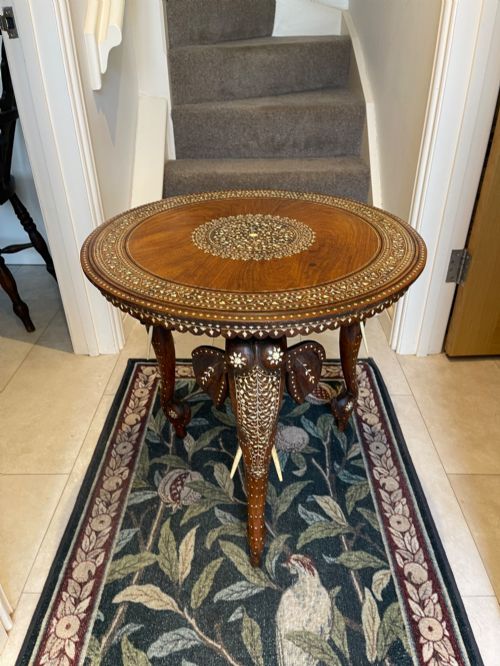
Elephants double as furniture supports, holding up heavy wooden tops with carved trunks and tusks.
What varies in quality
The degree of crispness in the chisel work dictates the visual success of the carving, separating deeply undercut foliage from softer, more generalized shaping. Precision in the geometric assembly of inlaid elements also marks superior execution.
The choice of dense primary timber, such as solid rosewood or padauk rather than lighter secondary woods, elevates the substance of the piece. Intact surface decoration without extensive loss to bone, brass, or mother of pearl segments maintains the integrity of the design.
The Vintage Indian Wooden Table Glossary
- Anglo-Indian
- Describing furniture made in India for British residents or export during the colonial period. These pieces blend indigenous craft techniques with European forms.
- Hoshiarpur
- A North Indian city renowned for intricate woodwork. Tables from this tradition feature dense bone, brass, or shisham inlay across folding octagonal surfaces.
- Takhat
- A low traditional Indian seat or platform table. These sturdy items function well as contemporary coffee tables.
- Padauk
- A heavy, durable tropical hardwood with reddish tones. Makers utilised this timber for nineteenth-century carved occasional furniture.
- Inlay
- A technique where contrasting materials are set flush into the wooden surface. Common materials include brass wire and bone.
Vintage Indian Wooden Table: Frequently Asked Questions
How do I clean a carved wooden table?
Dust regularly with a soft, dry brush to reach into the recesses of the deep carvings without damaging the timber.
Avoid liquid polishes that can build up within the carved channels or discolour inlaid bone and brass elements.
Are folding tables sturdy?
Many octagonal tables employ an ingenious interlocking wooden frame that collapses flat when lifted.
When properly assembled, the gravity-held base provides a stable platform for everyday use.
What is an elephant table?
These tables incorporate carved elephant figures or heads into the structural legs and supports.
They represent a specific Victorian and Edwardian export taste for figurative regional motifs.
How do I date these pieces?
Dating relies on timber selection, construction methods, and stylistic crossover between British aesthetic movements and Indian craftsmanship.
Nineteenth-century examples often feature heavier padauk and rosewood, while later items incorporate Art Deco influences or simpler turned supports.