


Carved Square Plant Stand
A carved square plant stand brings architectural form and rich timber texture to a room, offering a sturdy stage for greenery or sculpture.
Carved Square Plant Stand
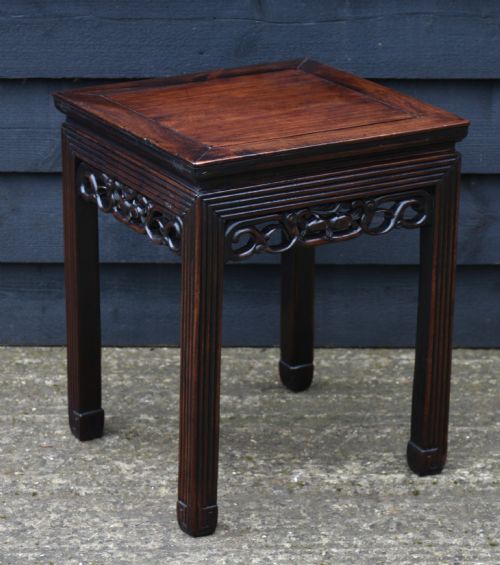
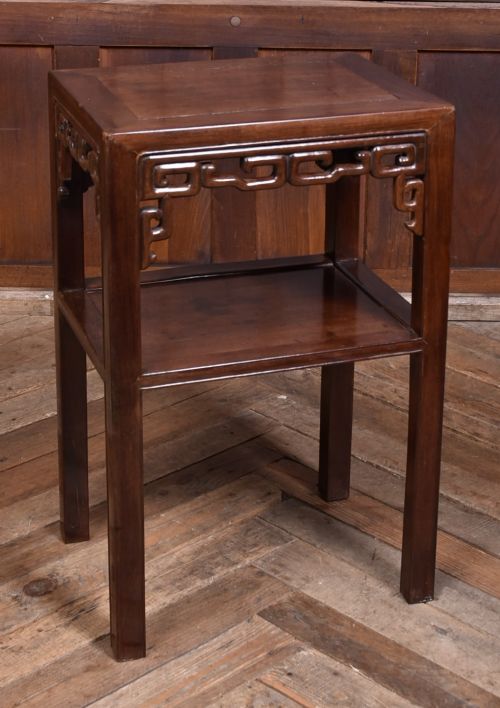
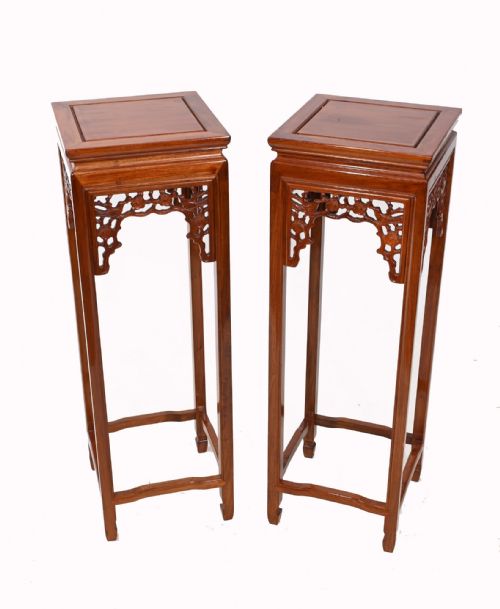
When you search for a carved square plant stand, you encounter a surprisingly varied group of small tables and pedestals. These pieces range from compact Edwardian occasional tables to substantial Chinese hardwood stands.
The form is defined by its geometry and purpose, serving to elevate plants, lamps or decorative objects. You will frequently find examples hailing from the nineteenth and early twentieth centuries, alongside occasional eighteenth-century George III pieces.
What varies in quality
The depth and crispness of the hand carving separate simpler utility pieces from finer examples. Sharp relief work and considered proportions indicate a more skilled hand at the bench.
Choice of material also drives distinction, with dense exotic hardwoods and specialised inlays sitting above straightforward regional pine or plain oak. The integrity of the timber joints and the weight of the base dictate how well the stand survives daily use.
Periods represented span from the eighteenth century through the Victorian era and into the Edwardian and Art Deco decades.
Liberty of London
The Carved Square Plant Stand Glossary
- Scagliola
- A composite material made from selenite, glue and pigments, mimicking marble or other fine stones. It appears on heavy pedestals designed for display.
- Barley twist
- A type of turning shaped like a spiral rope, popular on legs of tables and stands from the late nineteenth and early twentieth centuries.
- Chippendale Revival
- A style drawing on eighteenth-century designs by Thomas Chippendale, often featuring elaborate carved details on mahogany.
- Hoshiarpur
- A style of woodwork originating from India, characterised by dense surface carving and bone or ivory inlay on hardwoods such as sandalwood.
Carved Square Plant Stand: Frequently Asked Questions
What is a carved square plant stand used for?
These pieces were originally built to elevate potted plants, allowing greenery to catch the light and sit at a more prominent height within a room. Today, collectors utilise them just as readily for displaying porcelain, sculptures, or table lamps.
Because of their compact square footprint, they fit easily into corners, hallways, or beside seating without dominating the floor space.
How do I date a carved square plant stand?
Dating relies on observing the timber, the style of the carving, and the construction methods used underneath the top. Pieces from the eighteenth century show different joinery and timber ageing compared to Edwardian or Arts and Crafts examples from the late nineteenth century.
Revival styles can sometimes confuse the timeline, as makers in the early twentieth century frequently copied earlier Georgian or Jacoboan motifs.
What styles are available in these stands?
The selection spans several distinct aesthetic traditions, including Chinese traditional carving, Anglo-Indian bone inlay, and British Arts and Crafts. You will also encounter revival styles such as Chippendale and Jacobean, which lean heavily on historic European ornamentation.
This variety means a stand can anchor either a traditional period interior or a more eclectic modern room scheme.