
Vintage Indian Wood Carving
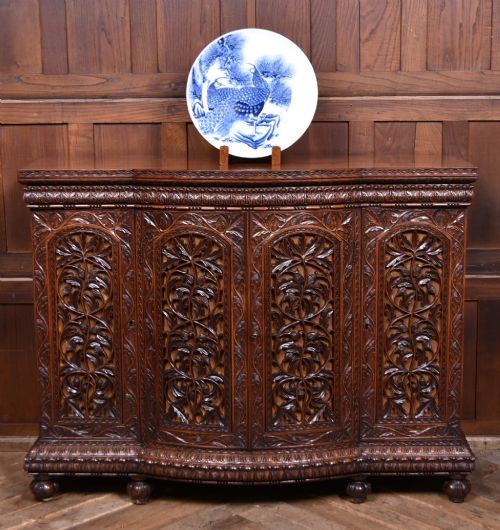
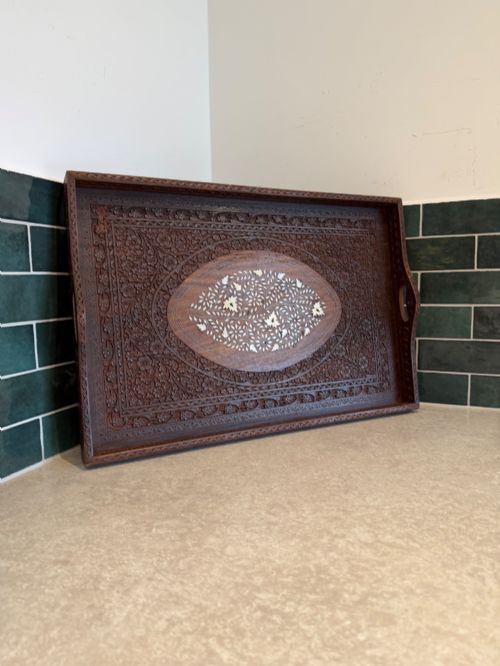
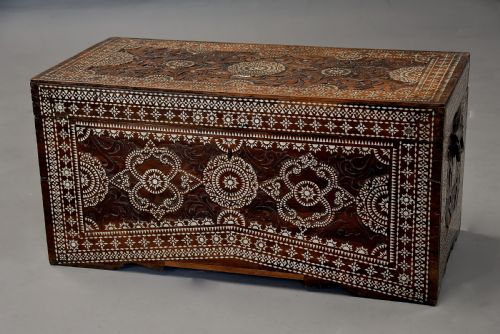
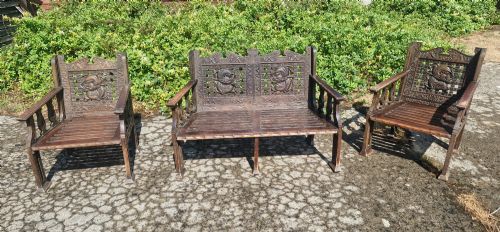
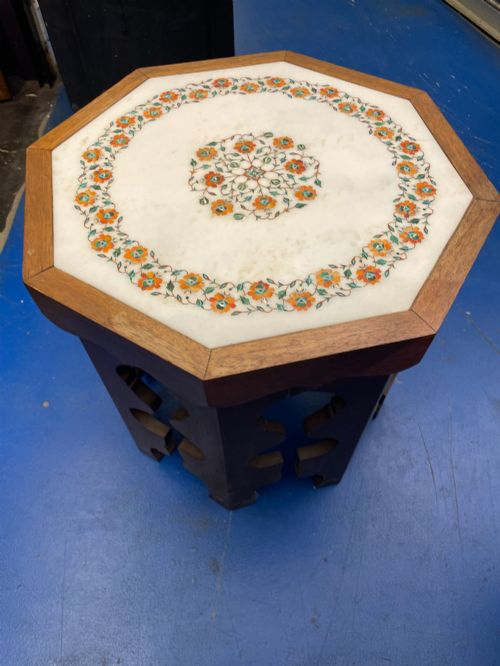
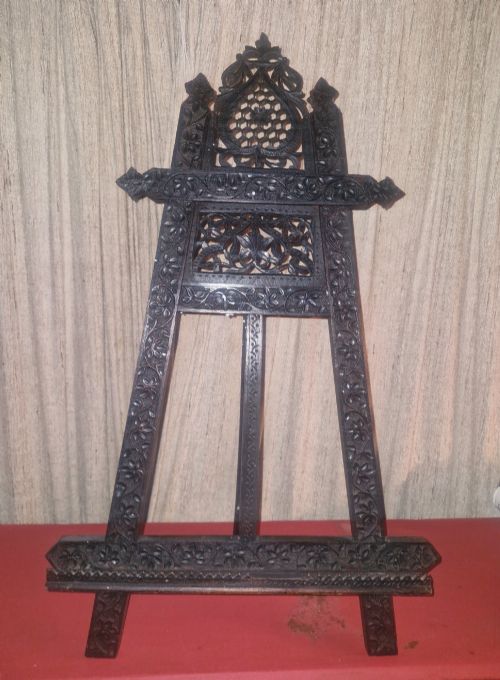
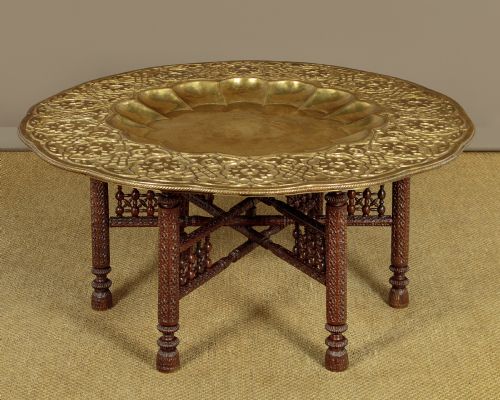
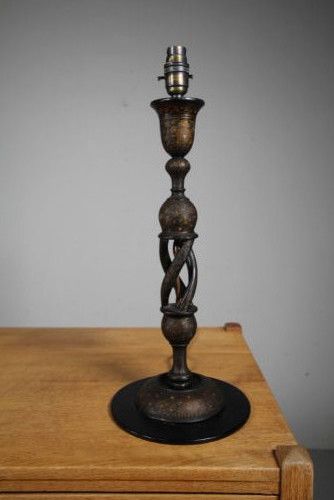
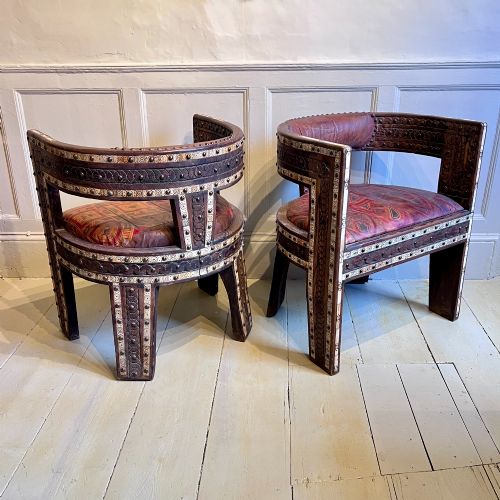
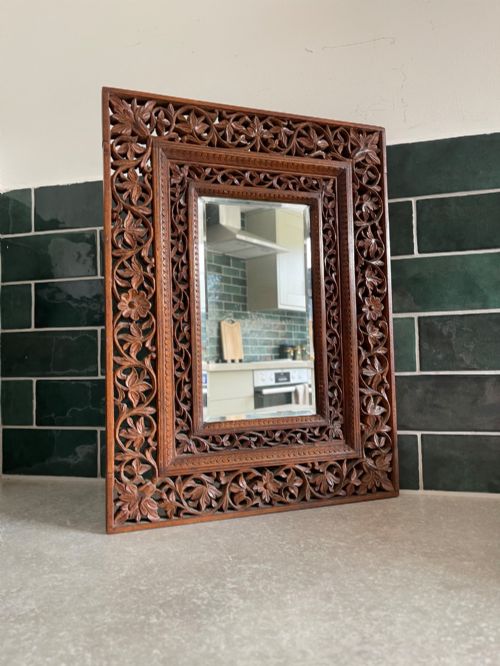
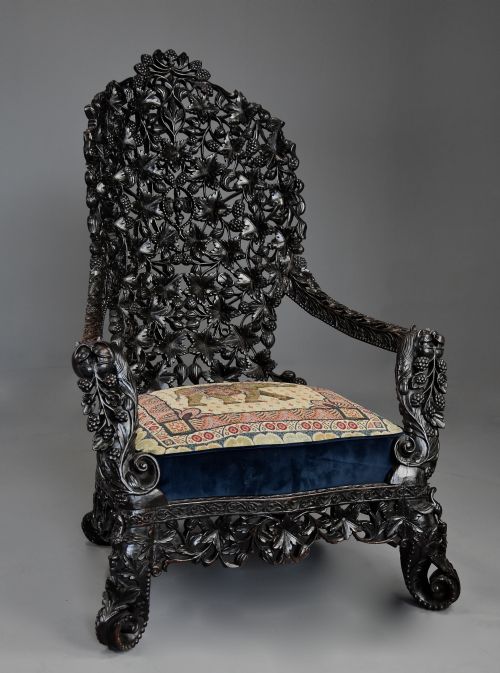
These vintage indian wood carving pieces bring dense foliage and geometric bone inlay into a room.
Vintage Indian Wood Carving
When you examine a vintage indian wood carving piece, you encounter furniture and decorative objects originating from the nineteenth and early twentieth centuries. These items range from occasional tables and sideboards to mirrors, armchairs, and storage cupboards produced across various regions.
Origins stretch from nineteenth-century workshops to early twentieth-century production, incorporating styles influenced by colonial trade and regional craftsmanship. Buyers find everything from small picture display easels to large sideboards and seating suites.
How They Were Made
Maker's workshops utilised dense timbers such as teak, padauk, rosewood, and general hardwood as the primary foundation for carving. These woods provided the necessary weight and stability for intricate surface relief work.
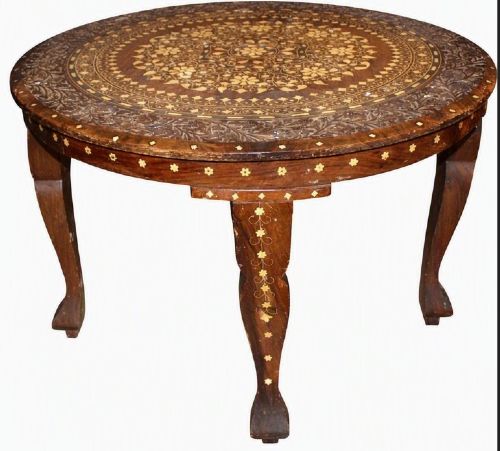
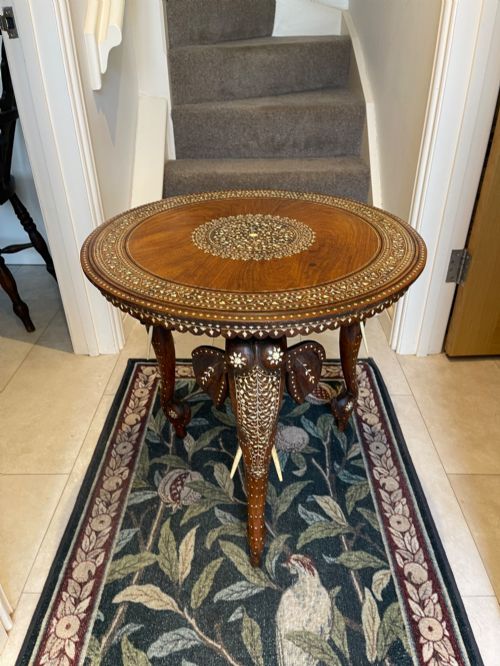
Artisans embellished wooden surfaces using contrasting materials, embedding bone, mother of pearl, and brass wire into precise recesses. Metal elements such as brass studs, plates, and iron fittings reinforced structural joints and added decorative contrast.
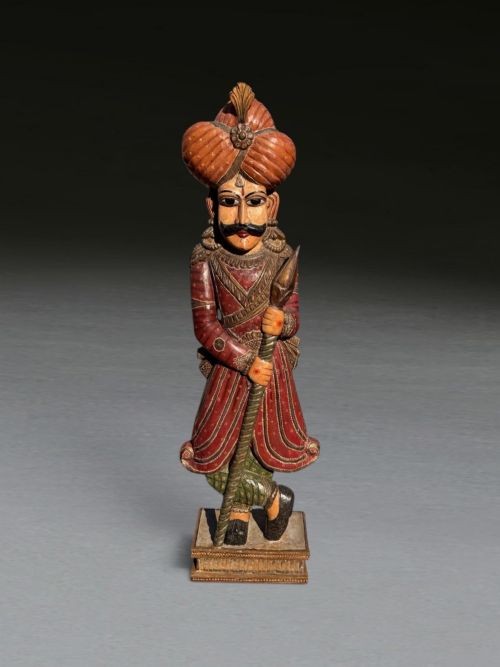
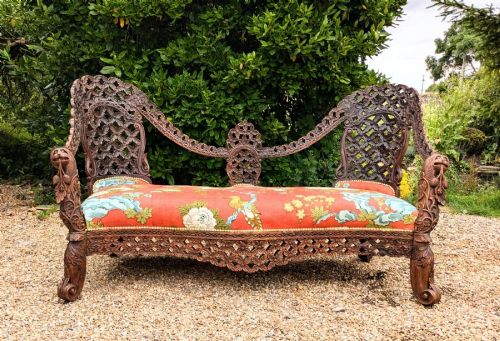
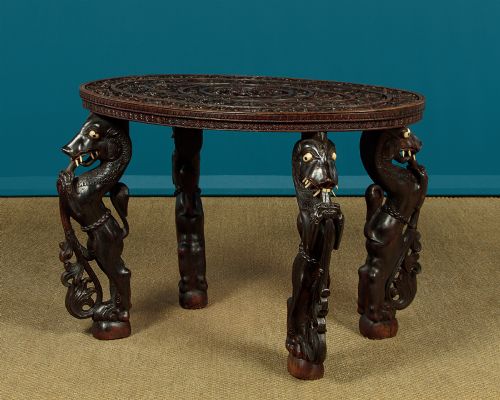
Carving techniques involved deep hand-chiselling to create foliate scrolls, animal figures, and geometric patterns. Surface treatments ranged from polished dark hardwoods to painted pigments on Kashmiri pieces.
Watch for carved wooden elephants and painted horses standing ready to guard your hallway.
What Varies in Quality
The depth and crispness of the hand-carving determine the visual success of a piece, with shallow, soft work sitting below deeply undercut foliage and figures. Superior examples display sharp relief work where every leaf and animal contour remains distinct.
The integration of inlay materials dictates the standard of execution, separating neatly flush bone and metal wire from loose or clumsily filled channels. Precision in geometric and floral arrangements shows the skill level of the original workshop.
Timber selection and structural joinery separate basic utilitarian items from exceptional commissions. Dense native hardwoods and solid padauk structures hold up better than secondary softwoods over decades of use.
Liberty And Co
The Vintage Indian Wood Carving Glossary
- Anglo-Indian
- Describing furniture made in India during the British colonial period, typically combining European forms with traditional Indian decorative carving.
- Hoshiarpur
- A region in Punjab known for intricate wooden furniture and decorative objects heavily inlaid with bone or brass in geometric patterns.
- Padauk
- A dense, heavy tropical hardwood featuring a reddish-brown colouration, frequently used for nineteenth-century colonial side tables and storage pieces.
- Almirah
- A freestanding cupboard or wardrobe originating from the Indian subcontinent, often constructed from reclaimed teak with panelled doors.
- Bone inlay
- A decorative technique where small pieces of animal bone are shaped and pressed into carved channels within a wooden surface.
Vintage Indian Wood Carving: Frequently Asked Questions
What is an almirah?
An almirah is a tall freestanding storage cupboard or wardrobe, usually built from heavy timbers like reclaimed teak.
These cabinets often feature panelled doors and substantial proportions, serving as statement storage furniture in a modern interior.
How do I identify Hoshiarpur pieces?
Hoshiarpur pieces are recognised by their dense surface coverage of geometric patterns formed from bone or brass wire inlay.
Workshops in this Punjab town applied this meticulous technique to tables, mirror frames, and small screens during the nineteenth and early twentieth centuries.
What woods were used?
Carvers utilised heavy tropical timbers including teak, padauk, rosewood, and general dense hardwoods.
These durable woods provided a stable canvas for deep relief carving and secure housing for delicate bone and metal inlays.