


Carved Wooden Indian Statue
A carved wooden indian statue brings centuries of sculptural craft and domestic folk tradition straight into a modern interior.
Carved Wooden Indian Statue
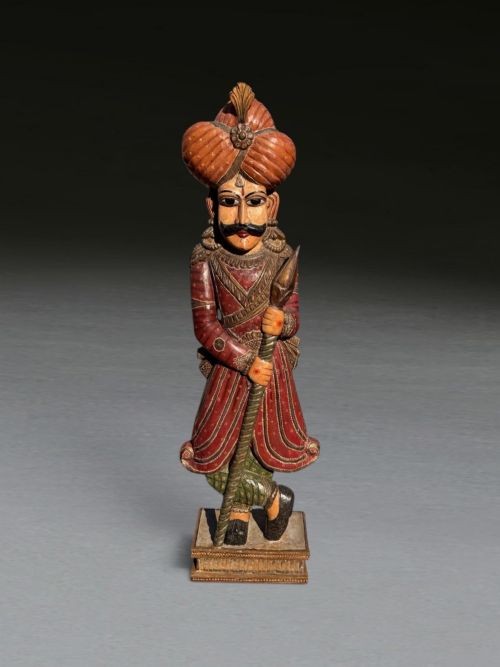
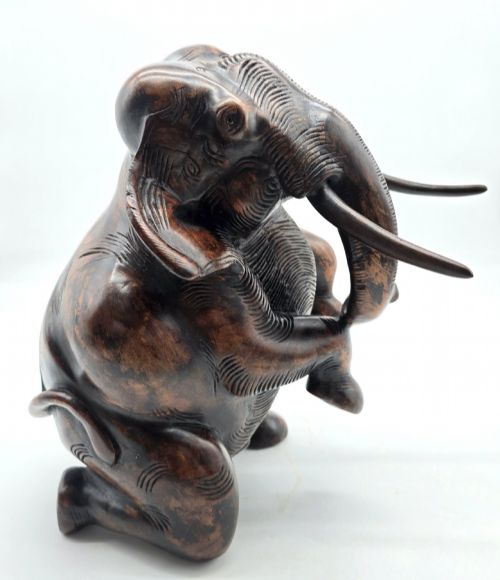
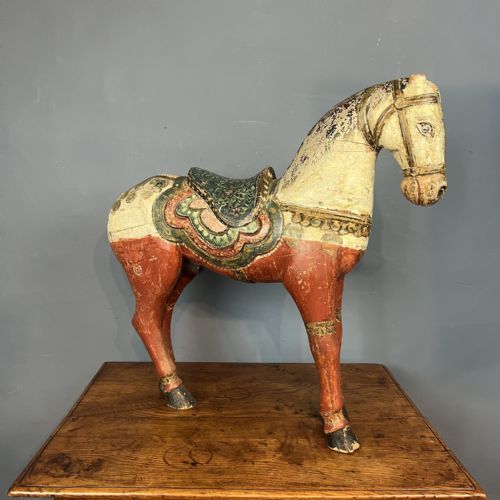
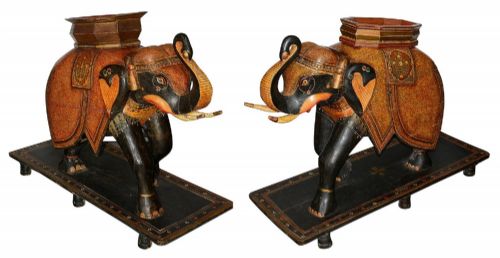
A carved wooden indian statue encompasses a diverse range of decorative figures, animals, and architectural elements originating primarily from the nineteenth and early twentieth centuries. Collectors searching for a carved wooden indian statue will frequently encounter representations of elephants, horses, soldiers, deities, and trade figures.
The objects span multiple stylistic traditions, including Anglo-Indian, Indian folk art, and Indo-Persian designs. Many of these pieces reflect the colonial Raj period, capturing local fauna and ceremonial subjects through traditional craftsmanship.
Forms vary widely from large floor-standing figures and processional animals to functional bookends and architectural carvings. The materials and finishes differ significantly between pieces, ranging from dark ebony and teak to polychrome painted surfaces.
Assessing quality in carved wooden indian statue pieces
The finesse of the carving dictates much of the visual success, separating stiffly rendered forms from lively, deeply undercut representations of animals and human figures. Anatomical accuracy and the crispness of ceremonial trappings reveal the skill of the original workshop.
Surface preservation plays a major role in the overall integrity of the piece, particularly where original paint, pigment, or lacquer survives. Intact polychrome decoration and stable wood seasoning elevate an object above heavily restored or stripped examples.
Recorded periods span from the seventeenth century through the Victorian era and into the early twentieth century.
The Carved Wooden Indian Statue Glossary
- Polychrome
- Decorated in a variety of different colours. This finish appears frequently on painted wooden figures and animal sculptures.
- Hardwood
- Wood from angiosperm trees that is generally dense and durable. Carvers utilised these resilient timbers for detailed animal studies and large architectural fragments.
- Gesso
- A plaster mix used as a smooth base for paint. Artisans applied this substance before adding colour to wooden statues.
- Anglo-Indian
- A style reflecting the artistic exchange between British and Indian cultures during the colonial period. These objects often combine traditional local motifs with forms suited to Western domestic spaces.
Carved Wooden Indian Statue: Frequently Asked Questions
What animals appear most often?
Elephants and horses dominate the animal subjects, appearing singly or in pairs across various nineteenth-century periods. These range from ceremonial processional beasts to naturalistic studies.
Other less common representations include iguanas, goats, and Nandi bulls, demonstrating the broad scope of traditional woodcarving.
How do I care for wooden statues?
Keep carved wooden items away from direct heat sources and dramatic humidity fluctuations to prevent the timber from splitting. Dust gently with a dry, soft cloth rather than using liquid polishes.
Take particular care with polychrome or lacquered surfaces, as moisture can lift the delicate decorative layers from the wood beneath.
Are these pieces functional?
While most items serve primarily as decorative sculptures or display figures, specific forms have practical uses. Examples include bookends and trade signs designed for commercial or domestic utility.
Even purely sculptural animals often functioned as decorative centrepieces within nineteenth-century interiors and colonial homes.
How do I date these carvings?
Dating relies on stylistic markers, tool marks, and the condition of the wood and surface finishes. Pieces from the Raj period often display distinct Anglo-Indian design characteristics alongside period-specific pigments.
Earlier seventeenth-century examples show heavier wear and distinct structural construction methods compared to later nineteenth-century output.