


Polychrome Indian Wooden Carving
A polychrome indian wooden carving brings vibrant hand-painted pigment and rich regional form straight into a room.
Polychrome Indian Wooden Carving
A polychrome indian wooden carving encompasses sculptural figures, animals, and occasionally furniture forms executed in carved timber. Buyers seeking a polychrome indian wooden carving examine pieces that bridge traditional craftsmanship and decorative domestic display.
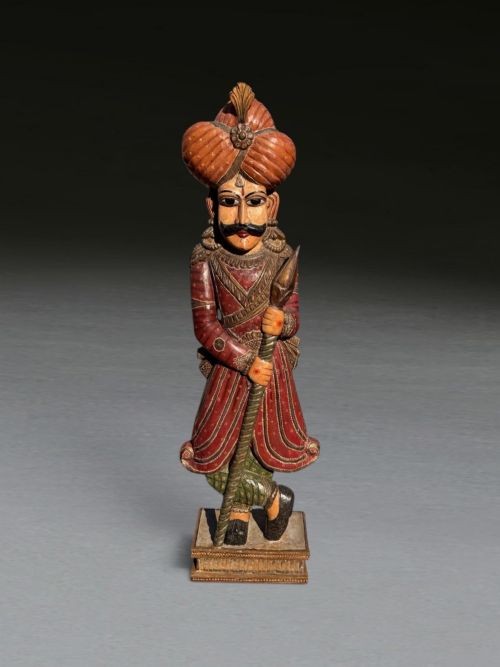
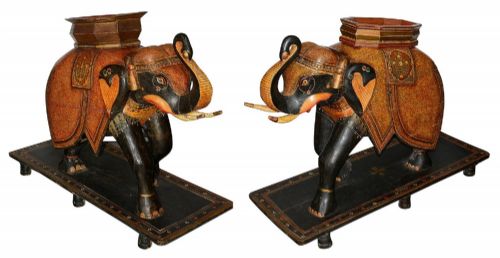
The selections encountered here span the nineteenth century through to the early twentieth century, reflecting diverse regional aesthetics. Common manifestations include figurative soldier statues, ritual Nandi figures, and painted elephant sculptures.
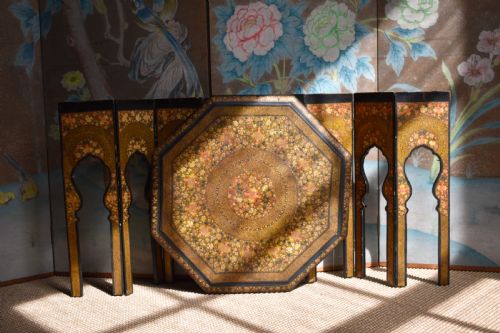
Objects range from larger statues measuring nearly a metre in height down to smaller decorative side tables and stools. Each piece relies on carved timber foundations enriched by applied colour.
Materials and construction methods
Surfaces were prepared using gesso or direct priming layers to receive colour. Artisans then applied mixed pigments, lacquer, and occasionally gold leaf to build up rich surface decoration.
Listings feature wood, paint, gesso, lacquer, and gold leaf across nineteenth-century and early twentieth-century periods.
Assessing quality and craftsmanship
Quality rests upon the crispness of the initial wood carving and the depth of the sculptural modeling. Finer examples display confident proportions in figures and animals, whilst simpler works remain more schematic.
The survival and complexity of the original pigment layer significantly influence the visual impact. Pieces retaining rich polychrome surfaces, lacquer, or gilding demonstrate superior decorative preservation.
The Polychrome Indian Wooden Carving Glossary
- Polychrome
- Decorated in multiple colours. This term describes surfaces painted with a variety of distinct pigments.
- Gesso
- A plaster-like mixture applied to wood to create a smooth surface for painting or gilding. It provides a stable base for detailed pigment application.
- Lacquer
- A clear or coloured varnish applied in thin coats to wood. It dries to form a hard, durable, and lustrous finish.
- Nandi
- The sacred bull of Hindu tradition. Sculptures depicting this subject often feature recumbent or standing bovine forms.
- Anglo-Indian
- Describing artefacts made in India under British influence or specifically for the export market. These pieces often blend local techniques with Western furniture forms.
Polychrome Indian Wooden Carving: Frequently Asked Questions
How old are these carvings?
The available pieces primarily date from the nineteenth century up to the early twentieth century. Specific items bear stylistic markers typical of Victorian production periods.
Craftsmen utilised traditional timber and pigment methods that continued across several decades without rapid technological alteration.
What subjects do they depict?
Common subjects include figurative human soldiers, elephants, horses, and Nandi bulls. Some examples take utilitarian forms such as side tables or stools.
Animals and human figures dominate the sculptural outputs, often reflecting regional folk traditions.
How do I care for the paint?
Keep painted wooden items away from direct sunlight and excessive moisture to protect the fragile pigment layers. Dust gently with a dry, soft cloth.
Avoid using liquid cleaners or abrasive materials that could lift the original gesso and lacquer finishes.
Are the pigments original?
Many pieces retain their historic polychrome surfaces, including applied pigments, lacquer, and gold leaf highlights. Close inspection reveals the natural ageing of these decorative layers.
Wear and patina on the paint surface typically correspond to the nineteenth-century origins of the timber forms.